
Da Nang sits midway between Hue and Hoi An on Vietnam’s central coast — a long east-facing beach, a forested peninsula with wildlife, a modern riverfront, and enough museums and food to fill a week without touching the same thing twice. It’s Vietnam’s third-largest city and widely considered its most liveable: wide pavements, passable traffic, a waterfront you can walk at night without navigating a gauntlet of hawkers.
My Khe Beach & the Han River
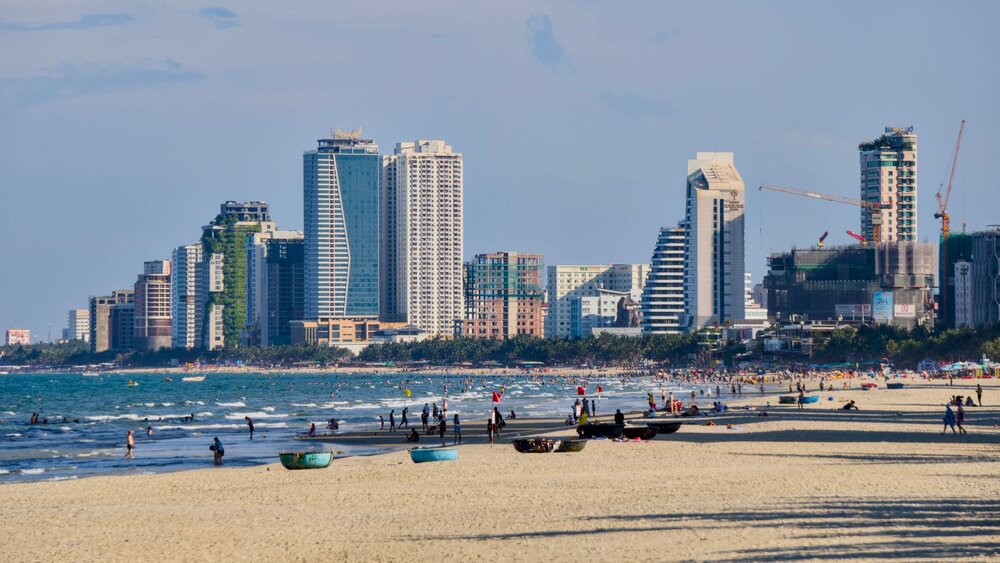
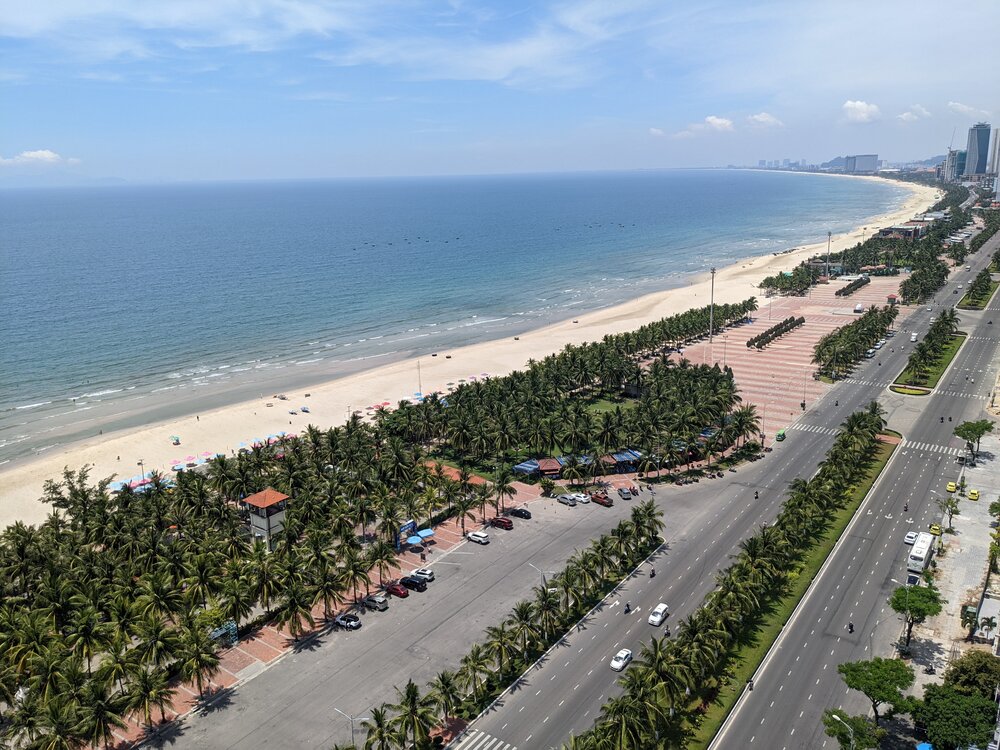
My Khe Beach runs for over 10 km of white sand with a consistent east-facing aspect — sunrise views are good and the water is calm for most of the year. The section at the end of Pham Van Dong and Nguyen Van Thoai Streets is where Vietnamese families set up in the early morning; the hotel resort strip is further north. Seafood restaurants line the beach road, most working from live tanks — prices are by weight, so confirm before ordering.
In the evening the focus shifts to the Han River. The waterfront promenade along Bach Dang Street runs past the Dragon Bridge and the older Han River Swing Bridge (built 1929, still rotates at midnight on weekends to let boats through). The Dragon Bridge breathes fire and water on Saturday and Sunday nights at 9pm — worth timing a walk around.
The Marble Mountains
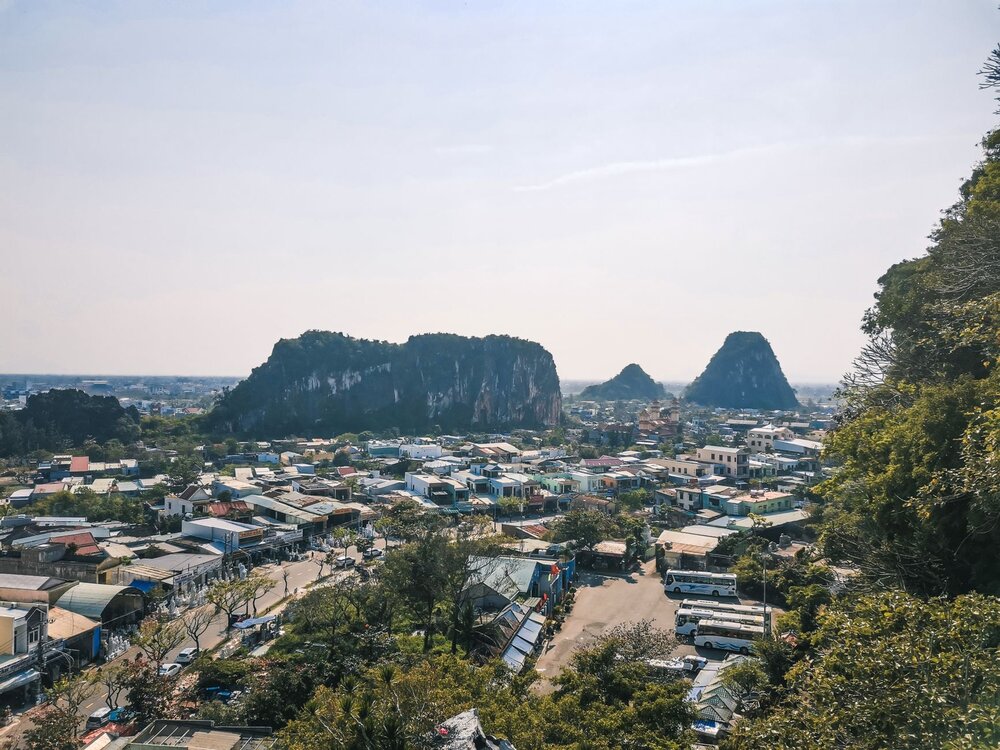
Five limestone peaks rise from the coastal plain 8 km south of the city, each named for one of the classical elements. The peaks were mined for marble for decades — the stone-carving workshops at the base still operate. Thuy Son (Water Mountain) is the one to climb: stairways cut into the rock lead through caves and grottoes filled with Buddhist and Cham shrines, then up to viewpoints over the coast and the Cham Islands offshore.
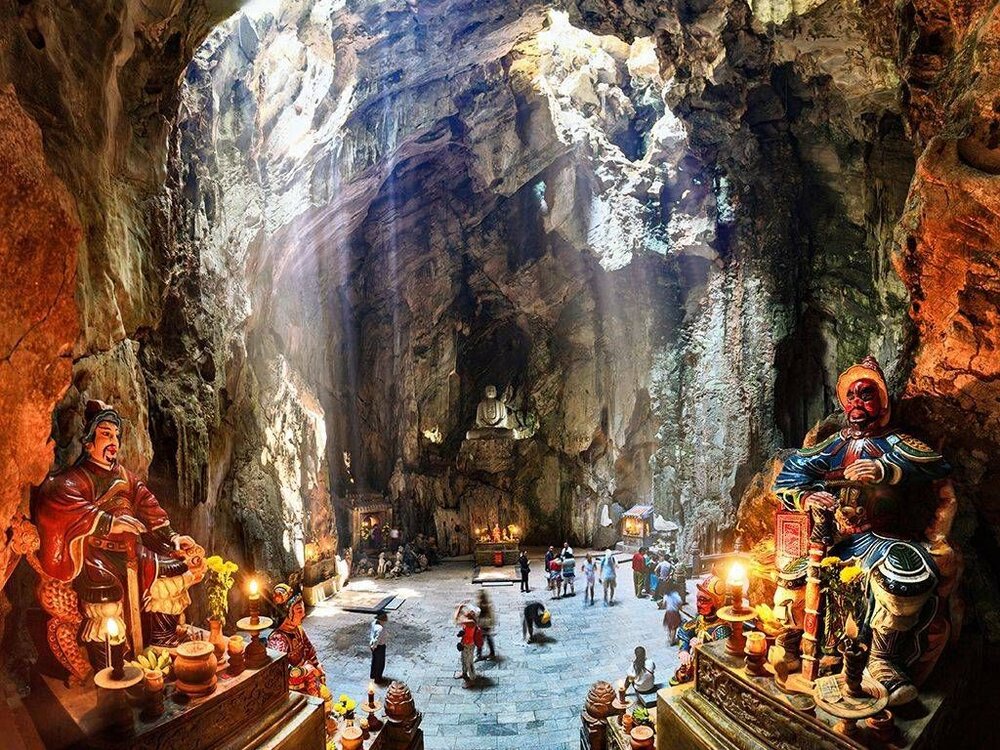
The caves themselves — Huyen Khong, Tang Chon — have natural skylights where shafts of light drop onto altar tables below. Allow 1.5–2 hours. Entry is around 40,000 VND; the elevator to the top costs extra. Motorbike taxis wait at the base.
Son Tra Peninsula & Linh Ung Pagoda
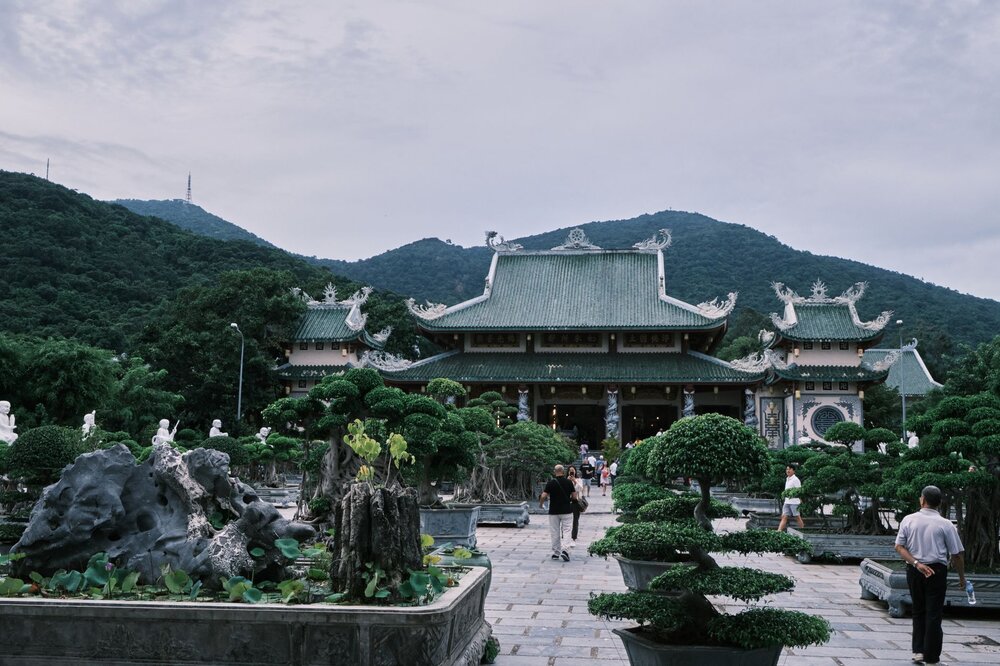
Son Tra is a 4,400-hectare forested headland 10 km northeast of the centre, rising to 693 m. The military controlled it for decades, which incidentally preserved the forest — it’s now the most biodiverse area near Da Nang, home to around 1,300 red-shanked douc langurs. The doucs are large primates with bright orange thighs, white forearms, and black faces; they come down to the roadside trees most reliably at dawn and dusk. Slow down on the forest roads and look up.
Linh Ung Pagoda is on the southern slope, facing the bay. Its 67-metre white Guanyin statue is visible from My Khe Beach and most of the Da Nang waterfront. The pagoda grounds are large and well-maintained; the views back over the city are good from the upper terrace. Beyond the pagoda, the peninsula road continues to quieter east-facing coves — Bai But, Bai Nam, Bai Da Den — that see far fewer visitors than My Khe.
Ba Na Hills & the Golden Bridge
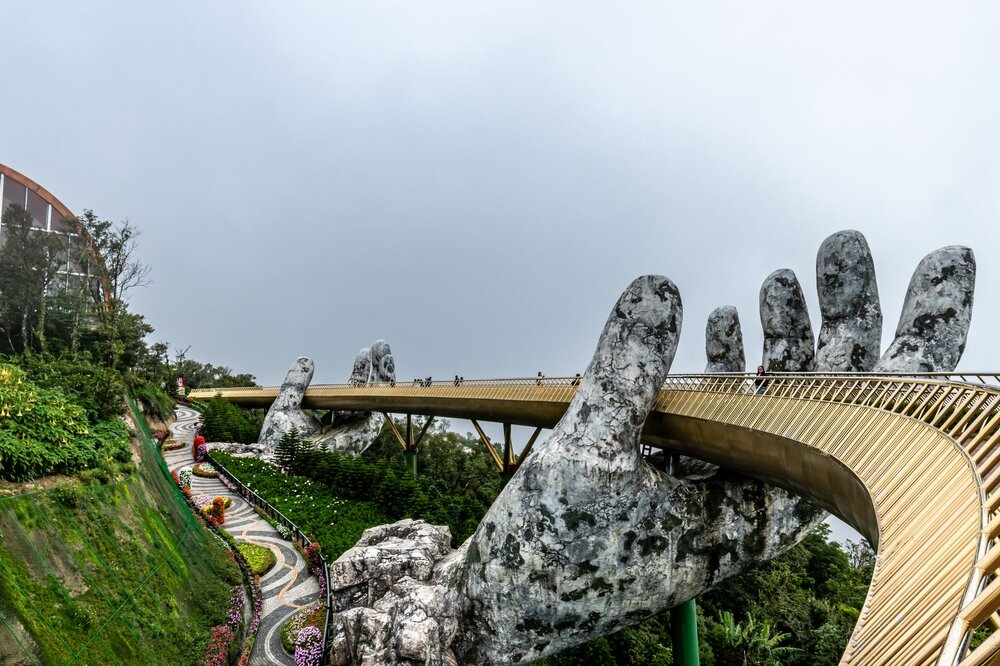
Ba Na Hills is a mountain resort 25 km west of the city at 1,487 m — built on a French-era hill station, now owned by Sun World and rebuilt as a theme park and entertainment complex. The cable car journey takes around 20 minutes and is worth it for the views alone. The Golden Bridge, held aloft by two giant stone hands, became globally famous when photos circulated in 2018; it delivers a walk through mist above the jungle canopy. The French Village at the summit replicates a medieval French town with wine cellars, gardens, and restaurants.
Ba Na Hills requires a full day. Book tickets online — prices are around 750,000–900,000 VND and include the cable car and most attractions. Arrive at the cable car base station by 8am to avoid queues that build quickly on weekends and public holidays.
Museum of Cham Sculpture
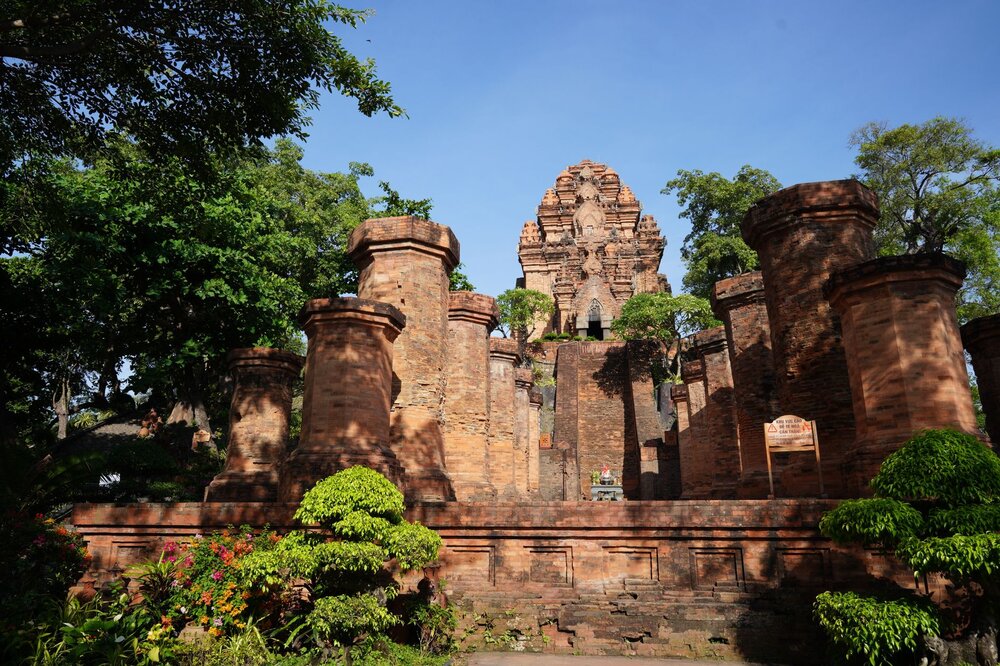
On 2 Thang 9 Street in the city centre, this is the world’s largest collection of Cham art — sandstone sculptures, lintels, pediments, and ritual objects spanning the 7th to the 15th century. The Cham ruled central Vietnam for over a millennium as a Hindu kingdom with strong Malay and Indian Ocean trading connections; many Cham later converted to Islam. The sculptures here came from temple sites across the region, including My Son, Po Nagar, and Dong Duong.
The museum is air-conditioned, well-lit, and rarely crowded — a good afternoon option when Da Nang heats up. Entry is around 60,000 VND. Give it an hour minimum; the courtyard pieces and the Tra Kieu altar are the standouts. My Son Sanctuary, 60 km south in a jungle valley, is where many of these temples originally stood — worth a half-day trip if you have time.
Food
Da Nang’s signature dishes come from the broader central Vietnamese tradition. Mi Quang is the one to know: thick turmeric-yellow noodles in a small amount of concentrated broth — more sauce than soup — topped with shrimp, pork, quail eggs, peanuts, and a rice cracker. It’s a lunch staple at local shops citywide. Banh xeo (crispy rice-flour pancakes filled with shrimp and beansprouts) and bun cha ca (rice vermicelli in a clear fish broth with fish cakes and crab cakes) are the other dishes worth seeking out specifically in Da Nang, where local versions differ from what you find in Hanoi or Saigon.
Seafood is the other constant. The beach road restaurants at My Khe work from live tanks — crab, lobster, mantis shrimp, geoduck — priced by weight and cooked to order. The café district around Nguyen Chi Thanh Street in Hai Chau District has the best concentration of independent coffee shops if you’re after a proper sit-down.
Dragon Bridge & Nightlife
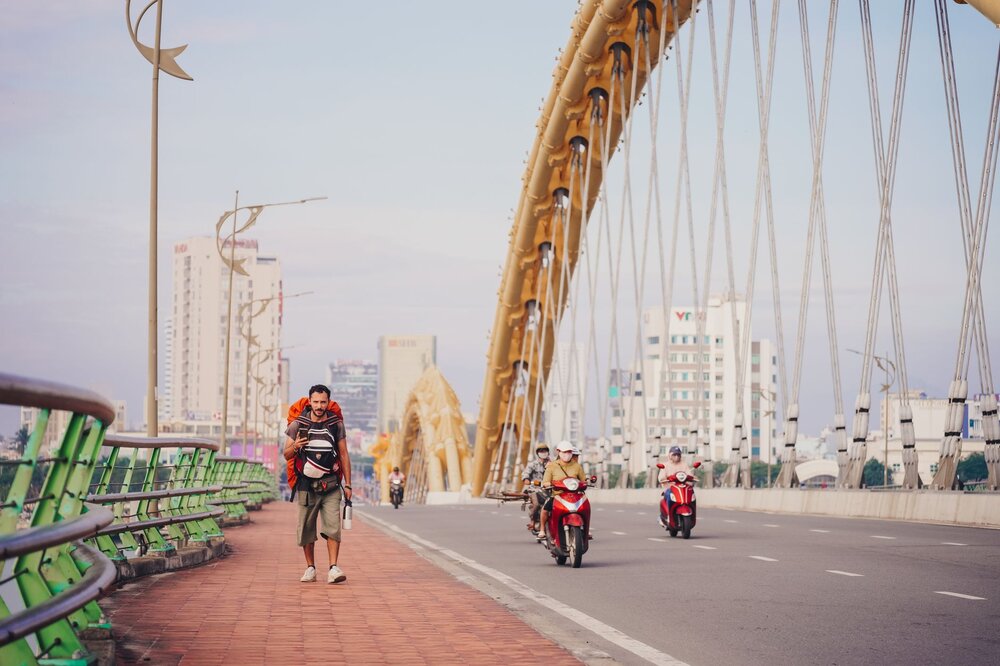
The Dragon Bridge crosses the Han River on Tran Hung Dao Street — a 666-metre steel structure shaped as a dragon, lit differently each night. On Saturday and Sunday at 9pm the dragon breathes fire, then water, from its head on the east bank. Cross to the east side before 8:45pm and stand on the promenade facing back toward the bridge for the best view. Riverside bars along Bach Dang Street on the west bank stay open late.
Day Trips
Hoi An is 30 km south — about 45 minutes by car. The Ancient Town is a UNESCO-listed trading port with well-preserved 15th–19th century merchant houses, Japanese covered bridge, and tailors. Go in the evening when the lanterns are lit; stay for a night if possible rather than doing it as a day trip, since the atmosphere after dark is the main draw.
Hue is 100 km north via the Hai Van Pass — the most dramatic coastal road in Vietnam, with switchbacks climbing through cloud forest above the South China Sea. By motorbike or open jeep the pass itself takes 30–45 minutes and the views are the point; the tunnel bypasses it entirely and should be avoided unless time is very short. In Hue: the Imperial Citadel, the royal tombs along the Perfume River, and the street food scene (banh mi Hue, bun bo Hue).
My Son Sanctuary is 60 km southwest — red-brick Cham Hindu temples in a jungle valley, built from the 4th to the 14th century. The site was heavily bombed in the 1960s and some towers are rubble, but Group B and C are largely intact. Allow 3–4 hours including the drive from Da Nang.
When to Visit
February to May is the best window: dry, clear days in the high 20s°C, calm seas, and low humidity. April and May are the hottest months but still reliably rainless. June to August is hot (32–35°C) and popular with domestic tourists but still dry — beaches are packed on weekends.
September to December is the wet season. Da Nang sits at a climatic crossroads where typhoons track in from the South China Sea; October and November see the heaviest rainfall and the roughest seas. The Da Nang International Fireworks Festival runs over several nights in June — it draws large crowds and books out accommodation early.
Getting Around
The city centre, My Khe Beach, Son Tra Peninsula, and the Marble Mountains are all accessible by Grab (the dominant ride-hailing app). Renting a motorbike (around 150,000 VND/day from most guesthouses) covers Son Tra and the Marble Mountains independently and is the right choice for the Hai Van Pass. Ba Na Hills is best reached by the resort’s own shuttle or by private car — the road up is steep and slow by motorbike.