
Quy Nhon
A seafood-loving beach city on Vietnam's south-central coast, with granite coves, 900-year-old Cham towers and far fewer tourists than Nha Trang.
Overview
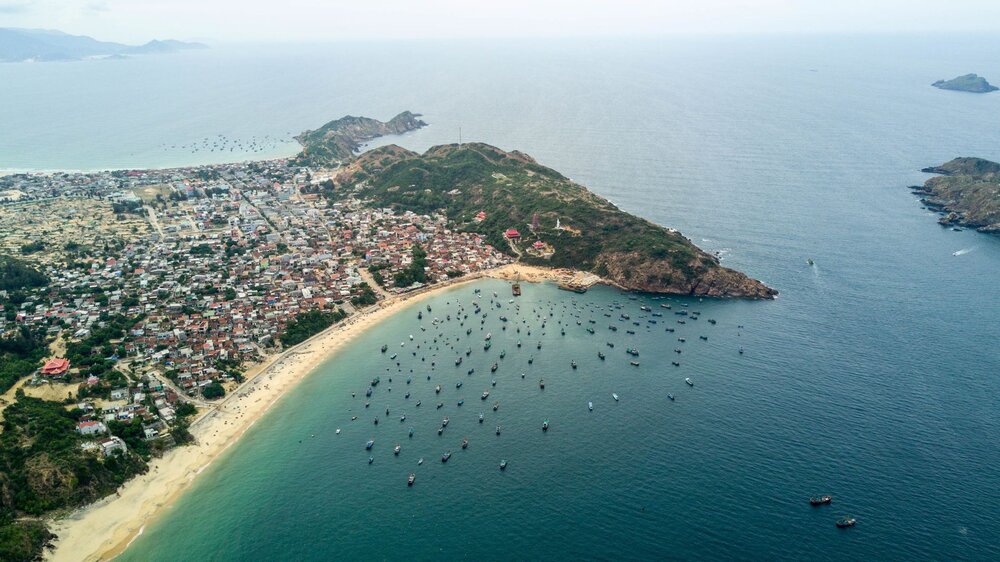
Quy Nhon (also spelled Qui Nhon, and in Vietnamese Quy Nhơn) is a beach city on Vietnam's south-central coast, roughly halfway between Hoi An and Nha Trang. It's about 300 km south of Hoi An and 220 km north of Nha Trang, and the train between Hanoi and Saigon stops 10 km outside town at Dieu Tri. The city sits on a long curved bay with a beach promenade right in the center, and the best scenery is out of town: granite headlands, small coves like Ky Co, and the old Cham brick towers in the rice fields inland.
It's a small, easy city that could well become Vietnam's next big beach destination. For now it doesn't change at the speed of Ho Chi Minh City or Hanoi, and it doesn't yet feel built around tourism; even in April there were no crowds on the beach, unlike Da Nang or Nha Trang. What makes it different from Nha Trang or Da Nang today is the pace. There are fewer high-rises, the seafood is cheaper, and most visitors are Vietnamese families who come in the June–August school holidays. Lonely Planet put Quy Nhon in its Best in Travel 2026 list, and Quy Nhon won the ASEAN Clean Tourist City Award for the third time in 2026, so expect it to get busier. Two to three days covers the highlights; four if you want a slow beach day and a trip inland to the Tay Son museum.
I came here after years of spending time in Da Nang, looking for somewhere quieter and more local, and stayed about two weeks in January. The first thing you notice is how quiet it is. There's construction everywhere, new hotels and restaurants going up along the coast, so I doubt it stays this way for long. If you like places before they get busy, now is a good time. (Jack Ng)
Administrative note: On 1 July 2025 the old Binh Dinh province merged into Gia Lai province, and the provincial administrative center is now in Quy Nhon. Vietnam also removed the city and district level, so "Quy Nhon City" is now five wards: Quy Nhon, Quy Nhon Dong (which includes Ky Co and Eo Gio), Quy Nhon Nam, Quy Nhon Tay and Quy Nhon Bac. Hotel and bus addresses now say "Gia Lai", though some booking sites still show "Binh Dinh". Nothing else changes for travelers.
Quy Nhon has a dry season from about February to August and a rainy, stormy season from September to December, peaking in October and November. Pick your month below.
 Browse on GetYourGuide →
Attractions
Things to see and do in Quy Nhon
In town, start with the beachfront promenade: it's wide, runs along most of the city beach, and has a shaded strip of palm trees next to the sunny side by the sand. Look out for the stone statues along it, each showing a different martial art (Binh Dinh is famous for its martial arts tradition). Long Khanh Pagoda, one of the city's oldest Buddhist temples, is a quiet half hour away from the traffic.
Most of what you come to Quy Nhon for is on the Phuong Mai peninsula across the Thi Nai bridge, 20–30 minutes from the center. Ky Co is the postcard cove: clear water, a short beach and a hill above it, about 25 km from town. Entry including the electric cart down to the beach was 170,000 VND (about $6.50) per person in April 2026. Go by boat from Nhon Ly, ride the road over the hill (steep, for confident riders only), or do what I did: a private car from the city to the Ky Co terminal cost 500,000 VND (about $19) return, with the driver waiting to take me back.
Don't skip Nhon Ly itself. It's a working fishing village on the way to Ky Co, and one of the most authentic places on this coast to wander around. Eo Gio, the "wind strait", is a few kilometers away, about 30 minutes by car from the city-beach hotels; it's a walking trail along the cliffs with a viewpoint over a narrow rocky bay. Entry is normally 50,000 VND (about $2); over the 2 September holiday in 2026 it was discounted to 25,000 VND. Most people do Ky Co and Eo Gio together in one morning.
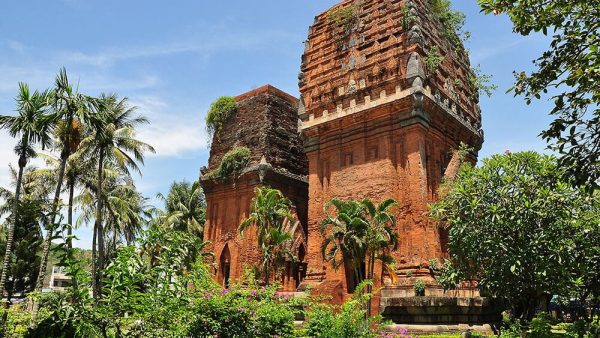
Closer to town, Ghenh Rang is a headland of big boulders with Queen's Beach (Bai Hoang Hau / Bai Da Trung) below it, a little cove covered in smooth round stones. It's for looking, not swimming. The grave of the poet Han Mac Tu is on the hill above (10,000 VND). In the city itself, Thap Doi (the Twin Towers) are two 12th-century Cham brick towers in a small park on Tran Hung Dao street (20,000 VND, open roughly 7am–5:30pm). Banh It, 18–20 km northwest, is a group of four Cham towers on a hill with views over the rice fields and the best of the Cham sites around Quy Nhon. Hon Kho is a small island off Nhon Hai fishing village, reached by coracle or canoe in 10–15 minutes, with snorkeling over shallow coral.

Quy Nhon Coastal Road
A scenic 30 km stretch of Highway 1D hugging the coast between Quy Nhon…
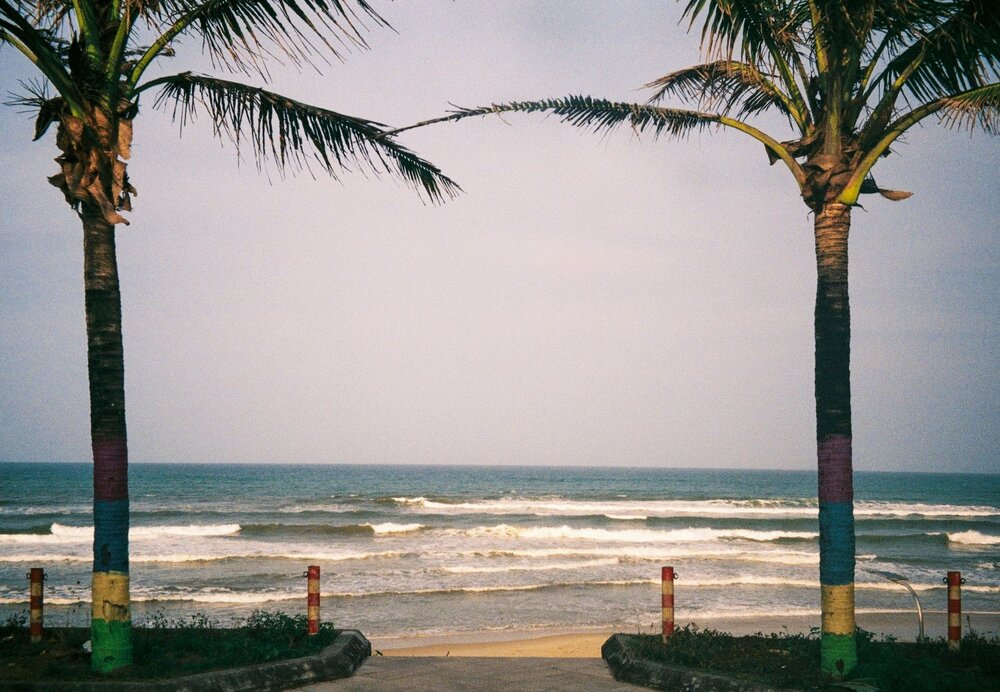
Ky Co Beach
A sheltered bay of turquoise water flanked by dramatic limestone cliffs — consistently rated…
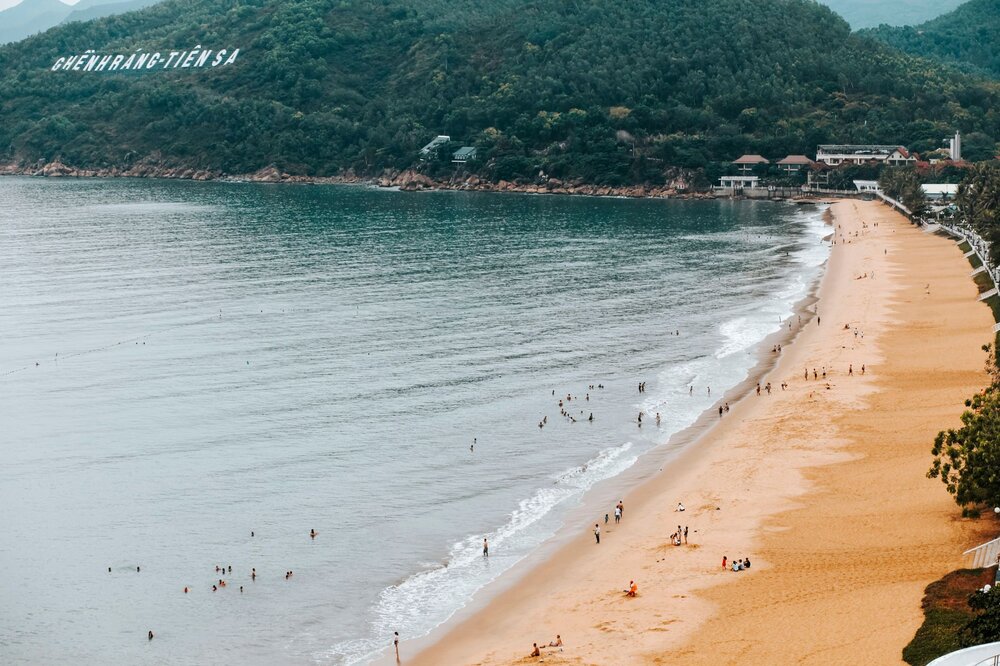
Queen’s Beach (Bai Hoang Hau / Bai Da Trung)
A striking pebble beach near Ghenh Rang — millions of smooth oval stones instead…
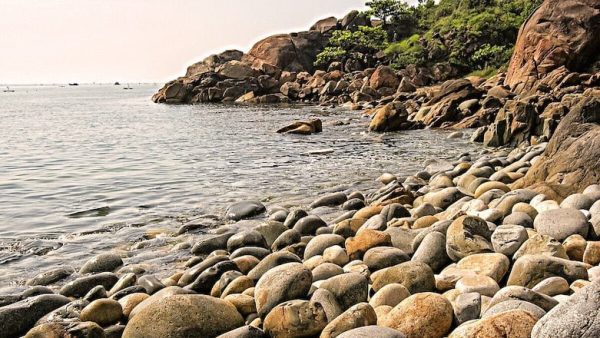
Ghenh Rang (Tien Sa)
A rugged headland south of Quy Nhon with dramatic rock formations, hidden coves, cliff-top…

Eo Gio (Wind Strait)
A wild coastal cliff formation where the wind whistles through a narrow rock strait…
Twin Towers (Thap Doi)
Two well-preserved Cham towers standing side-by-side in the heart of Quy Nhon city —…

Banh It Cham Towers
A hilltop cluster of four Cham towers 18–20 km northwest of Quy Nhon —…
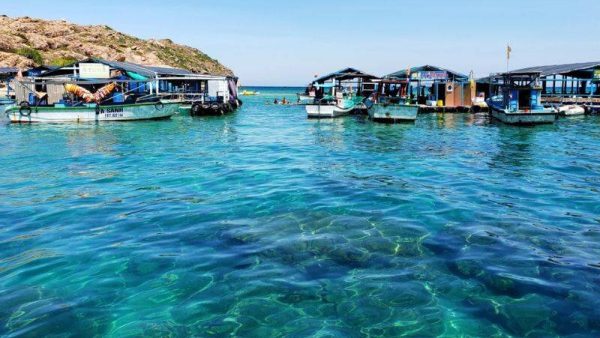
Hon Kho Island (Dry Island)
A small offshore island with shallow crystal-clear water, vibrant coral gardens, and wooden bridges…

Vung Chua Mountain
A short hike above Quy Nhon rewarding with sweeping views of the city, bay,…
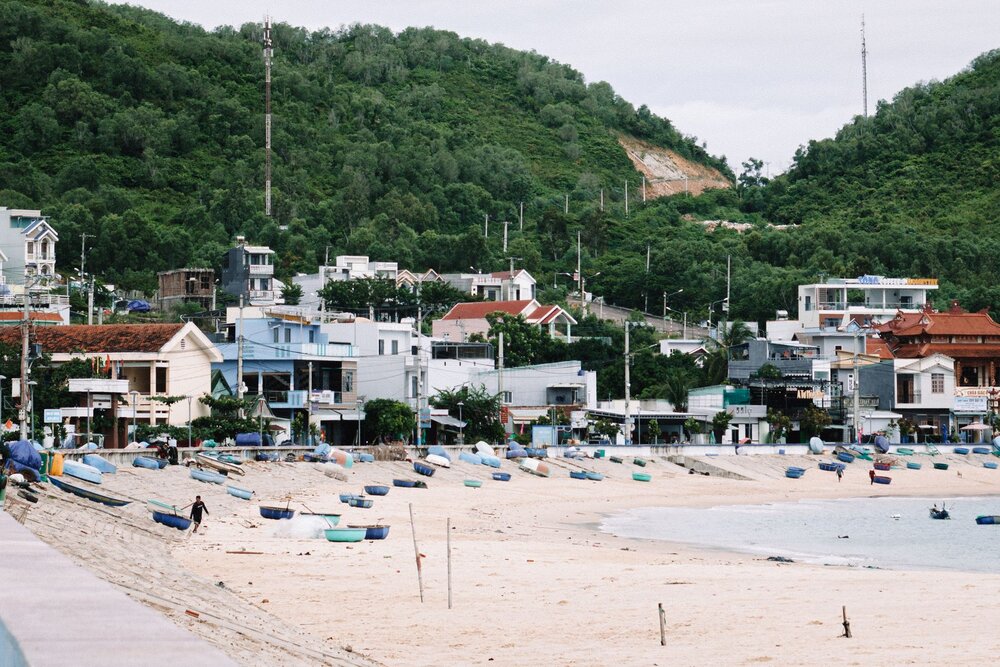
Nhon Hai Fishing Village
A traditional fishing community north of Quy Nhon known for its colourful coracle boats,…
Quy Nhon Night Market
A lively riverside evening market where locals and travellers mix over bánh xèo tôm…
Interests
What Quy Nhon is known for
Getting There
Transport options to reach Quy Nhon
By air. Quy Nhon's airport is Phu Cat (UIH), 30–35 km north of the city, about 40 minutes by road. Vietnam Airlines, Vietjet and Bamboo Airways fly from Ho Chi Minh City (about 1 hour 5 minutes) and Hanoi (about 1 hour 30 minutes). There are no regular international flights; a Seoul charter has been talked about for 2026. From the airport, a shuttle bus meets each flight for 50,000 VND (about $2), a Grab or taxi costs about 250,000–320,000 VND ($10–12), and local bus T7 runs hourly until 7pm for 18,000 VND.
By train. Get off at Dieu Tri, not Quy Nhon station. Dieu Tri is on the main north–south line about 10 km from the center; Quy Nhon station is on a short branch with only one or two trains a day. From Dieu Tri it's about a 25-minute Grab into the center (roughly 150,000–250,000 VND, $6–10). I came down from Da Nang by train: about 6 hours, around $13 for a soft seat, clean, reclining seats with plenty of legroom, a snack trolley, a decent toilet and an on-time arrival. I'd take the train over the bus on this route. Rough journey times: Da Nang 5–6.5 hours, Nha Trang 4–5 hours, Saigon 11–14 hours (the overnight SE4 is the handy one), Hanoi 21–24 hours. Book on dsvn.vn or 12Go; the timetable changed in May 2026, so check before you plan around a specific train.
By bus or limousine van. From Hoi An or Da Nang it's 5.5–7 hours, about $14–19 by limousine van (Cocovip, An Phu, Hoang Minh and others). From Nha Trang it's 3–5.5 hours for $10–25 (Futabus, Techbus). From Ho Chi Minh City, Phuong Trang (Futabus) sleeper buses take 12–14 hours for about 255,000–285,000 VND ($10–11). Book on Vexere or 12Go.
Nearest airport: Phu Cat Airport (UIH), 30–35 km north of Quy Nhon
Fly into Phu Cat Airport (UIH), 30–35 km north of Quy Nhon, then take a bus, train, or private transfer onward to Quy Nhon.
Search schedules and book seats on 12Go or Vexere — both cover routes from Da Nang to Quy Nhon.
Book a private transfer directly — faster and stress-free, especially with luggage or arriving late.
 Central Vietnam transfer — Alex Le
For a full breakdown of transport options across Vietnam → Vietnam Transportation Guide
Hotels & Where to Stay
Accommodation options in Quy Nhon
Stay along the city beach (An Duong Vuong and Xuan Dieu streets) if you want to walk to restaurants and the night market; it's the most convenient base for a first visit. The resorts are spread out along the coast south of town (Bai Dai, Ghenh Rang) and on the peninsula, which is great for a quiet beach stay but means a taxi or motorbike every time you go out to eat. Book ahead for June to August and Vietnamese public holidays, when domestic tourists fill the city.
Budget to mid-range: this is where Quy Nhon beats Da Nang and Nha Trang: you get noticeably better hotels for less money. I stayed at Sala Quy Nhon in early September 2026 for about $30 a night, with a rooftop pool and rooftop bar. Grand Hyams is in the same price range (from about $26–31 on Kayak in October 2026). Guesthouses a block or two back from the beach are cheaper still.
Mid-range: Fleur de Lys Quy Nhon is where I stayed in April 2026, at about $75 a night: a lovely ground-floor pool, a decent breakfast buffet with plenty of Vietnamese dishes, and a beautiful bar on the 18th floor. Seagull Hotel (489 An Duong Vuong) is an older 4-star right on the city beach. Crown Retreat Quy Nhon is a resort at Cat Tien, about 20 km north on the peninsula, roughly $78–95 a night on average.
Upmarket: Avani Quy Nhon Resort on Bai Dai beach, about 10 km south, runs about $120–155 a night (October is the cheapest month). Anantara Quy Nhon Villas has 25 pool villas near Bai Xep, 15 minutes from the center.
For longer stays, look at serviced apartments on the city beach. I paid about 420,000 VND (about $16) a night for a big modern apartment in the center with a full kitchen, a washing machine and a balcony over the beach. For two weeks that beat any hotel.
Restaurants & Food
Where to eat in Quy Nhon
Quy Nhon eats seafood and rice-paper dishes, and almost everything is cheap. These are the dishes to look for:
- Bánh xèo tôm nhảy: small crispy pancakes with tiny "jumping" shrimp, rolled in rice paper with herbs. About 15,000 VND a plate at the food street.
- Bún chả cá: rice noodle soup with fish cakes, the classic Quy Nhon breakfast. Bún chả cá Liên at 379 Nguyen Hue is a well-known spot.
- Bánh hỏi cháo lòng: fine woven rice vermicelli with pork offal porridge on the side, another breakfast dish. Look on Dien Hong street.
- Nem chợ Huyện: fermented pork rolls from Tuy Phuoc, the thing locals bring home.
- Bánh ít lá gai: black sticky rice dumplings with mung bean, a Binh Dinh specialty sold at markets.
Quy Nhon Food Street near the main square has about 30 stalls open from mid-afternoon to midnight, with bún thịt nướng at around 35,000 VND and chè (sweet soup) at about 15,000 VND. The night market runs from about 7pm to 10pm on the waterfront side of town near Le Duan street. For seafood, the restaurants along Xuan Dieu street price by weight; ask for the price per kg before you order.
Food is noticeably cheaper than in Da Nang if you eat local. One of my best meals was crispy pork belly from a small takeaway near my apartment, with rice noodles, herbs, pickled vegetables and dipping sauce: under $8, and enough for two. You roll a bit of everything up and dip it. On the street, try the small sugared fruit sold in cups with chili salt (about 20,000 VND); it's sweet, with a little pit in the middle.
For a sunset beer, East West Brewing has a branch right on the beach. The storm damaged it, but it's been rebuilt and reopened, and it brews its own craft beer. It's a nice spot for a beer by the sand (we've both been).
Three places I'd go back to, all from my April 2026 trip:
- Nem Chợ Huyện restaurant (24 Xuan Dieu): a small local place in walking distance of the beach hotels, and my favorite meal in town. A combo for two people was 165,000 VND (about $6). Nobody speaks English, so have Google Translate ready.
- Restaurant 114 (114 Xuan Dieu), seafood: the place everyone recommends. No English spoken here either. A large lobster was 1,900,000 VND (about $72) per kilo, and the bigger the lobster, the higher the price per kilo, so check the weight before they cook it.
- Surf Bar 1, on Quy Nhon beach: a café right on the sand. A cà phê sữa đá (iced milk coffee) was 50,000 VND and a cream cheese coffee 55,000 VND, which is beach prices rather than street prices, but you sit on the sand. I spotted little crabs running around on the beach in front of it.
One warning: Quy Nhon closes early. Some local restaurants shut in the middle of the afternoon, and on a couple of days I had to hunt for lunch. Don't expect late-night food outside the food street and night market.
Experiences
Adventures and activities in Quy Nhon
The easiest way to see the peninsula without a motorbike is a Ky Co + Eo Gio day tour: around $32 on Klook, or about $40 with Hon Kho island and hotel pickup added. Tours usually include the boat to Ky Co, entry tickets, snorkel gear and a seafood lunch. If you ride, rent a motorbike for 150,000–180,000 VND ($6–7) a day and do it yourself, starting early to beat the tour groups.
Inland, the Quang Trung Museum in Tay Son (about 45 km west, 50,000 VND entry) tells the story of the Tay Son brothers and puts on a Tay Son martial arts and drum show for an extra fee. Combine it with Banh It towers on the way. Further out, Cu Lao Xanh island is a 30–40 minute speedboat from Ham Tu pier (about 200,000 VND one way), but boats often don't run from November to January because of the swell.
GetYourGuide discount: use code JACKVIETNAMTRAVEL5 for 5% off.
 More on GetYourGuide
 Browse on Klook
Travel Tips
Practical guides for visiting Quy Nhon
Quy Nhon has a dry, hot season from February to August and a wet season from September to December. October and November are the wettest months (over 450 mm of rain each), with the highest typhoon risk; Typhoon Kalmaegi tore roofs off in the city in early November 2025. The sea is calmest from March to September, which is also the best window for boat trips to Ky Co, Hon Kho and Cu Lao Xanh. For foreign visitors, February to May is the sweet spot: dry, not yet scorching, and before the Vietnamese summer crowds.
Read the month-by-month guides before you book (links above), plus Vietnam weather by region and the Vietnam sleeper train guide if you're coming by rail.
Quy Nhon FAQ
Where is Quy Nhon in Vietnam?
Quy Nhon is on the south-central coast of Vietnam, roughly halfway between Hoi An (about 300 km north) and Nha Trang (about 220 km south). Since July 2025 it's the administrative center of Gia Lai province; before that it was the capital of Binh Dinh province.
Is Quy Nhon worth visiting?
Yes, if you like beaches, seafood and quiet towns more than nightlife. The coves around Ky Co and Eo Gio are some of the prettiest on the coast, and the city has far fewer foreign tourists than Nha Trang. Skip it in October and November, when rain and rough seas cancel most of the boat trips. If you love Da Nang's expat scene, nightlife and Western food, you may find it too quiet; if you want to slow down, eat well and walk the beach, it's a great choice.
How do you get to Quy Nhon?
Fly to Phu Cat airport (UIH) from Hanoi or Ho Chi Minh City, then take the 50,000 VND shuttle or a 250,000–320,000 VND Grab into town. By train, get off at Dieu Tri, 10 km from the center. Limousine vans run from Hoi An (5.5–7 hours) and Nha Trang (3–5.5 hours).
What is the best time to visit Quy Nhon?
February to May for dry weather, calm seas and fewer crowds. June to August is hotter and busier with Vietnamese families but still good for boat trips. September to December is the rainy season, with October and November the worst months.
How many days do you need in Quy Nhon?
Two to three days covers the city beach, Ky Co and Eo Gio, Ghenh Rang and the Twin Towers. Add a day for Hon Kho island and Banh It, or for the Quang Trung Museum in Tay Son.
Is Quy Nhon better than Nha Trang?
It's quieter, cheaper and less built-up, with better coves but a smaller choice of hotels, restaurants and nightlife. Pick Quy Nhon for a slow beach stop between Hoi An and the south; pick Nha Trang if you want island-hopping tours, diving and lots of places to eat.