
Ninh Binh’s limestone karsts rise straight out of flooded rice paddies about two hours south of Hanoi, earning it the nickname “the inland Ha Long Bay” — though here the drama unfolds on rowing boats through cave-riddled rivers rather than cruise decks. Ancient capitals, cliffside pagodas, and quiet farmland fill the gaps between karst towers. It rewards travellers happy to slow down, with far fewer crowds than Vietnam’s coastal Ha Long Bay.
Trang An Grottoes
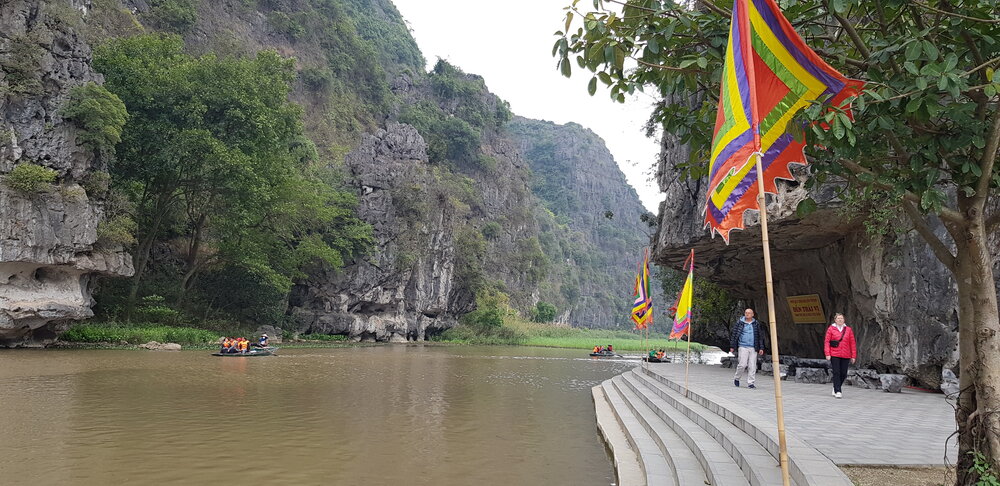
A UNESCO World Heritage Site, Trang An is Ninh Binh’s signature experience: a small rowing boat, paddled by a local guide, threads through a landscape of towering limestone peaks, past riverside temples, and through a series of dark, low-ceilinged caves carved by water over millennia. The three-hour loop covers several linked routes with different caves and shrines, and the pace is unhurried by design — this is scenery best absorbed slowly, from water level.
Tam Coc & the Ngo Dong River
Tam Coc, meaning “three caves,” offers a similar rowing-boat experience along the Ngo Dong River, weaving between karst cliffs and, depending on season, either lush green or golden rice paddies right up to the water’s edge. It’s especially striking in May and June when the rice ripens, and rowers here are known for a distinctive technique of paddling with their feet. It’s more compact than Trang An and easily combined with a bicycle ride through the surrounding villages.
Mua Cave (Hang Mua)
Hang Mua is less about the cave itself and more about the climb above it: several hundred steps up a steep hillside lead to a dragon-topped viewpoint overlooking the entire Tam Coc valley, its rice paddies and winding river laid out below the karst peaks. It’s a popular sunset spot, and while the stairs are demanding, the summit panorama is one of the most photographed views in the region.

Hoa Lu Ancient Capital & Bai Dinh Pagoda
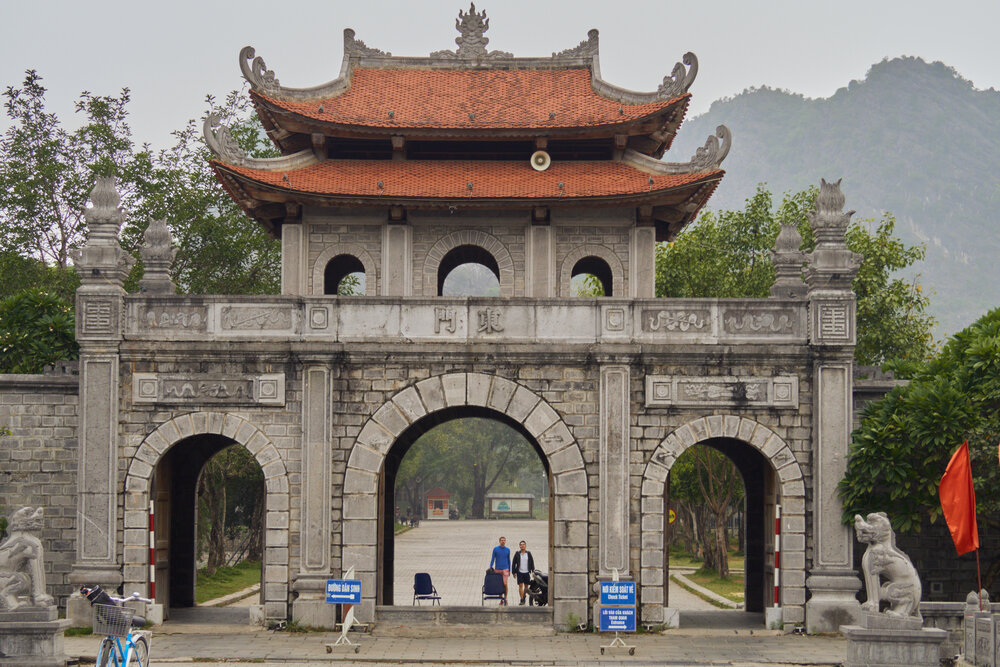
Hoa Lu served as Vietnam’s capital in the 10th and 11th centuries, and its remaining temples — dedicated to the Dinh and Le dynasty kings — sit amid the same karst scenery, offering a quieter historical counterpoint to the boat rides. Nearby, Bai Dinh Pagoda is one of Southeast Asia’s largest temple complexes, with a giant bronze Buddha, a hillside stupa, and a long corridor lined with hundreds of arhat statues, reachable by golf cart or a long uphill walk.
Food & Local Specialties
Ninh Binh’s signature dish is com chay, crispy sun-dried and fried rice crackers traditionally served with a rich meat-and-mushroom sauce for dipping — a specialty said to trace back over a century. Goat meat (de) is another regional staple, grilled, stir-fried, or simmered into hotpot, reflecting the karst hillsides where goats graze freely. Riverside restaurants around Tam Coc and Trang An serve freshwater fish and snails alongside these local specialties, often overlooking the same karst views you’ve just rowed through.
Boat Rides & Nature Reserves
Beyond the well-known Trang An and Tam Coc routes, Ninh Binh’s boat culture extends to Van Long Nature Reserve, a still, reed-fringed wetland known for birdwatching and a resident population of endangered langurs on its limestone cliffs. Thung Nham Bird Park offers another slow-boat route through wetland forest, best visited at dusk when thousands of birds return to roost. Cuc Phuong National Park, Vietnam’s oldest, adds jungle trekking and a primate rescue centre for those wanting to pair the karsts with rainforest.
Best Time to Visit
Planning a trip to Ninh Binh? We arrange private guided tours — day trips, multi-day itineraries, and custom routes.
The dry season, roughly October to April, offers the most reliable weather, with cooler, comfortable temperatures from November to February (15-22°C) and warming into spring. May and June are worth targeting for Tam Coc’s ripening golden rice, even though heat and humidity climb. July to September brings the wettest, muggiest weather and occasional typhoon-linked storms, which can affect boat operations.
Getting There
Ninh Binh has no airport of its own; travellers typically fly into Hanoi’s Noi Bai International Airport (HAN) and continue by road. The drive from Hanoi takes roughly two hours via a well-maintained highway, and regular buses and trains also connect the two cities in a similar timeframe. Ninh Binh’s compact geography means most karst attractions are within a 20-30 minute drive of Ninh Binh city or Tam Coc town, making a rental car, taxi, or motorbike the easiest way to link sites.
Where to Stay
Tam Coc town offers the region’s highest concentration of guesthouses and homestays, many with karst or rice-paddy views and bicycles for guests to explore independently. Ninh Binh city provides a more urban base with a wider range of hotels, convenient for early starts to Trang An or Hoa Lu. A small but growing number of countryside eco-lodges near Van Long and Cuc Phuong suit travellers prioritising nature and quiet over proximity to the main sights.
Practical Tips
Book boat rides for Trang An or Tam Coc as early in the day as possible to beat both crowds and midday heat. Bring a hat and sun protection, as the open rowing boats offer little shade. A bicycle is the best way to cover the flat farmland between Tam Coc and Hang Mua at your own pace. Tipping boat rowers modestly is customary and appreciated, though not strictly required.