
Bai Dinh Pagoda
Vietnam's biggest pagoda complex: a 99-meter stupa, a 500-statue arhat corridor and giant bronze Buddhas, plus a much older cave pagoda up 300 steps. Free entry.
Overview
Last updated: October 2026
Bai Dinh Pagoda (Chùa Bái Đính) is the largest pagoda complex in Vietnam, on Bai Dinh Mountain about 15 km from Ninh Binh city and 7 km from the Hoa Lu temples. Entry is free. You pay for the electric cart, the stupa and parking, and you should give it two to three hours.
There are really two pagodas here. The new complex, about 80 hectares of halls, gardens and courtyards on Ba Rau Hill, was built between 2003 and 2010, and it's the one in all the photos. The old Bai Dinh Pagoda, about 800 meters away in the foothills, is a set of small cave shrines that goes back to the Dinh and Ly dynasties around a thousand years ago. Most tour groups only see the new part.
The new complex is built to break records, and it holds a list of them: the largest gilded bronze Buddha in Asia, the longest arhat corridor in Asia, the largest bronze bell in Vietnam, and more. It's impressive for the scale. Bear in mind that it's a modern build, and it can feel more like a monument than a working temple, especially on a busy day. If you want old and atmospheric, spend your time at the old pagoda or at Tuyet Tinh Coc nearby.
Get There
Bai Dinh is in Gia Sinh, Gia Vien, in the northwest of Ninh Binh. Since Vietnam's 2025 administrative reorganization, the official address may show a new ward or commune name, so search "Chùa Bái Đính" in Grab or Google Maps.
From Tam Coc, Trang An or Ninh Binh city: about 15 km from the city and close to Trang An, so it's easy to do both on the same day by Grab, taxi or motorbike.
From Hanoi: about 95 km, roughly 2 hours by private car or tourist bus. Many Ninh Binh day tours from Hanoi pair Bai Dinh with Trang An. If you take a public bus to Ninh Binh, you'll need a taxi or Grab from the bus station to the pagoda.
Parking: 40,000 VND (about $1.50) per car and 15,000 VND (about $0.60) per motorbike.
Hotels
There's no reason to stay right next to Bai Dinh. Base yourself in Tam Coc, which is quieter in the evening and close to Trang An, Mua Cave and Hoa Lu too. For specific places, see the Ninh Binh section of our Ninh Binh travel guide.
🏨 Search hotels & guesthouses — Booking.comOther
Tickets and opening hours
Bai Dinh is open daily from 7am to 9pm. Prices below are the ones listed in 2024.
- Entry to the complex: free
- Electric cart from the gate: 30,000 VND (about $1.15) per person each way, running until 8pm
- Bao Thap stupa: 50,000 VND (about $2) per person
- Parking: 40,000 VND per car, 15,000 VND per motorbike
The cart is worth it. The gate is a long way from the main halls, and the complex is mostly walking once you're inside.
What to see in the new complex
The arhat corridor. Covered walkways lined with 500 stone arhat statues, each with a different face. It's the longest corridor of its kind in Asia, and it's the part most people remember.
Tam The Hall. The biggest building in the complex, 34 meters tall and over 59 meters long. The roofs use tiles from Bat Trang, and inside the craftwork comes from northern craft villages: bronze from Y Yen, stone carving from Ninh Van and woodwork from Phu Loc.
The Hall of Avalokitesvara. An ironwood hall holding an 80-ton gilded bronze statue of the many-armed Bodhisattva of compassion.
The bell tower. An octagonal three-tier tower on a lotus-shaped base, housing a 36-ton bronze bell, the largest in Vietnam.
Bao Thap stupa. A 13-story, 99-meter tower that holds Buddha relics brought from India and Myanmar. It has the best view over the complex and the karst around it, and it's the one part with a separate ticket.
The Maitreya Buddha. A 10-meter, 80-ton bronze statue on the highest hill, the largest outdoor bronze Maitreya in Southeast Asia.
Gieng Ngoc (the Pearl Well). A moon-shaped well 30 meters across and 10 meters deep, said to date back about 1,000 years.
The old Bai Dinh Pagoda
About 800 meters from the new complex, the old pagoda is reached by more than 300 stone steps up the hillside and through an old gate. The shrines are built into small caves in the slope, and as well as the Buddha they honor mountain spirits. The old site was where Emperor Dinh Tien Hoang set up a shrine to pray for good weather in the 10th century. Other records date its founding to the Ly dynasty, as a place for meditation and for treating the sick. It's quieter and older than anything in the new complex, so climb up if you have the legs for it.
When to go
The first three lunar months (roughly February to April) are the festival season, when the Bai Dinh Pagoda Festival runs and pilgrims come from all over Vietnam. It's lively, and it's also the most crowded the site gets. For a calmer visit, avoid Tet and that spring stretch, and come early on a weekday.
Good to know before you go
Dress: Cover shoulders and knees. This is a working pilgrimage site.
Shoes: Wear sneakers. You'll walk a lot even with the cart, and the old pagoda is all steps.
Weather: Bring sunscreen and a hat in summer and a rain jacket in the wet months. Much of the walking is out in the open.
Respect: Don't touch the statues, and don't write or carve on the walls.
Nearby
Trang An is next door, and most people pair the two. Hoa Lu Ancient Capital is about 7 km away, with Tuyet Tinh Coc right beside it. Tam Coc, Mua Cave and Thung Nham Bird Park are all within easy reach for the rest of the day.
More attractions in Ninh Binh
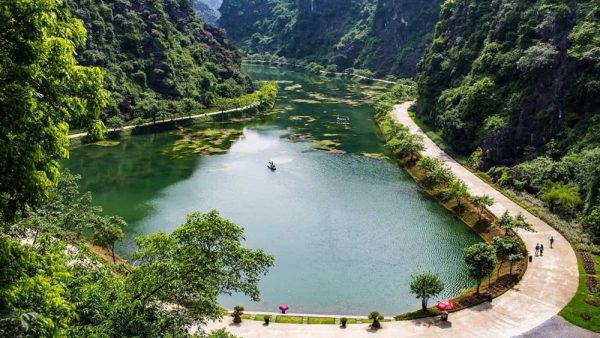
Tuyet Tinh Coc (Am Tien Cave)
A quiet cave-and-pagoda valley next to Hoa Lu, with a green lake, an old…

Hoa Lu Ancient Town
A free, lantern-lit walking quarter built in 2022 around Ky Lan Lake in central…

Trang An Grottoes
A UNESCO-listed complex of limestone caves navigated by rowboat through flooded valleys.
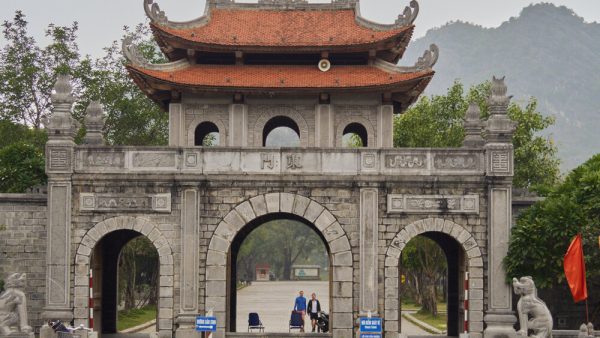
Hoa Lu Ancient Capital
Vietnam's 10th-century imperial capital — explore citadel ruins and twin temples honoring emperors Dinh…