
Quy Nhon sits on a crescent bay in Binh Dinh province — one of central Vietnam’s least-visited coastal cities and, for that reason, one of its most rewarding. The beaches are uncrowded, the seafood is exceptional, and the ancient Cham ruins scattered through the hills give the region a depth that pure beach destinations lack. These are the five attractions that make Quy Nhon worth the trip.
Ky Co Beach
Ky Co is the standout beach of the Quy Nhon area — a secluded bay in Nhon Ly village where turquoise water curves between limestone headlands and the sand stays clean and quiet on most days. Seen from above, the colour gradations in the water are striking: pale jade in the shallows deepening to cobalt further out. Getting there is part of the appeal: either a short motorboat ride (around 20 minutes) from Nhon Ly pier, or the scenic coastal road that winds along the clifftop with open sea views on both sides. Most visitors come as a day trip from Quy Nhon city, arriving by late morning and leaving before the afternoon heat peaks.
Eo Gio (Wind Strait)
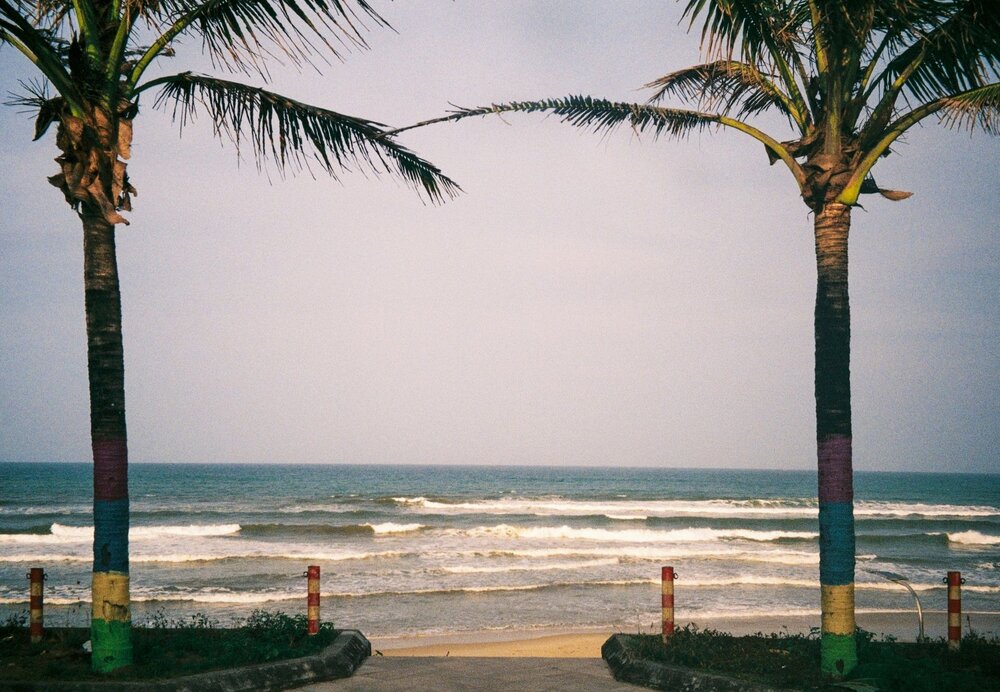
Eo Gio — “the Windy Gate” — is a narrow rocky strait between two sea-facing peaks where the wind funnels in constantly from the South China Sea. The views from the ridge are spectacular: dramatic cliff edges, churning water below, and an open horizon. Local authorities have installed stone staircases along the trail to make the terrain safer, though the path still requires sure footing. Just beside the main viewpoint is Ngoc Hoa Temple, a small and peaceful shrine set among the rocks that offers a quiet contrast to the wind-battered scenery outside. Eo Gio and Ky Co are often combined into a single half-day trip — they sit close together along the same coastal stretch north of the city.
Thap Doi (Twin Towers)
Built by the Champa civilisation in the 12th century, Thap Doi is a pair of brick towers standing 20 and 18 metres tall respectively — one of the best-preserved Cham temple complexes in Vietnam outside of My Son. The Cham were the dominant civilisation along central Vietnam’s coast for over a thousand years, and their brick-built temples are found throughout Binh Dinh province; Thap Doi is the most accessible and most intact of these. The site sits within Quy Nhon city itself, making it easy to combine with a morning walk or evening stroll along the seafront. Entry is free.
Queen’s Beach (Bãi Hoàng Hậu)
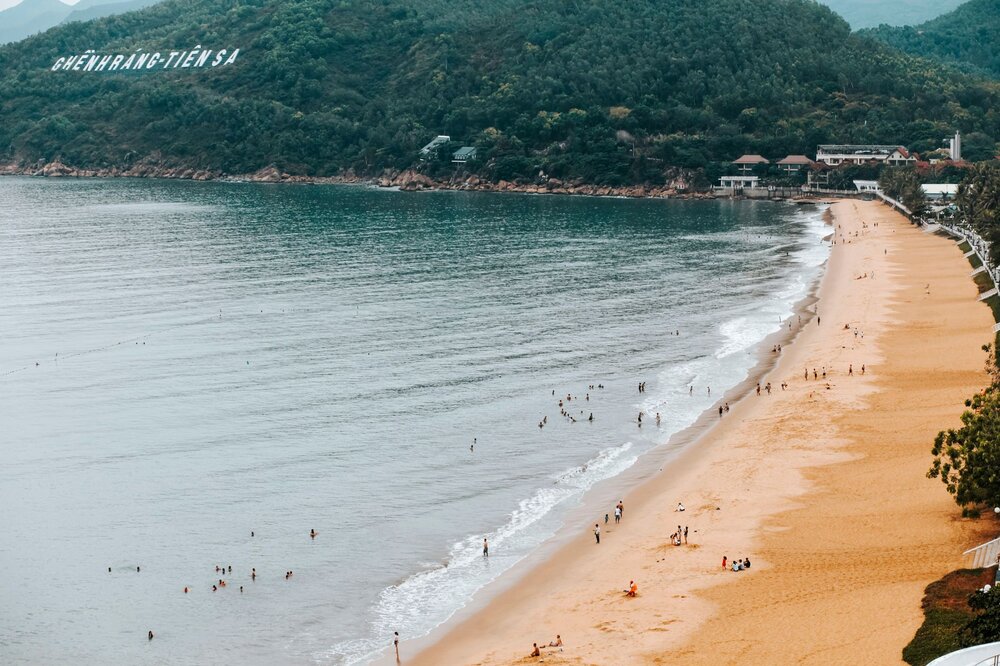
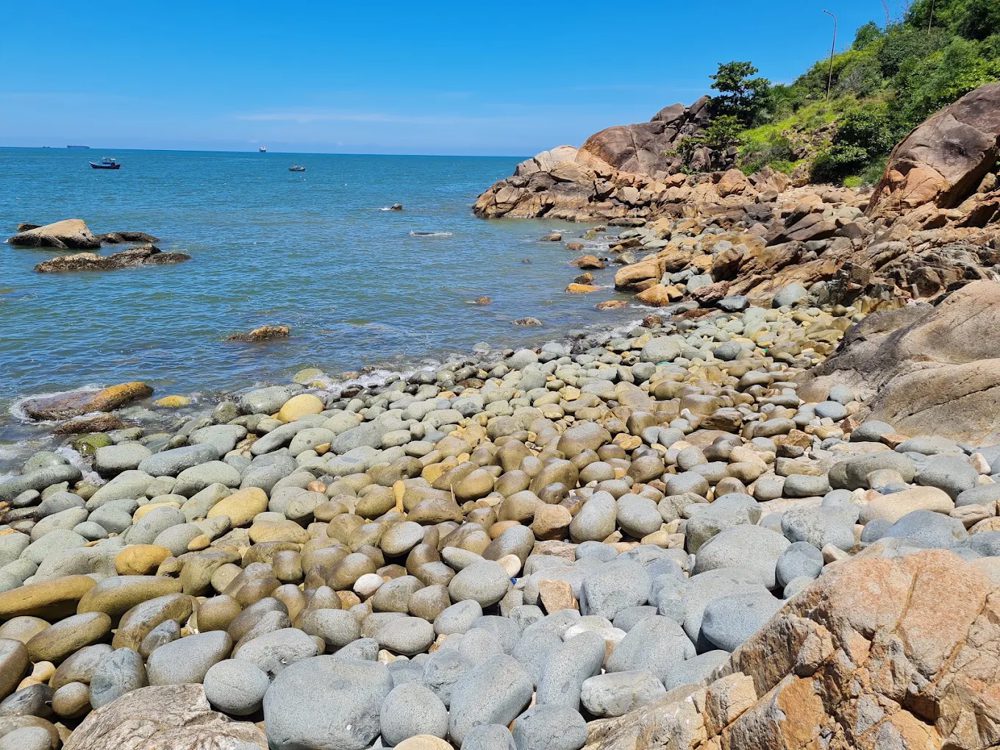
Named after Queen Nam Phuong — wife of Vietnam’s last emperor, Bao Dai — this small beach 3 km from the city centre is one of Quy Nhon’s most distinctive spots. The sand is fine and pale, and the shoreline is scattered with smooth, colourful egg-shaped pebbles that have become something of a symbol for the beach. The area also has historical and literary significance: the grave of poet Han Mac Tu, one of Vietnam’s most celebrated early 20th-century writers, sits nearby at Ghenh Rang hill. The combination of quiet beach, royal history, and literary pilgrimage site makes Queen’s Beach a more layered visit than a straight beach day.
Bai Xep Beach
Ten kilometres south of Quy Nhon, Bai Xep is a small fishing village beach that has developed quietly into one of the coast’s most relaxed spots without losing its local character. Set within a low-key ecotourism area, the beach is fringed by palm trees, fruit gardens, and a handful of wooden cafés and simple bungalows facing the water. It’s the kind of place where there’s nothing to do except swim, eat fresh seafood, and sit with a view of the bay. Accommodation is basic and affordable — the bungalows are occupied mostly by travellers who intended to stay one night and ended up staying three.
Getting to Quy Nhon
- By air: Phu Cat Airport (UIH) is 35 km from the city. Vietnam Airlines and Vietjet operate routes from Hanoi and Ho Chi Minh City
- By train: Quy Nhon sits on the main north–south rail line. Trains from Hanoi take around 11–13 hours; from Da Nang about 5–6 hours
- By bus: Sleeper buses connect Quy Nhon to Da Nang, Hoi An, Nha Trang, and Ho Chi Minh City
Getting Around
Hiring a motorbike (150,000–200,000 VND/day) is the most practical way to reach Ky Co, Eo Gio, and Bai Xep. The city centre is walkable for Thap Doi and the seafront. Grab is available in Quy Nhon town for shorter trips.
Tours & activities in Vietnam
Activity links above are affiliate or partner links.