
Phong Nha is a small riverside town in central Vietnam, gateway to Phong Nha-Ke Bang National Park, a UNESCO World Heritage Site of ancient limestone karst riddled with hundreds of caves carved over millions of years. Beyond the caves lie dense jungle, underground rivers, and hidden valleys that few roads reach. Once a sleepy farming village, Phong Nha has grown into Vietnam’s premier adventure-travel base — equal parts backpacker hub and serious expedition launchpad for those chasing the world’s largest cave.
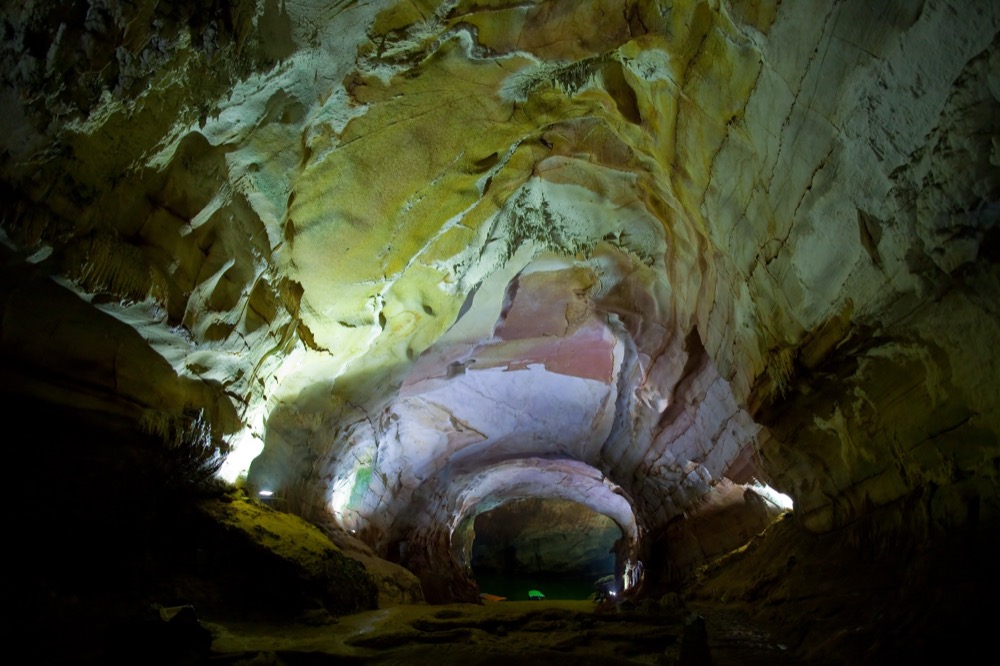
Phong Nha-Ke Bang National Park & Son Doong Cave
The park’s crown jewel is Son Doong Cave, the largest cave passage on Earth by volume — big enough to hold a 40-storey skyscraper and containing its own jungle, river, and weather system beneath a collapsed ceiling that lets sunlight flood in. Access is tightly restricted to a handful of multi-day expedition permits sold each year through licensed operators. Even without entering Son Doong, the wider national park’s karst peaks, sinkholes, and forest trails reward hikers and make clear why UNESCO recognised it twice, for both geology and biodiversity.
Phong Nha Cave
Phong Nha Cave gives the town its name and is the most accessible of the park’s showcase caves, reached by a slow boat ride up the Son River and into an underground river system lit by natural stone formations. Boats glide beneath towering stalactites for around 1,500 metres before docking at a chamber where visitors can walk among dry passages. It’s a gentle, family-friendly introduction to the region’s cave systems and one of the few here explorable without trekking gear.
Paradise Cave
Paradise Cave (Thien Duong) is a dry cave reached via a steep staircase and boardwalk that winds nearly a kilometre through one of the longest dry caves in Asia, its ceiling soaring over 70 metres above ivory-coloured stalagmite formations lit dramatically along the walkway. For those wanting more adrenaline, the surrounding area offers zip-lining through the forest canopy. The scale and lighting make it one of the most photographed caves in the park, and it’s a manageable half-day trip from town.
Hang En Cave
Hang En Cave is one of the world’s largest cave passages and a popular multi-day trekking destination, reached on foot through jungle and past minority villages before arriving at a cavern large enough to camp inside beside an underground beach and river. Trekkers typically overnight on the sand within the cave, waking to swifts wheeling through the enormous entrance at dawn. It’s the most immersive way to experience the park’s scale without the expedition-level permits Son Doong requires.
Food & Local Life
Phong Nha’s dining scene is simple and traveller-friendly, built around riverside restaurants serving Vietnamese staples alongside Western comfort food for the trekking crowd. Expect fresh spring rolls, grilled fish from the Son River, and rice dishes served with local greens, often eaten at open-air tables overlooking the water. The town itself is compact and walkable, with a relaxed evening atmosphere as guides and travellers swap stories after a day underground. It’s less about culinary spectacle and more about hearty, unfussy meals that refuel you for the next cave.
Adventure & Activities
Phong Nha is Vietnam’s adventure capital: trekking through the national park, kayaking and boating on the Son and Chay rivers, zip-lining near Paradise Cave, and multi-day expeditions into Hang En or Son Doong for those who book far enough ahead. Licensed local operators run everything from half-day cave boat trips to gruelling multi-day treks through jungle terrain, and the range of difficulty makes the area suitable for both casual visitors and serious adventure travellers seeking one of Southeast Asia’s most unique landscapes.
Best Time to Visit
Planning a trip to Phong Nha? We arrange private guided tours — day trips, multi-day itineraries, and custom routes.
The dry season from February to August offers the most reliable conditions, with lower rainfall and safer river levels for cave access, particularly for the trickier Son Doong and Hang En expeditions. April to June brings warm, mostly dry weather ideal for trekking, while July and August can be hot and humid. From September to January, heavy rains and flooding regularly close caves and rivers, so most multi-day expeditions pause during this period. Booking ahead is essential year-round given limited permit numbers.
Getting There
Phong Nha has its own small airport (Dong Hoi, airport code VDH) roughly 45 minutes away by road, with domestic flights connecting to Hanoi and Ho Chi Minh City. Alternatively, the Reunification Express train stops at Dong Hoi station, from which taxis and buses continue to Phong Nha. By road, it’s about a 5-6 hour drive or bus ride from Hue, and roughly 3 hours from Dong Hoi. Sleeper buses also run overnight from Hanoi, taking around 10 hours.
Where to Stay
Phong Nha town centres around a small strip of guesthouses, homestays, and backpacker hostels within walking distance of the riverfront, ideal for travellers organising cave tours day to day. Slightly further out, farmstay-style bungalows set among rice paddies and karst scenery offer a quieter base with valley views. Most accommodation is budget to mid-range, reflecting the town’s function as an adventure hub rather than a resort destination, and booking ahead is wise during peak dry-season months.
Practical Tips
Book Son Doong or Hang En expeditions months in advance, as permits are limited and sell out early, especially in peak season. Wear sturdy shoes with grip for cave boardwalks and boat entries, and bring a light jacket, as cave interiors stay cool year-round. Cash is preferred for most small guesthouses and local restaurants, with limited ATM access outside the town centre. Check current park access and weather conditions before multi-day treks, since heavy rain can close river routes with little notice.