
Dia Tang Phi Lai Pagoda
Overview
Last updated: November 2026
Dia Tang Phi Lai Pagoda (Chùa Địa Tạng Phi Lai, also called Chùa Đùng or Dung Pagoda) is a working Buddhist temple at the foot of a forested hill, about 70 km south of Hanoi. It is quiet, free to enter and built in a plain Northern Vietnamese style, with natural wood instead of gold lacquer. Expect to spend 2 to 3 hours here.
The site began as Dung Pagoda, which local accounts place in the 11th century. It was rebuilt in December 2015 under Venerable Thich Minh Quang and renamed after Ksitigarbha (Địa Tạng in Vietnamese), the bodhisattva honored in the main hall. It was recognized as a provincial-level relic in 2017.
Many older pages still place it in Ha Nam Province. Ha Nam merged into Ninh Binh in 2025, so the pagoda is now in Thanh Binh commune, Ninh Binh Province. For the full visit plan, costs and etiquette, read our Dia Tang Phi Lai Pagoda day trip guide.
Get There
Search "Chùa Địa Tạng Phi Lai" in Google Maps or Grab rather than an address, because old and new addresses differ. Older sites list Liem Son commune, Thanh Liem district, Ha Nam.
From Hanoi: about 70 km, 1.5 to 2 hours by road. A car with driver is the easiest option, and you can send a request on our transport booking page. Buses run from Giap Bat or My Dinh stations toward Thanh Liem, but the last stretch needs a taxi or motorbike taxi. Trains reach Phu Ly in about 50 minutes, and the pagoda is another 15 to 20 km by taxi.
Parking: informal parking by the gate is free, and parking at nearby houses costs about 10,000 VND (about $0.40). On festival days you may need to park about 1 km away and walk.
Hotels
Most visitors do this as a day trip from Hanoi. The nearest hotels are in Phu Ly and Ninh Binh city, about 15 to 20 km away. Phu Ly rooms run from about 200,000 VND (about $8) at budget hotels to 800,000–1,200,000 VND ($31–46) at upper hotels. Overnight stays at the pagoda are only for registered retreat participants. See the Ninh Binh section of our Ninh Binh travel guide.
🏨 Search hotels & guesthouses — Booking.comOther
What you'll see
White pebble courtyard. The main courtyard is paved with white pebbles. In front of the ancestral hall, 12 circles in the pebbles stand for the Twelve Links of Dependent Origination. Walk on the dark stone tiles, not the gravel.
Tam Bao Hall. The main hall holds statues of Shakyamuni Buddha and Ksitigarbha, with curved tile roofs and carvings of lotus, dragons and birds.
Wind chime corridor. Wind chimes hang in the halls and along a corridor behind the main area, the temple's best-known photo spot.
Hill path. A path behind the temple climbs through pines past meditation gardens to a high point with a view back over the roofs. The trail is unsigned, so wear shoes with grip.
Tickets and hours
Entry is free and donations are optional. Hours are about 6:00 or 6:30 to 18:00 or 18:30 daily (sources differ). The hill path closes earlier, around 16:30.
When to go
Weekdays are quietest, and spring and autumn bring cooler, clearer weather. Weekends, Lunar New Year, the 1st and 15th of each lunar month, the Vu Lan festival and Mid-Autumn are the busiest times.
Good to know before you go
Dress: Cover shoulders and knees. Robes are usually available at the entrance.
Behavior: Keep your voice low. Do not enter the monastic quarters or ring bells without permission.
Food: Nothing is sold inside the temple. Bring snacks and water, and bring any offerings such as fruit.
Language: Most information on site is in Vietnamese.
Nearby
Tam Chuc Pagoda, a very large temple and lake complex about 30 to 40 km away, pairs well for a full day; see our day trip guide for a sample plan. The Ninh Binh karsts and Bai Dinh Pagoda are the natural next stops.
More attractions in Ninh Binh
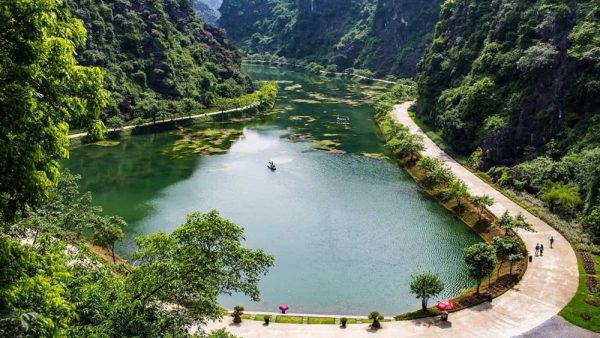
Tuyet Tinh Coc (Am Tien Cave)
A quiet cave-and-pagoda valley next to Hoa Lu, with a green lake, an old…
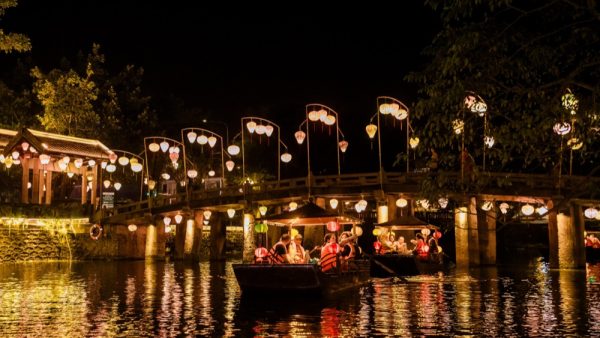
Hoa Lu Ancient Town
A free, lantern-lit walking quarter built in 2022 around Ky Lan Lake in central…

Trang An Grottoes
A UNESCO-listed complex of limestone caves navigated by rowboat through flooded valleys.
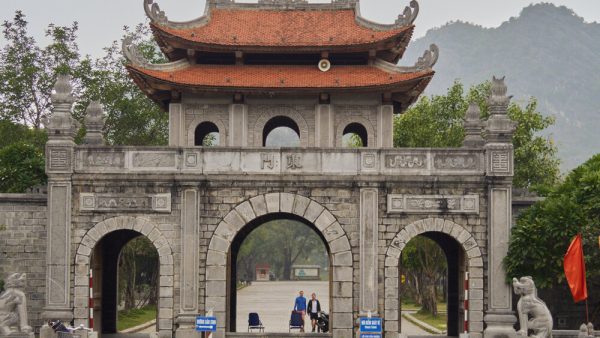
Hoa Lu Ancient Capital
Vietnam's 10th-century imperial capital — explore citadel ruins and twin temples honoring emperors Dinh…