
Last updated: October 2026. Prices below are off-peak fares checked on Vexere, 12Go and operator listings in 2026.
Should I take a sleeper bus in Vietnam?
It’s probably one of the questions I get asked most often.
My answer is almost always the same: at least once.
Whether you love it or hate it, a sleeper bus is part of the Vietnam travel experience. It’s how millions of Vietnamese travel between cities every year, and increasingly it’s one of those experiences international travellers remember long after they’ve gone home.
The biggest reason is practical. Vietnam is a long, narrow country. Instead of losing a full day travelling between Hanoi and Hue, Hoi An and Nha Trang, or Ho Chi Minh City and Da Lat, you board a bus in the evening and wake up at your next stop. You save both travel time and the cost of a night’s accommodation, which is why sleeper buses are still one of the most popular ways to move around the country.
Sleeper bus in Vietnam: the short version
- An economy berth costs about 250,000–380,000 VND ($10–14) on a 6–8 hour route like Hanoi–Sapa or HCMC–Da Lat.
- A cabin (VIP) berth costs roughly 1.5 to 2 times that. On anything over 8 hours overnight, it’s usually worth paying for.
- Most buses have no toilet. They stop every 2–3 hours.
- Pick the operator, not just the price. A company rated 4.5+ on Vexere or Google Maps is a safer bet than the cheapest walk-up bus.
- Book 2–3 days ahead. Around Tet, fares can double or triple and buses sell out.
- Under about 100 km, skip the sleeper and take a limousine van.

Economy sleeper buses
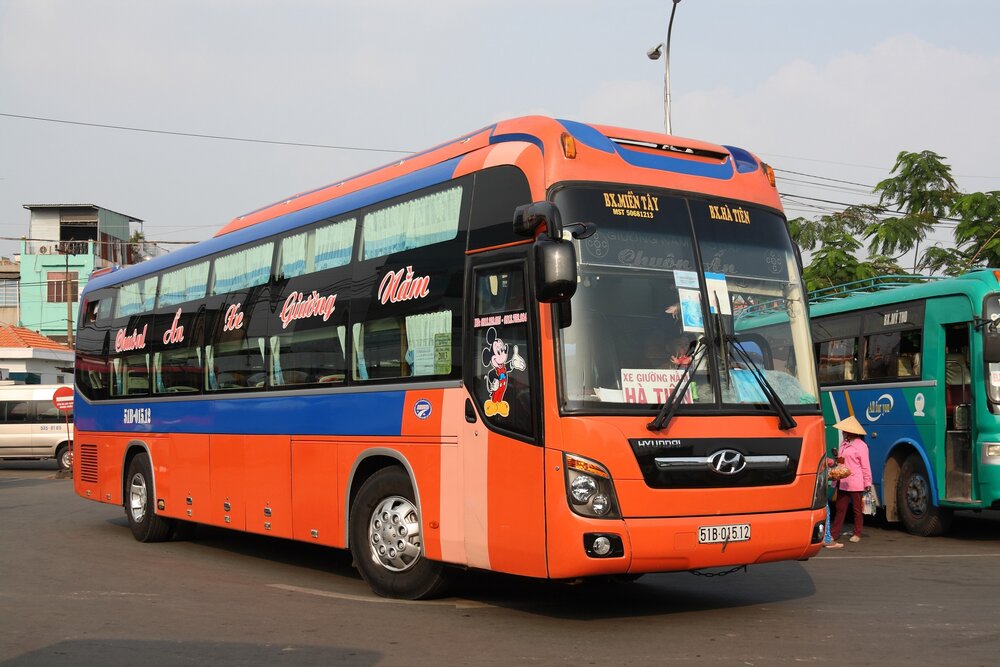
This is the one most people picture when they think of a Vietnam sleeper bus. Usually three rows of bunk-style beds stacked over two levels, with 32, 34, 40 or 44 beds depending on the model. They’re affordable, run on almost every intercity route, and are surprisingly comfortable for most people.
The catch? If you’re taller than about 180 cm (5’11”), you’re unlikely to stretch out fully. The beds were designed around the average Vietnamese passenger, so taller travellers often end up sleeping with their knees slightly bent.
Basics are usually included: a thin pillow, a blanket, a bottle of water, and most newer buses have USB charging ports at each berth. Prices typically run 250,000–380,000 VND (about $10–14) for a 6–8 hour route. Ho Chi Minh City to Da Lat, for example, is around 280,000–370,000 VND depending on the operator.
Cabin (VIP) sleeper buses
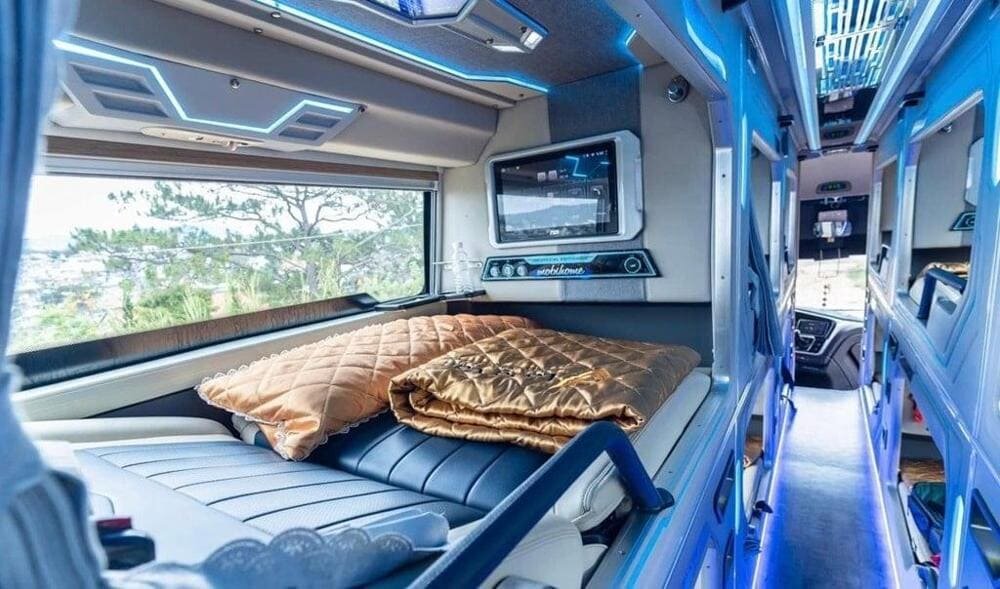
For a step up in comfort, cabin buses have taken over many of the popular routes in the last few years. Instead of open bunks, each passenger gets an enclosed pod with a curtain or sliding door, charging ports, often a small TV screen, and on some buses a massage-function mattress. These buses usually have 20 to 24 cabins instead of 40-odd beds, so there’s also less noise.
Cabins are the better choice if you want privacy or you’re travelling as a couple. Prices depend on the route and on whether you book a single or a double cabin:
- Single cabin: about 400,000–650,000 VND ($15–25) per person on most routes. On Hanoi–Sapa, single cabins were 400,000–500,000 VND in 2026, with lower-deck cabins usually the dearer ones.
- Double cabin: priced for the whole cabin, about 650,000–720,000 VND ($25–27) for two people on Hanoi–Sapa with King Express, G8 Sapa Open Tour or HK Buslines.
Cabins are a little longer than economy berths, but not by much. One HCMC–Da Lat cabin bus lists its pods at 180 x 120 cm, so very tall travellers will still be a bit cramped. Many cabin operators include pickup and drop-off at your hotel. If you’re travelling overnight and value privacy, the extra cost is usually worth it.

Main sleeper bus routes and prices
These are the routes most travellers use, with off-peak fares checked on Vexere, 12Go and operator listings in 2026. Treat them as planning ranges: the same berth can cost a bit more on one booking site than another, and prices jump at Tet and on national holidays.
| Route | Time | Economy berth | Cabin | Operators to look for |
|---|---|---|---|---|
| Hanoi – Sapa | 5.5–7 hrs | 250,000–380,000 VND ($10–14) | 400,000–500,000 VND single; 650,000–720,000 VND double | Sao Viet, Sapa Express, Inter Bus Lines, G8 Sapa Open Tour |
| Hanoi – Ha Giang | 6–7 hrs | 250,000–350,000 VND ($10–13) | about 350,000 VND | Inter Bus Lines, Cat Ba Express |
| Hanoi – Phong Nha | 9–10 hrs | 250,000–450,000 VND ($10–18) | check on Vexere | HK Buslines, G8 Sapa Open Tour |
| Hanoi – Hue | 12–14 hrs | 350,000–500,000 VND ($13–19) | 550,000–650,000 VND single | The Sinh Tourist, Queen Cafe |
| Hanoi – Da Nang | 14–17 hrs | 400,000–550,000 VND ($15–21) | about 700,000 VND single | Futa, The Sinh Tourist, Queen Cafe |
| Hoi An / Da Nang – Nha Trang | 10–12 hrs | 380,000–450,000 VND ($14–17) | about 500,000 VND | Futa (Phuong Trang), Hanh Cafe, An Phu |
| Ho Chi Minh City – Nha Trang | 8–10 hrs | 250,000–390,000 VND ($10–15) | 500,000–560,000 VND | Futa, The Sinh Tourist, Hanh Cafe |
| Ho Chi Minh City – Da Lat | 6–8 hrs | 280,000–370,000 VND ($11–14) | 400,000–450,000 VND | Futa, Thanh Buoi, Kumho Samco |
| Ho Chi Minh City – Mui Ne | 4–5 hrs | 150,000–280,000 VND ($6–11) | about 300,000 VND | Futa, Hanh Cafe |
A few notes on specific routes. For Sapa, compare the bus against the overnight train and the limousine vans in our Hanoi to Sapa guide. On Hanoi–Ha Giang, most night buses arrive around 4 or 5am, so book a homestay that lets you check in early or plan to sit in a café until the loop tours leave. Hue to Hoi An is only 3–4 hours, so a limousine van or a seat bus makes more sense than a sleeper there. And the full Hanoi–Ho Chi Minh City run takes 30 to 40 hours by bus. Almost nobody should do it in one go; break it up or fly.
We’ve ridden the Hanoi routes north to Sapa and Ha Giang and south to Hue and Da Nang, in both upper and lower cabins. A cabin from Hanoi to Ha Giang costs about 350,000 VND.
On the road: what to expect
Most sleeper buses don’t have toilets. Drivers stop every two to three hours at roadside service areas, long enough to use the bathroom and grab food, so it’s rarely a serious problem, but worth knowing before you board. A few newer buses do have one (Sao Viet’s 40-berth buses on Hanoi–Sapa, for example). On Vexere, look for “WC” in the bus description.
When you board, you’ll be asked to take your shoes off. The staff hand you a plastic bag for them, and you carry them to your berth. Big bags go in the hold under the bus; keep a small bag with your passport, phone and wallet with you in the berth.
The air-conditioning is usually set very cold, even in the south. Bring a warm layer.
Are sleeper buses in Vietnam safe?
Mostly, yes, but the operator matters more than anything else. Vietnamese news regularly reports sleeper bus crashes, often at night or on mountain passes, and overloaded buses around Tet. Vietnam’s Ministry of Construction has since asked road and registration authorities to tighten checks on companies that run night buses, including emergency exits.
Some operators have solid safety records and professional drivers; others are known for speeding or stopping often to pick up extra passengers. A slightly cheaper ticket isn’t always the best deal. What we’d do:
- Book a company with a 4.5+ rating and plenty of recent reviews on Vexere or Google Maps. Futa Bus Lines, Hoang Long, Sao Viet and Inter Bus Lines are good starting points.
- Be wary of the cheapest unnamed bus sold at a hotel desk or on the street.
- Wear the seat belt if your berth has one.
- On mountain routes (Sapa, Ha Giang, Da Lat), a daytime bus is a reasonable choice if night driving worries you.
- Avoid travel in the days right before and after Tet if you can; that’s when buses are most crowded.
Which berth should you pick?
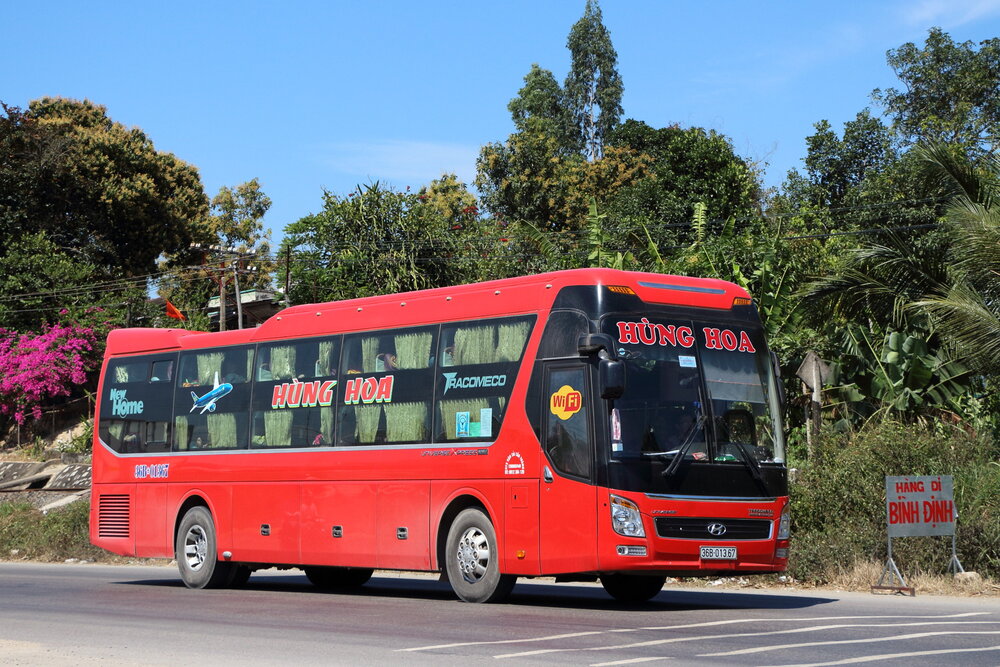
On an economy bus, the lower deck sways less and is easier to climb out of at rest stops. The upper deck has better window views and a bit more privacy, but you’ll feel every bend more, which matters on the roads to Sapa, Ha Giang and Da Lat.
Avoid the back row if you can. It’s usually five berths side by side over the engine, and it’s the bumpiest part of the bus.
Our honest take: we’ve slept in both upper and lower cabins, and the lower ones are clearly more stable. Book a lower berth near the front, close to the driver, where the ride is smoothest. It often costs a little more, and it’s worth it.
If you’re tall, ask whether the operator has longer “VIP” pods on that route, and book a cabin rather than an economy berth.
What to pack for a sleeper bus
- A hoodie or light jacket for the air-con
- Socks, since you’ll be shoeless
- Eye mask and earplugs (the driver uses the horn a lot)
- Motion sickness tablets for mountain routes
- Snacks and some water, since stops can be far apart at night
- Small cash in VND for rest-stop food and toilets
- A power bank, in case your berth’s USB port doesn’t work
When a sleeper bus is not the right call
For trips under about 100 km, skip it. Vietnam has comfortable minibuses and limousine vans (9 to 28 seats, plush reclining seats, charging outlets, sometimes individual screens) that are quicker and better suited to short routes, typically 100,000–200,000 VND ($4–8). Hanoi to Ninh Binh is a good example: it’s about two hours, so there’s no reason to book a full sleeper bus.
On the long north–south legs, compare the bus with the train or a flight too. The overnight train costs more, but you get more space and a proper toilet. Our guide to transportation in Vietnam compares the options.
How to book a sleeper bus in Vietnam
- Book 2–3 days ahead, especially on popular routes like HCMC–Da Lat or Hanoi–Sapa, where seats fill up fast on weekends and public holidays. Around Tet and national holidays, book a week or more ahead and expect fares to double or triple.
- Always confirm which type you’re booking. Economy and cabin buses are sold side by side on most platforms, and the difference isn’t always obvious from the listing title.
- Vexere is the most widely used booking platform for domestic bus travel, with an English version and seat maps for most routes. 12Go is easier to use if you also want to compare trains and flights.
- Check the pickup point. Many buses leave from an operator’s office in town rather than the main bus station, and some pick up from Old Quarter hotels.
- Keep a screenshot of your booking confirmation. On many routes, that’s your ticket.
- Booking at your hotel desk is easy, but expect to pay more than online. See our list of common scams in Vietnam for the usual tricks.
Is it worth it?
Absolutely, though not because it’s luxurious, and not because you’ll necessarily get your best night’s sleep.
It’s worth it because of the experience itself. You climb aboard in one city, watch the lights fade through the window, drift in and out of sleep, stop at a roadside café somewhere in the middle of the night, and wake up somewhere entirely different. Efficient, affordable, and a little chaotic at times.
In other words, it’s all part of travelling in Vietnam.
Sleeper bus FAQ
How much is a sleeper bus in Vietnam?
An economy berth costs about 150,000–280,000 VND ($6–11) on short routes like HCMC–Mui Ne, 250,000–380,000 VND ($10–14) on 6–8 hour routes like Hanoi–Sapa, and 350,000–500,000 VND ($13–19) on long routes like Hanoi–Hue. Cabin berths cost roughly 1.5 to 2 times more.
Do sleeper buses in Vietnam have toilets?
Most don’t. Buses stop every 2–3 hours at service areas with toilets. A few newer buses on routes like Hanoi–Sapa have one onboard; look for “WC” in the listing when you book.
Are sleeper buses in Vietnam safe?
Generally yes, if you pick a reputable operator. Choose companies with strong recent reviews on Vexere or Google Maps, wear the seat belt if there is one, and be careful around Tet, when buses are most crowded.
Is a cabin bus worth the extra money?
On overnight trips of 8 hours or more, usually yes. You get a door or curtain, more space and less noise for roughly 1.5 to 2 times the economy fare. On short daytime trips, the economy berth is fine.
Can I bring a big suitcase on a sleeper bus?
Yes. Large bags go in the hold under the bus at no extra charge on most operators. Keep valuables in a small bag with you in your berth.
Sleeper bus or overnight train?
The bus is cheaper and goes to places the train doesn’t, like Sapa town, Ha Giang, Da Lat and Phong Nha. The train has more space and real toilets, which makes it the more comfortable choice on routes like Hanoi–Hue.
Have you taken a sleeper bus here? Drop a comment below, whether it was one of your favourite travel memories or one you’d rather forget.
Read more
- Hanoi to Sapa: train, bus, van or car?
- Transportation in Vietnam: complete guide
- How to avoid transport scams in Vietnam
- Ha Giang travel guide
- Da Lat travel guide
Tours & activities in Vietnam
Activity links above are affiliate or partner links.