
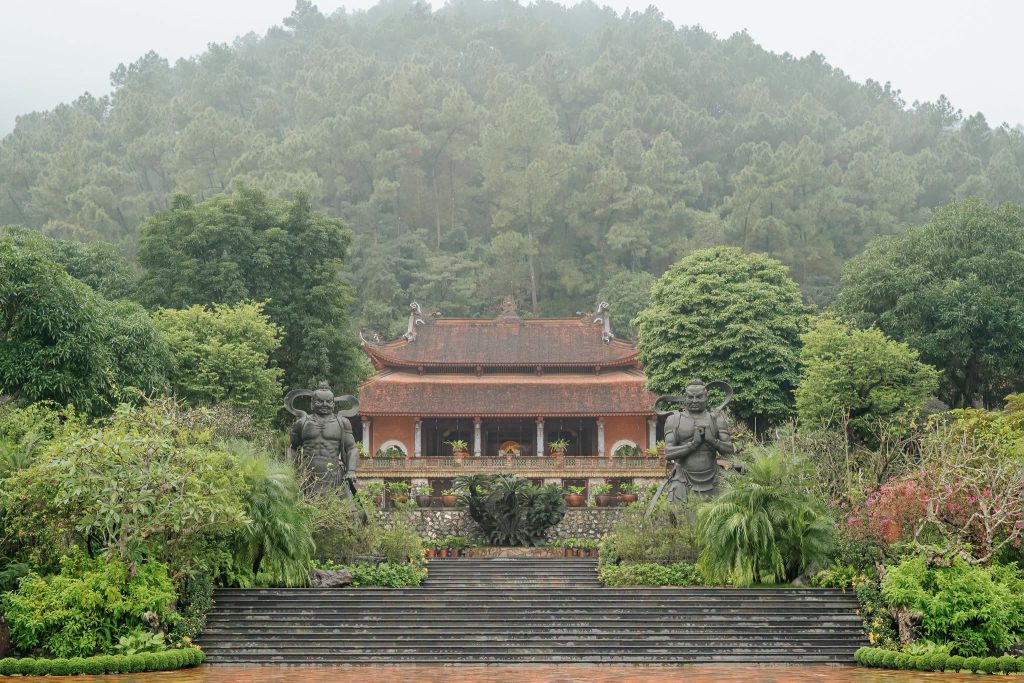
Dia Tang Phi Lai Pagoda (Chùa Địa Tạng Phi Lai, also called Dung Pagoda) is a Buddhist temple about 70 km south of Hanoi, in Thanh Binh commune, Ninh Binh Province. It suits travelers who want a calm half day away from crowds and are happy with a working monastery instead of a big attraction. Entry is free, and the temple is open daily from roughly 6:00 or 6:30 to 18:00 or 18:30. Allow 1.5 to 2 hours each way by road from Hanoi, and pair it with Tam Chuc Pagoda if you want a full day.
Quick facts
| Item | Detail |
|---|---|
| Names | Chùa Địa Tạng Phi Lai (Dia Tang Phi Lai Tu), also Chùa Đùng (Dung Pagoda) |
| Current address | Dung hamlet (Ninh Trung hamlet in older sources), Thanh Binh commune, Ninh Binh Province |
| Old address (still on many sites) | Liem Son commune, Thanh Liem district, Ha Nam Province |
| Distance from Hanoi | About 70 km, 1.5 to 2 hours by road |
| Entry | Free, donations optional |
| Hours | About 6:00 or 6:30 to 18:00 or 18:30 daily (sources differ). The hill path behind the temple closes earlier, around 16:30 |
| Time needed | 2 to 3 hours at the pagoda |
| Best for | Quiet sightseeing, photography, a slow morning, Buddhist culture |
| Skip if | You want big monuments, English signs or a restaurant on site |
Looking for the short version? See the Dia Tang Phi Lai Pagoda attraction page in our Ninh Binh section.
Is it in Ha Nam or Ninh Binh?
Both names appear online, and that confuses many trip plans. Ha Nam Province was merged into Ninh Binh Province in mid-2025, and the new province started operating on 1 July 2025. The local communes were merged too: Liem Son, Liem Thuan and Liem Tuc became Thanh Binh commune. Airline guides, news articles and booking pages written before the change still say Liem Son, Thanh Liem district, Ha Nam.
For a taxi, a driver or a map, search the Vietnamese name, Chùa Địa Tạng Phi Lai, rather than an address. Old and new addresses point to the same temple.
How to get there from Hanoi
| Option | Time | What to know |
|---|---|---|
| Car with driver | 1.5 to 2 hours | The easiest choice. The driver can wait, and the route can include Tam Chuc. Ask for a quote; prices vary by operator |
| Private day tour | About 10 hours | Usually combines Tam Chuc and Dia Tang Phi Lai, often with a guide and lunch. Check what is included |
| Bus plus taxi | Longer, variable | Buses from Giap Bat or My Dinh stations go to the Thanh Liem area. The last stretch needs a taxi or motorbike taxi |
| Train plus taxi | About 50 minutes to Phu Ly, then a taxi | Phu Ly is about 15 to 20 km from the pagoda. Check current fares on the Vietnam Railways booking sites |
| Motorbike | About 2 hours or more | Experienced riders with a valid license only. Older highways are slower than the expressway. See our motorbike license guide |
A private car is the practical pick for most visitors, because public transport ends some distance from the gate. For a private driver, send a request on our transport booking page. The closest listed tour is the Ninh Binh Day Tour from Hanoi, a group tour that does not visit this pagoda.
What it costs
There is no ticket. Costs are small and mostly local. Conversions use about 26,000 VND per US dollar and are approximate.
| Item | VND | Approx. USD |
|---|---|---|
| Entry | Free | $0 |
| Parking at a nearby house | About 10,000 | About $0.40 |
| A bowl of noodles at stalls near the gate | About 30,000 | About $1.15 |
| Donation | Optional | Your choice |
| Budget hotel in Phu Ly (Hoa Dong Hotel) | 200,000 to 600,000 | About $8 to $23 |
| Upper hotel in Phu Ly (Muong Thanh Luxury Ha Nam, Melia Vinpearl) | 800,000 to 1,200,000 | About $31 to $46 |
Most visitors do this as a day trip from Hanoi. Phu Ly and Ninh Binh city, 15 to 20 km away, have the nearest hotels.
What to see
The white pebble courtyard. The main courtyard is paved with white pebbles instead of the usual red brick. In the yard in front of the ancestral hall, 12 circles in the pebbles stand for the Twelve Links of Dependent Origination, a Buddhist teaching on how suffering and rebirth are connected. Walk on the dark stone tiles, not the gravel.
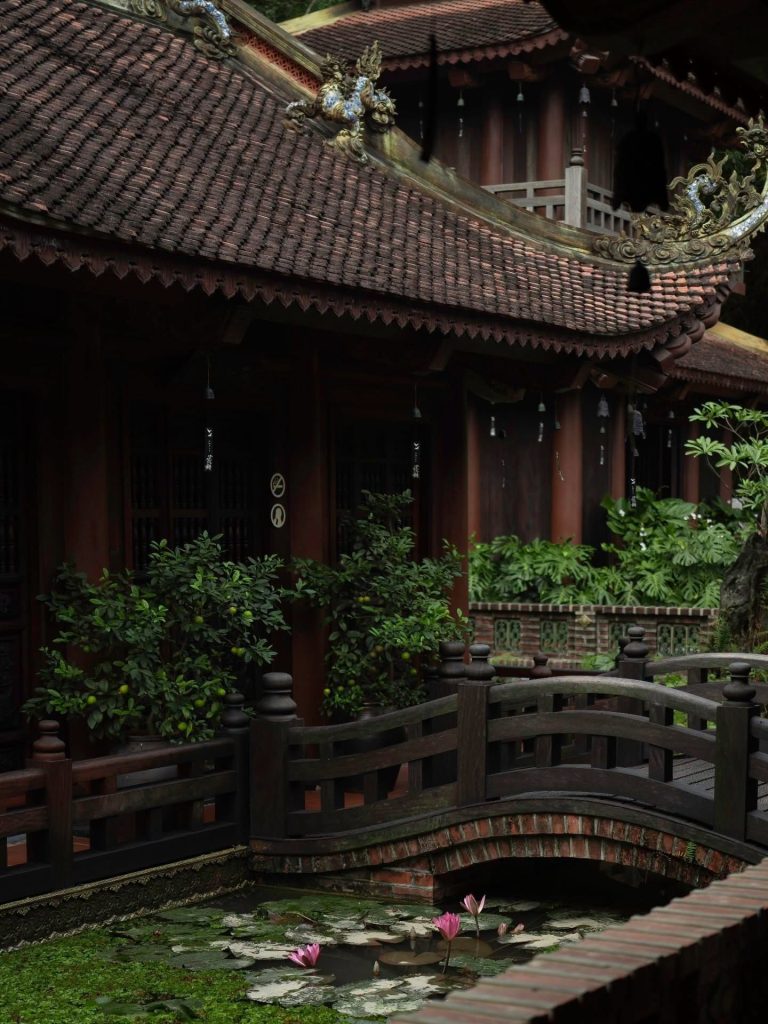
Tam Bao Hall. The main hall holds statues of Shakyamuni Buddha and Ksitigarbha (Địa Tạng in Vietnamese), the bodhisattva the temple is named for. The buildings follow a Northern Vietnamese style with curved tile roofs and carvings of lotus, dragons and birds. The wood is left natural, without gold lacquer.
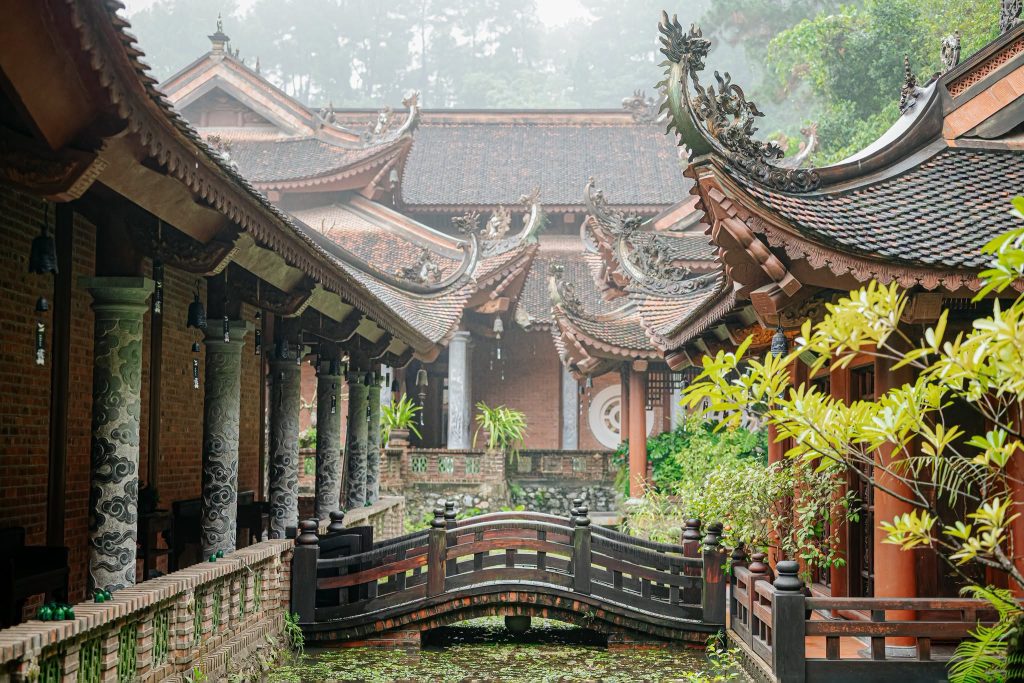
Ancestral hall and Pho Dong Tower. The ancestral hall honors more than 40 generations of abbots, and the tower holds relics of earlier abbots. A small shrine nearby honors Avalokitesvara (Quan The Am).
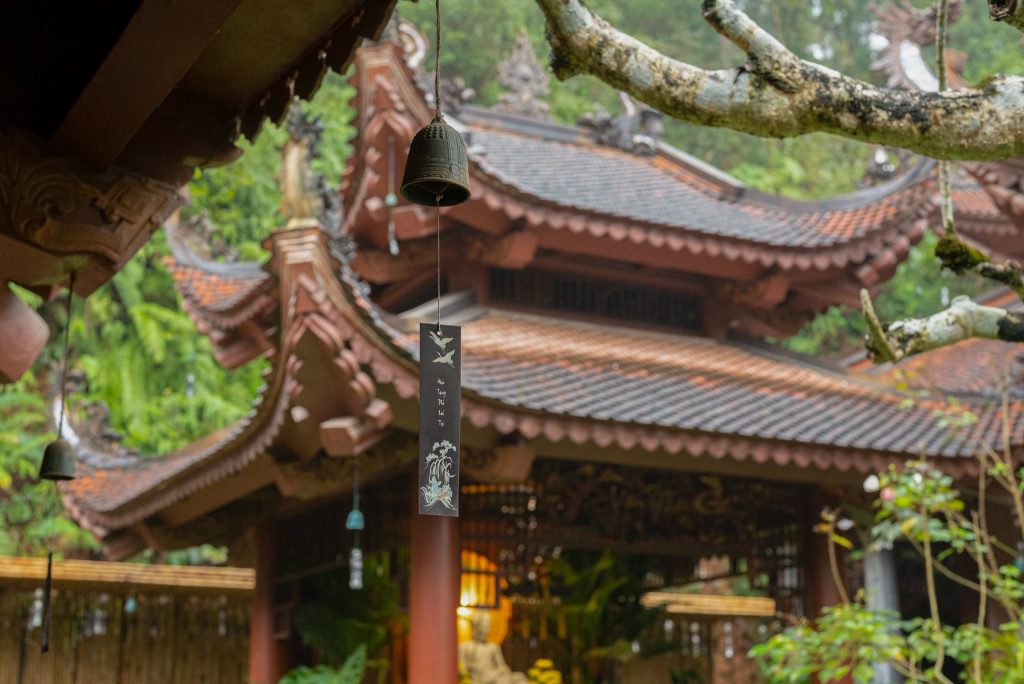
Gardens, ponds and wind chimes. The grounds include lotus ponds, herb and fruit gardens, and quiet corners with seats. Wind chimes hang in the halls and along a corridor behind the main area, which is the temple’s best-known photo spot.
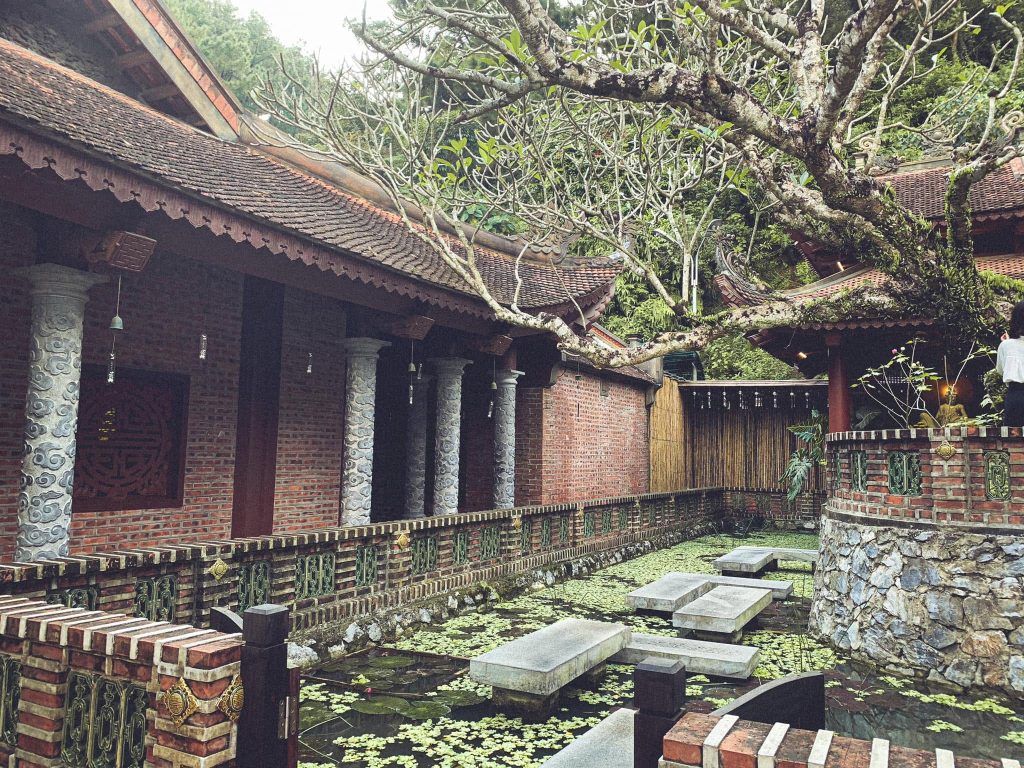
The hill path. A path behind the temple climbs through pines past meditation gardens and small hermitages to a high point with a view back over the roofs. One source puts the climb at about 10 minutes, another mentions hundreds of stone steps. The trail is unsigned, so wear flat, grippy shoes.
Handwritten sutras. Devotees hand-copy the Ksitigarbha sutra and send it to the temple. In February 2020, 49,000 copies were enshrined in the Ksitigarbha tower. The abbot has said copying is meant to help people read, understand and apply the teachings, not to collect merit.
A short history
The site began as Dung Pagoda, which local accounts place in the 11th century (one state news piece says the 10th). Local stories link it to King Tran Nghe Tong, who is said to have retreated here, and to King Tu Duc, who is said to have prayed here for an heir. These are traditions, not documented in detail.
The buildings decayed over several centuries. In December 2015, Venerable Thich Minh Quang became abbot, rebuilt the complex and renamed it Dia Tang Phi Lai. It was recognized as a provincial-level historical and cultural relic in 2017.
The name uses Địa Tạng (Ksitigarbha) plus Phi Lai. A common reading is that the bodhisattva comes to help all beings without being invited. Other readings exist, so treat the meaning as interpretive.
Visiting etiquette
- Dress modestly, with shoulders and knees covered. Robes are usually available at the entrance if you arrive in shorts or a sleeveless top.
- Keep your voice low and move slowly. This is an active practice site, not a tourist park.
- Do not enter the monks’ and nuns’ quarters, and do not ring bells or play instruments without permission.
- Nothing is sold inside, and there are no fortune-tellers. If you want to make an offering such as fruit or cakes, bring it.
- Overnight stays are only for registered retreat participants. Volunteering for several days can be arranged with the nuns.
- Ask before photographing people at prayer.
Food
Sources disagree. One local guide says free vegetarian noodles or pho are served at lunch and nearby stalls sell portions for about 30,000 VND. Another says there are no restaurants nearby and suggests bringing snacks, or asking the temple in advance about a vegetarian meal. Bring snacks and water to be safe. For a proper meal, Phu Ly has local dishes such as field-fish noodle soup and Phu Ly rolled cake.
Best time to visit
The temple is open all year. Weekdays are quietest. Weekends, Lunar New Year (including the country market in the first lunar months), the 1st and 15th of each lunar month, the Vu Lan festival in the seventh lunar month and Mid-Autumn are busiest. During festivals you may need to park about 1 km away and walk. Spring and autumn bring cooler, clearer weather. For dates, see our festivals and public holidays guide.
Combine it with Tam Chuc Pagoda
Tam Chuc is a very large temple and lake complex about 30 to 40 km away, and it is now in Tam Chuc Ward, Ninh Binh Province. The usual plan is Tam Chuc in the morning and Dia Tang Phi Lai after lunch, or the reverse. Day tours from Hanoi take about 10 hours. Tam Chuc has extra costs for the electric shuttle or boat inside the complex, so check prices before you go.
For a bigger loop, Ninh Binh’s limestone karsts and the wider Ninh Binh destination page are the natural next stops. If you prefer a temple closer to Hanoi, see Thay Pagoda and our 20 things to do in Hanoi.
Who should go, and who should skip
Go if you like quiet places, gardens, simple architecture and a slow pace, or if you have already seen Hanoi’s main sights and want a half-day trip out of the city.
Skip if you have only one or two days in Hanoi, want large monuments, need English signs (most information is in Vietnamese) or want food and entertainment close by. In that case Tam Chuc or the Ninh Binh karsts give more to see per hour.
Sample day from Hanoi
- 7:30 Leave Hanoi by car.
- 9:00 to 9:30 Arrive. Walk the courtyard and halls, then the hill path.
- 12:00 Lunch in Phu Ly or at the stalls near the gate.
- 13:30 Tam Chuc Pagoda, if you are combining the two.
- 17:00 Drive back, arriving in Hanoi in the early evening.
For a longer plan around the capital, see our Hanoi itinerary ideas and the Hanoi destination page.
Request a private car from Hanoi
Need a driver for this route? Use the “Send a Transport Request” form on our transport booking page. Include your travel dates, pickup point in Hanoi, group size and whether you want to add Tam Chuc. A WhatsApp number is optional and gets a faster reply, and the team aims to answer within 24 hours. The page lists private transfers priced per vehicle (a sedan seats up to 3 guests), for example Hanoi to Ninh Binh from $45, but this pagoda and Tam Chuc are not listed routes. Ask for a custom quote for a return trip with waiting time. To compare buses and trains instead, the same page links to 12Go, Baolau and Vexere.
FAQ
How far is Dia Tang Phi Lai Pagoda from Hanoi?
About 70 km, or 1.5 to 2 hours by road depending on traffic and route.
Is there an entrance fee?
No. Entry is free and donations are optional. Parking at nearby houses costs about 10,000 VND.
Is the pagoda in Ha Nam or Ninh Binh?
It is now in Ninh Binh Province, in Thanh Binh commune. Many older pages still list Ha Nam because the provinces merged in 2025.
What are the opening hours?
Roughly 6:00 or 6:30 to 18:00 or 18:30 every day. The hill path behind the temple closes earlier, around 16:30. Hours can change on festival days.
Can I visit Dia Tang Phi Lai and Tam Chuc in one day?
Yes. Operators run day trips of about 10 hours from Hanoi that cover both.
Can tourists stay overnight?
Only registered retreat participants and volunteers who arrange it with the nuns can stay. Most visitors stay in Phu Ly or Ninh Binh.
What should I wear?
Modest clothing that covers shoulders and knees, and flat shoes. Robes are usually available at the entrance.
Tours & activities in Vietnam
Activity links above are affiliate or partner links.