
Hanoi is older and slower than Saigon. Most of its main sights sit within a few kilometres of Hoàn Kiếm Lake, and many of them close by 5pm, so the city rewards early starts and long evenings.
This list is about what to do, not just what to look at: the history sites worth getting up early for, the museums that fill a hot afternoon, the food and coffee the city is known for, what to do after dark, and two easy day trips. If you only want the headline landmarks, our 15 must-visit attractions in Hanoi is the shorter version.
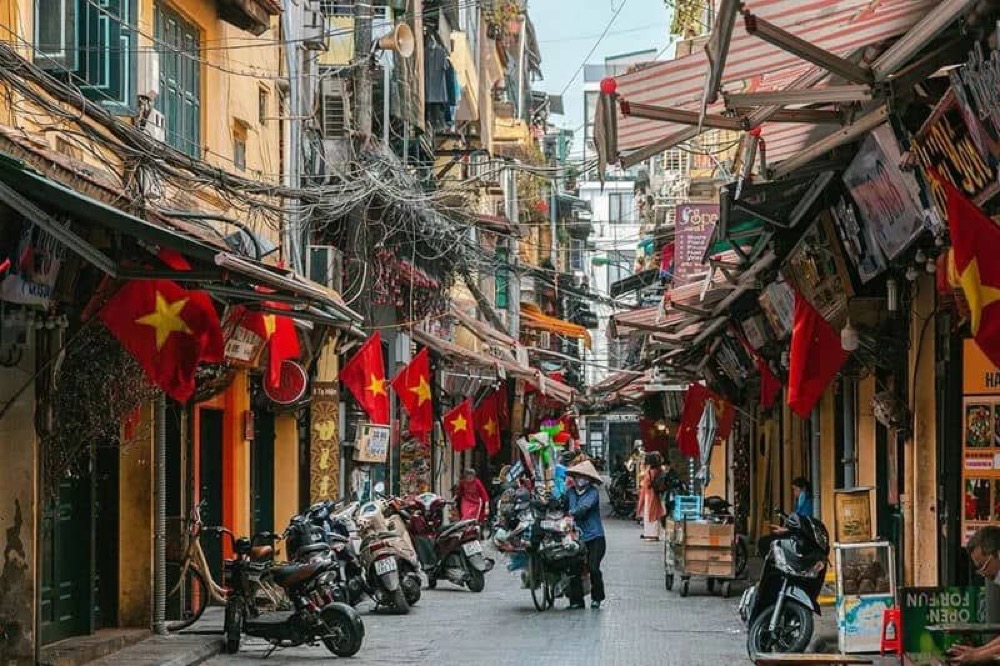
History and culture
1. Ho Chi Minh Mausoleum and Ba Đình Square
Start at the Ho Chi Minh Mausoleum, where the embalmed body of Vietnam’s founding leader lies in a granite hall on Ba Đình Square, the spot where he declared independence on 2 September 1945.
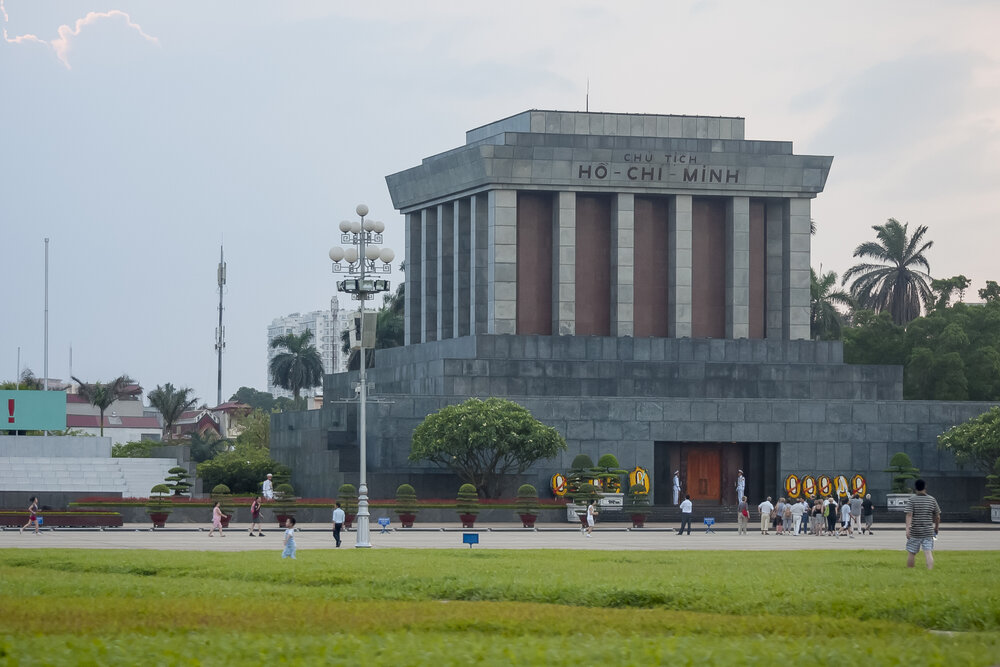
Entry is free, but the rules are strict. It opens in the morning only, is closed on Mondays and Fridays, and shuts for maintenance for a couple of months most years, so check before you plan your day around it. Shoulders and knees must be covered, bags and cameras go to the cloakroom, and you file past in silence.
Afterwards, walk through the grounds to Ho Chi Minh’s stilt house and the Ho Chi Minh Museum (VND 40,000 each) and the tiny One Pillar Pagoda next door.
2. Temple of Literature
The Temple of Literature was built in 1070 as a temple to Confucius, and in 1076 it became the site of Vietnam’s first university.
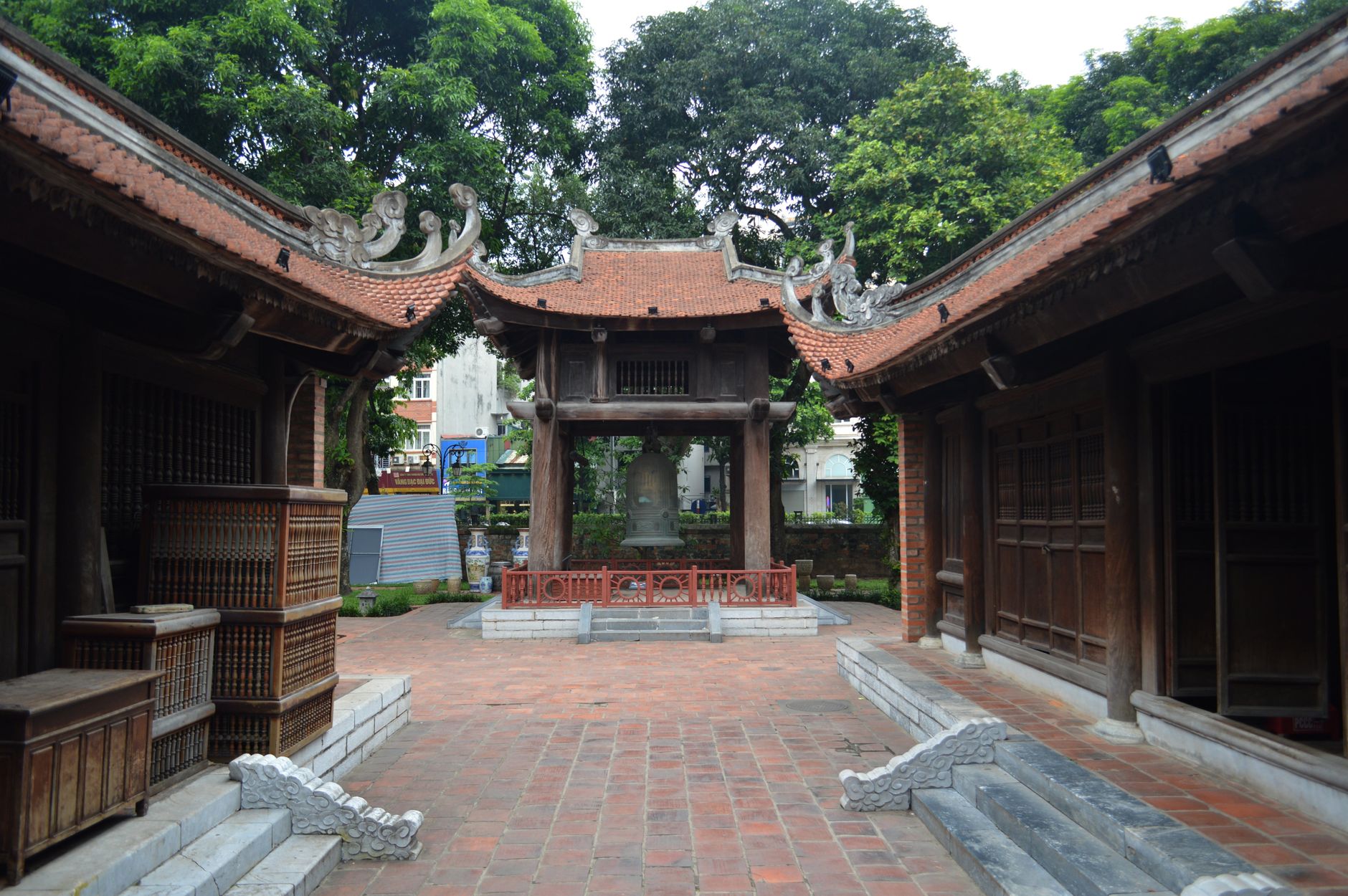
You walk through five walled courtyards. The third holds 82 stone stelae mounted on stone turtles, carved with the names of scholars who passed the royal exams between 1442 and 1779. Tickets are VND 70,000 for adults and free for under-16s. It is almost all outdoors, so go early; in spring you will see students in graduation gowns posing for photos.
3. Hoa Lo Prison
The French built Hoa Lo Prison in the late 1890s to hold Vietnamese political prisoners. During the American war it held captured US pilots, who called it the “Hanoi Hilton”.
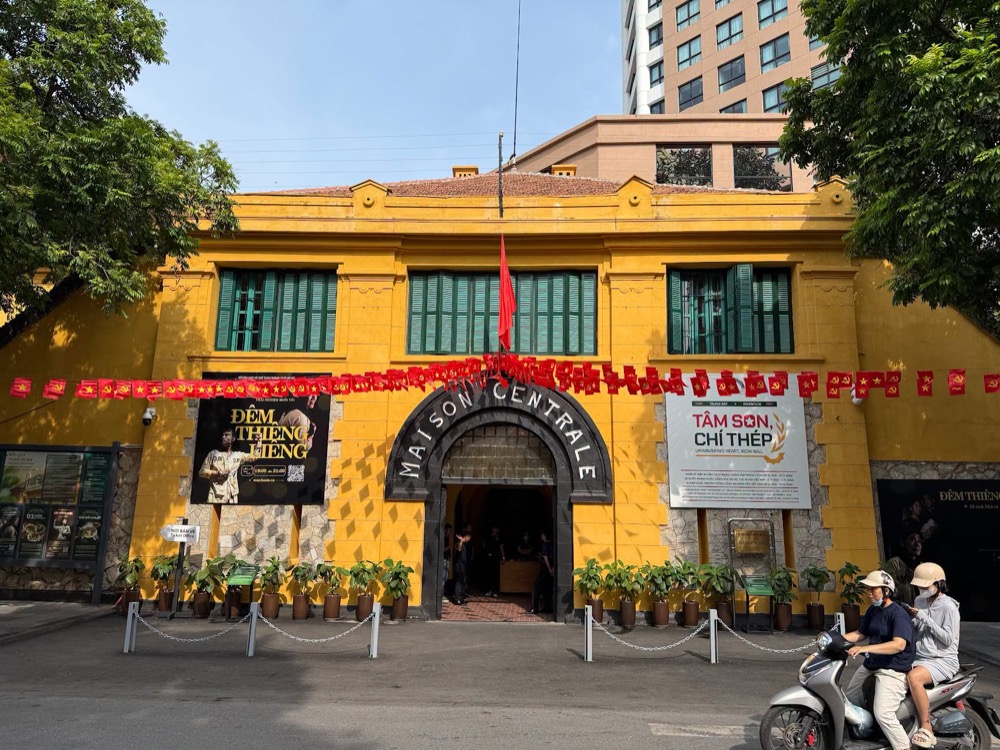
Only part of the original prison survives, but it includes the cramped communal cells, a French guillotine and the flight suit of John McCain, who was held here after being shot down over Hanoi in 1967. The museum tells the story from the Vietnamese side. Tickets are VND 50,000 and free for under-16s. It is at its quietest first thing in the morning; allow an hour.
4. Imperial Citadel of Thang Long
The Imperial Citadel of Thang Long was the seat of Vietnamese dynasties for more than a thousand years and became a UNESCO World Heritage Site in 2010.
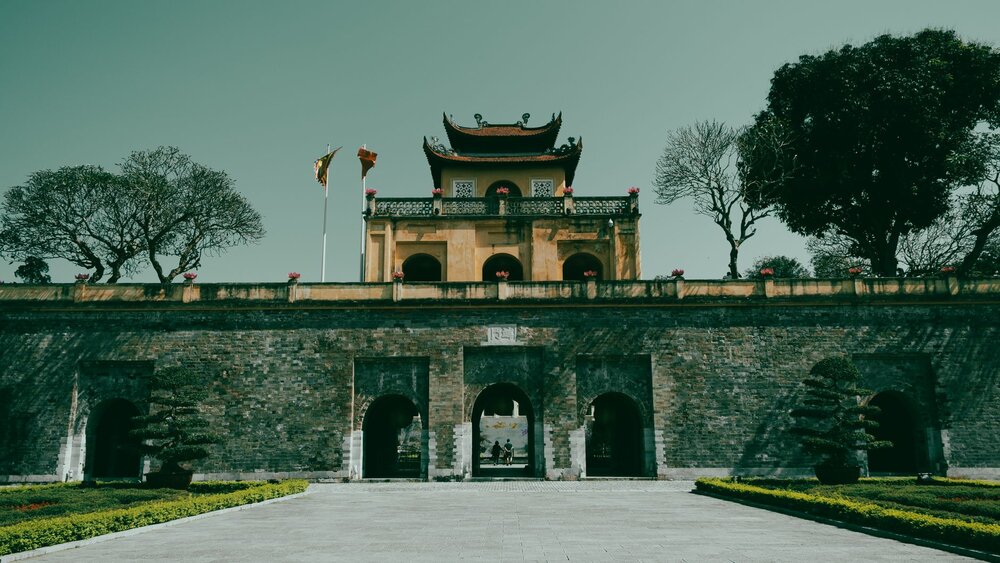
Most of the palaces are gone. What remains is the Đoan Môn gate, the dragon-carved steps of the Kính Thiên palace, and the D67 bunker, from which North Vietnam’s generals ran the war. Across Hoàng Diệu street, an excavation site shows palace foundations going back to the 7th century. It is a 10-minute walk from the mausoleum, so do both in one morning.
Museums worth an afternoon
Hanoi’s museums are the best way to spend the hottest or wettest hours of the day. Most close between 4:30 and 5pm, and some close for lunch, so start by 2pm.
5. Vietnam Museum of Ethnology
If you visit one museum in Hanoi, make it the Vietnam Museum of Ethnology in Cầu Giấy, about 30 minutes west of the Old Quarter by Grab.
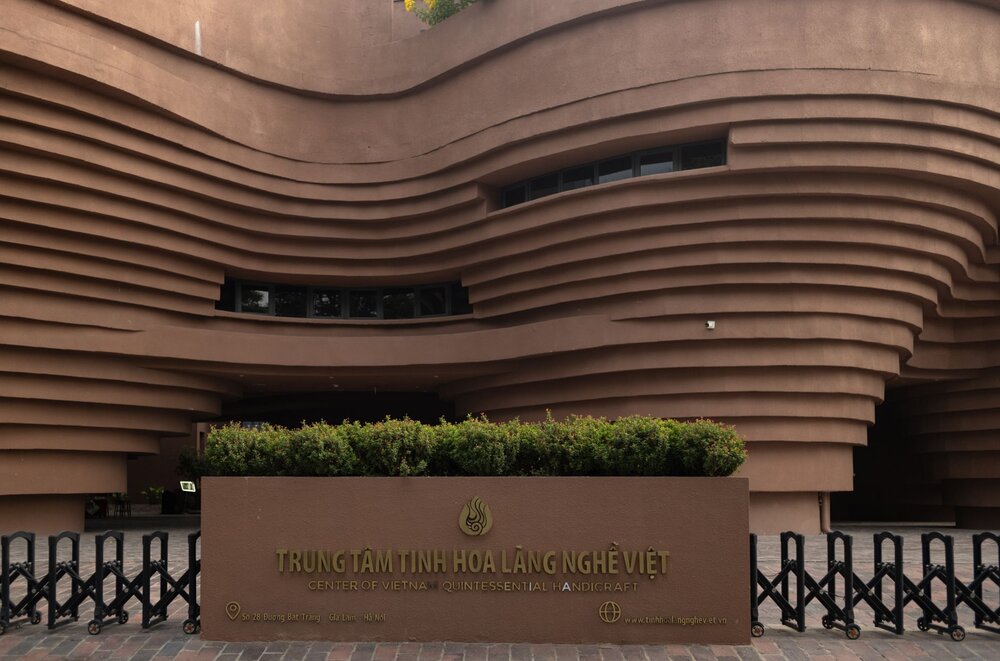
Indoors, three floors cover the daily life, crafts and ceremonies of Vietnam’s 54 ethnic groups. Outside, the garden holds full-size houses built by craftsmen from each community, including a tall communal house from the Central Highlands that you can climb into. Tickets are VND 40,000 and free for under-6s. Go on a dry day so you can spend time in the garden; there is a café on site.
6. Vietnamese Women’s Museum
The Vietnamese Women’s Museum, ten minutes’ walk south of Hoàn Kiếm Lake, covers marriage, family, war and work across four air-conditioned floors.
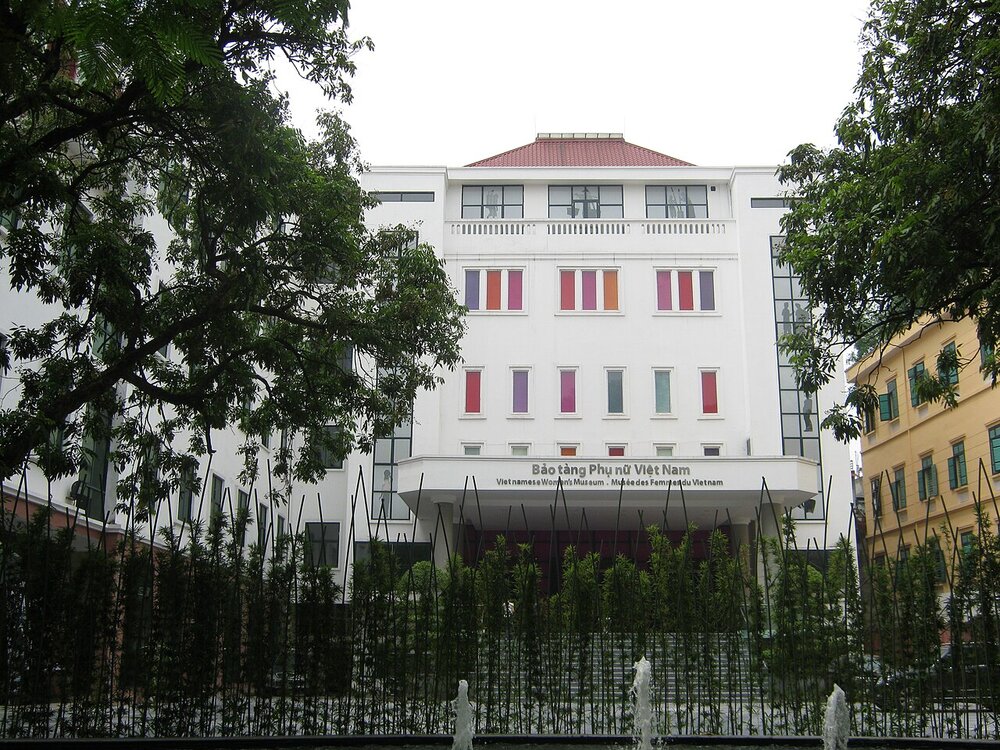
The galleries on Hanoi’s street vendors and on women who fought in the wars are the strongest, and the top floor has clothing and silver jewellery from ethnic minority groups. Labels are in Vietnamese, English and French. Tickets are VND 40,000; allow 1.5 hours.
7. Vietnam National Fine Arts Museum
The Vietnam National Fine Arts Museum is across the road from the Temple of Literature, which makes it easy to pair the two.
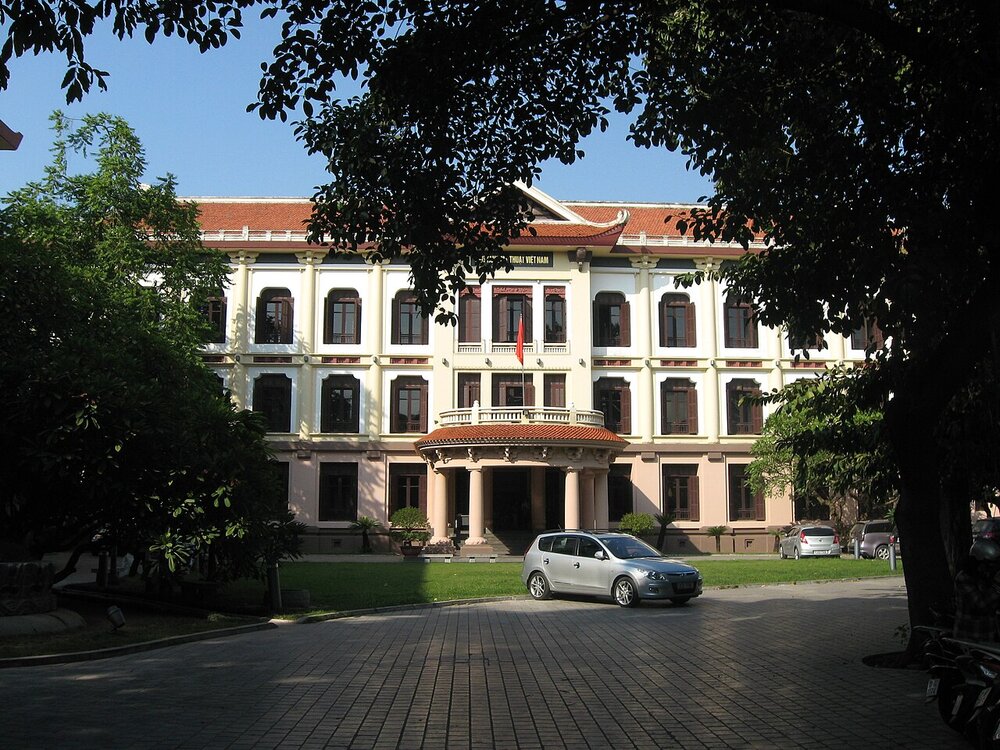
The collection runs from prehistoric bronzes and carved wooden Buddhas from northern pagodas to 20th-century lacquer and silk paintings, which are the highlight. It is air-conditioned and rarely busy. Tickets are VND 40,000 for adults and VND 10,000 for children aged 6 to 15; allow about 2 hours.
8. Vietnam Military History Museum
The Vietnam Military History Museum moved in November 2024 from its old home near the Citadel to a much larger site west of the centre.
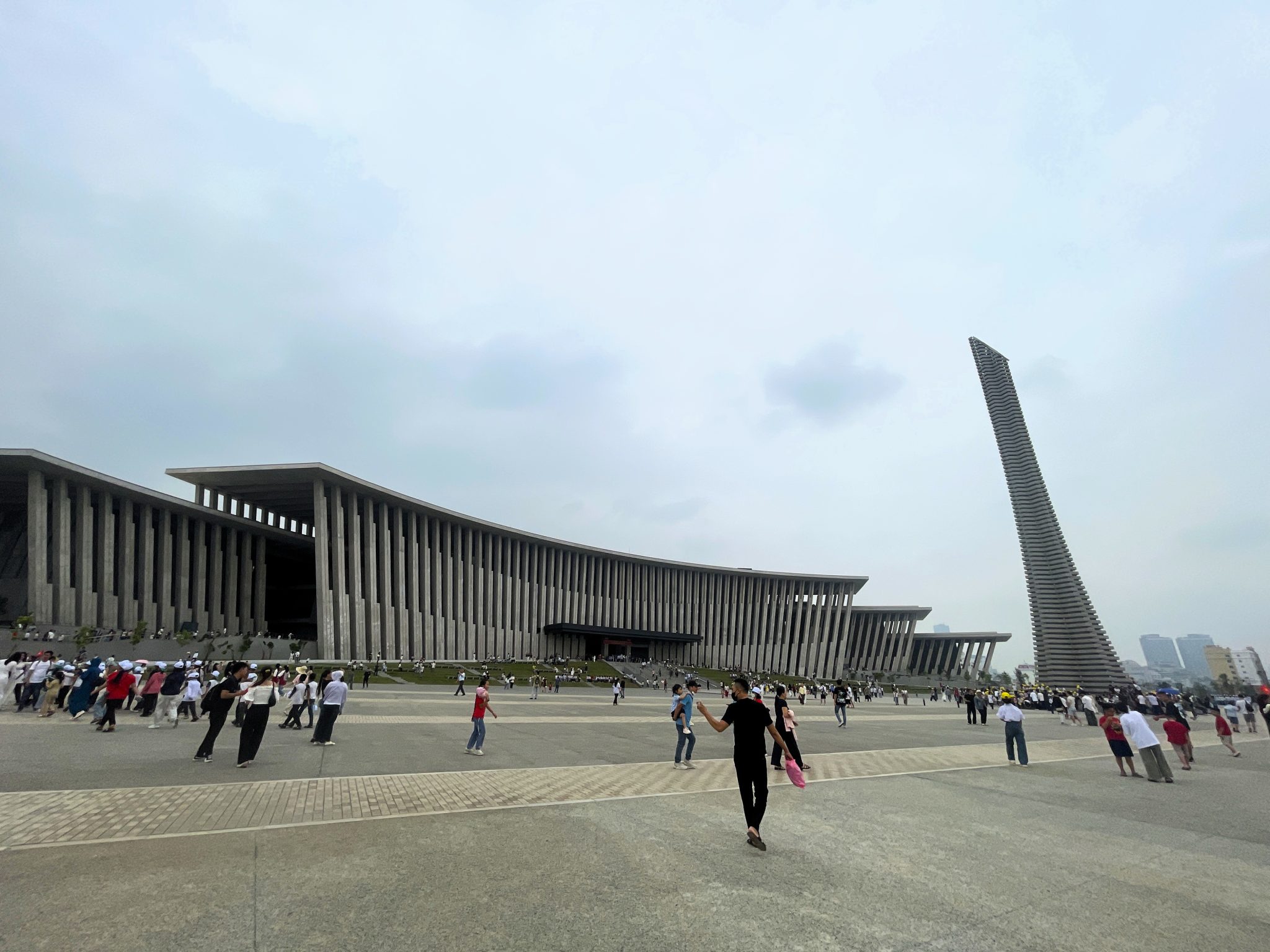
Parts of the new site are still being finished, but the outdoor displays of aircraft, tanks and artillery are already open. Tickets are VND 40,000, free for under-16s and over-80s. It is a long ride from the Old Quarter, so combine it with the Museum of Ethnology, which is on the same side of the city.
9. B-52 Victory Museum and Hữu Tiệp Lake
The small, free B-52 Victory Museum covers the 12 days of US bombing over Hanoi in December 1972, with B-52 wreckage, a MiG-21 and SAM-2 missiles in its courtyard.
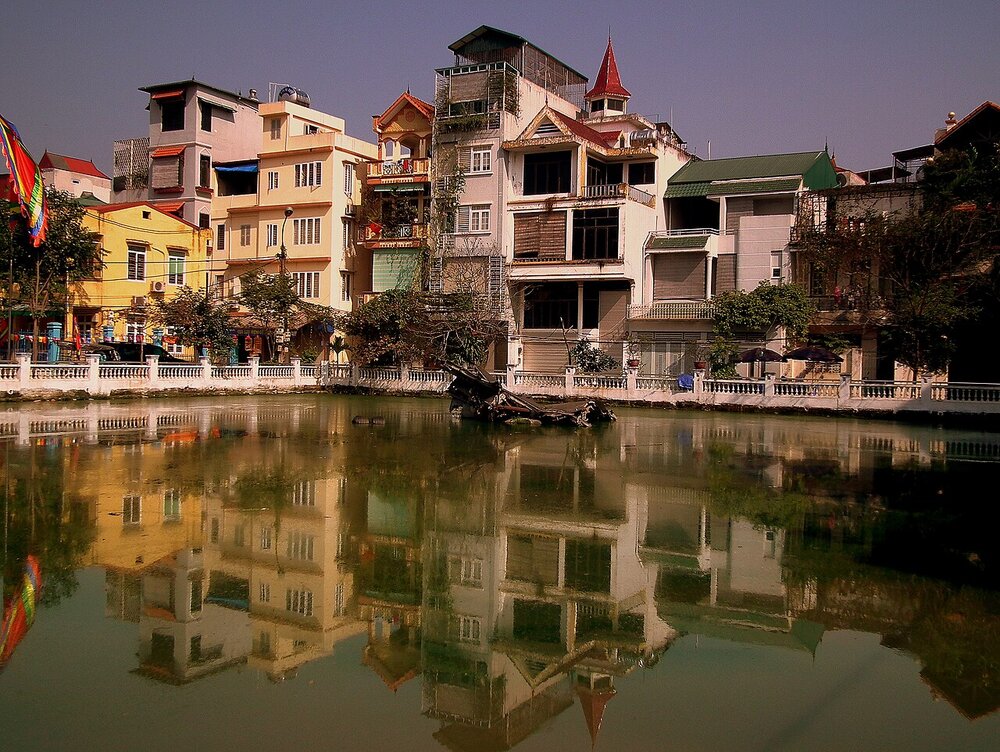
The more striking sight is a short walk away. In Hữu Tiệp Lake, a neighbourhood pond in Ngọc Hà, the wreckage of a B-52 shot down on 27 December 1972 still sits in the water, surrounded by houses. It takes 15 minutes, costs nothing, and is one of the strangest sights in the city.
Lakes, streets and landmarks
10. Walk around Hoàn Kiếm Lake
Hoàn Kiếm Lake is the centre of Hanoi, and a walk around it takes about 30 minutes.
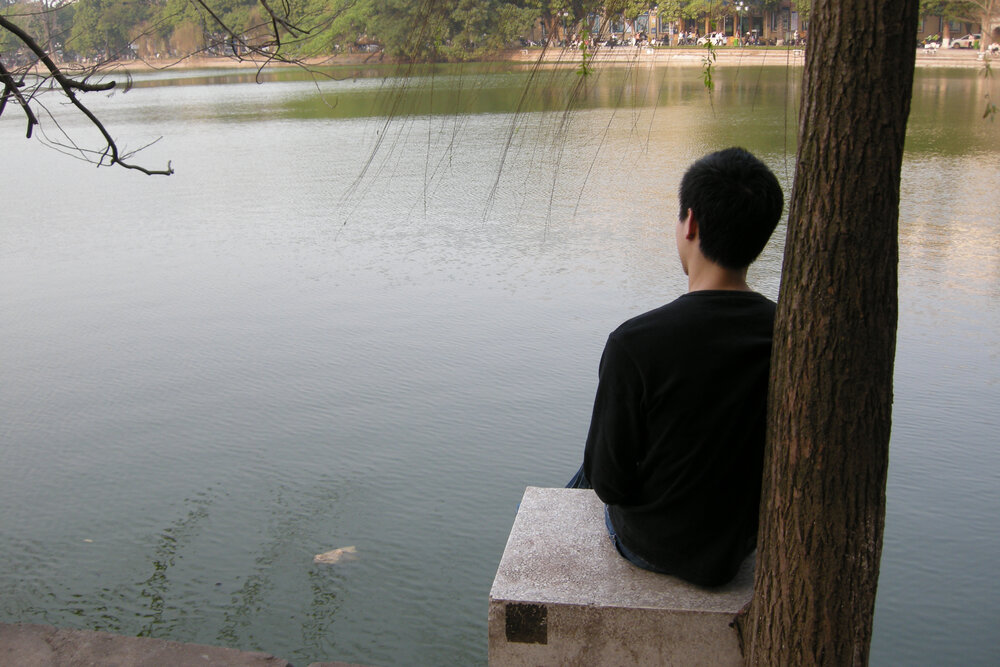
Come early, around 6am, when locals are doing tai chi, dancing and badminton along the shore, or on a Friday, Saturday or Sunday evening, when the streets around the lake close to traffic and fill with families, street performers and games. On the north shore, the red Thê Húc bridge leads to Ngọc Sơn Temple on a small island.
11. Trấn Quốc Pagoda and West Lake
Trấn Quốc Pagoda is Hanoi’s oldest Buddhist temple, founded in the 6th century and moved to its small island on West Lake in the 17th.
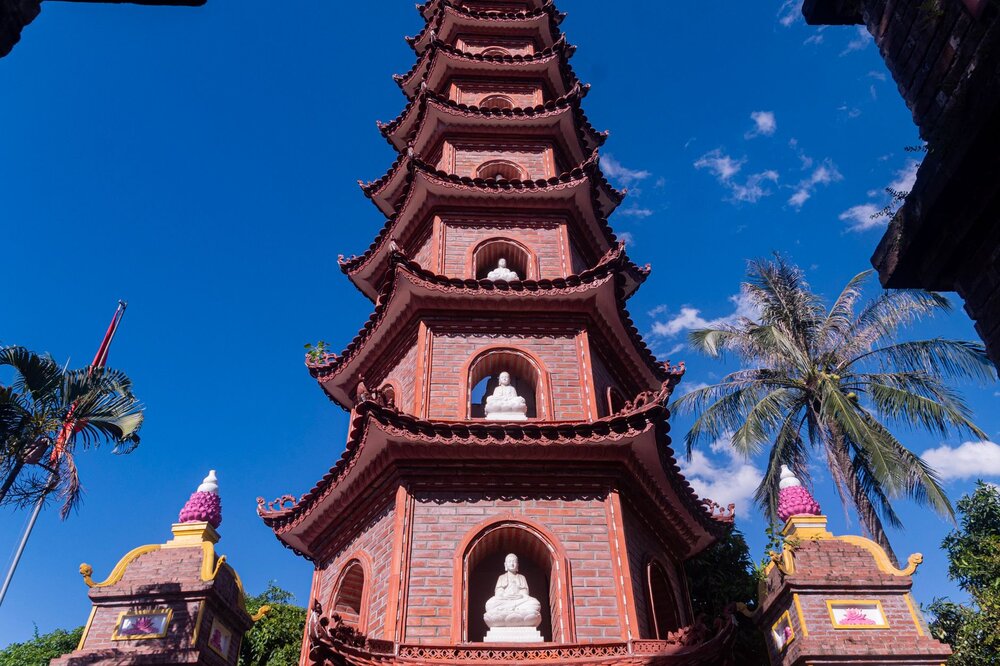
Entry is free, but cover shoulders and knees; vendors at the gate sell shawls if you forget. It gets busy, so go early. Afterwards, walk or cycle along the lake; on the Trúc Bạch side of Thanh Niên road is a small memorial to where John McCain’s plane came down in 1967. West Lake is ringed with cafés and is the best place in the city for a sunset drink.
12. St. Joseph’s Cathedral
St. Joseph’s Cathedral, five minutes’ walk west of Hoàn Kiếm Lake, is a neo-Gothic church the French finished in 1886, with twin towers modelled on Notre-Dame de Paris.
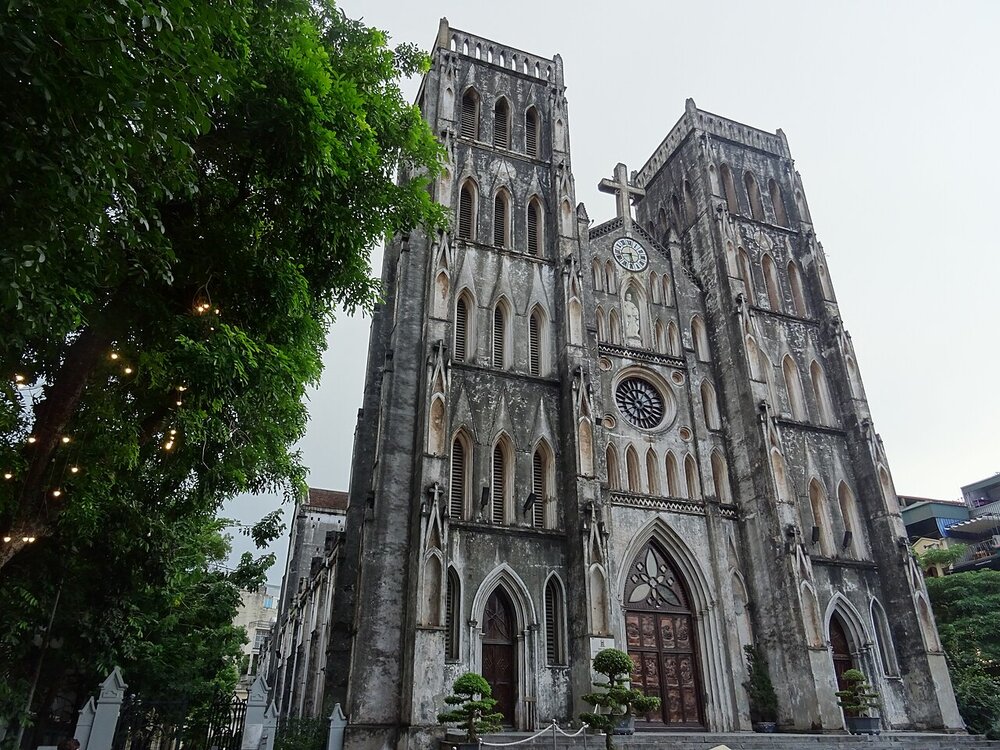
The doors open around Mass times, which are posted at the gate; the rest of the day you can only see the outside. The best time to come is after dark, when the front is lit up and the square fills with low plastic stools for iced lemon tea (trà chanh). It gets crowded on weekends.
13. Hanoi Train Street
On Hanoi Train Street, the railway runs between houses so close that residents step inside when a train comes through.
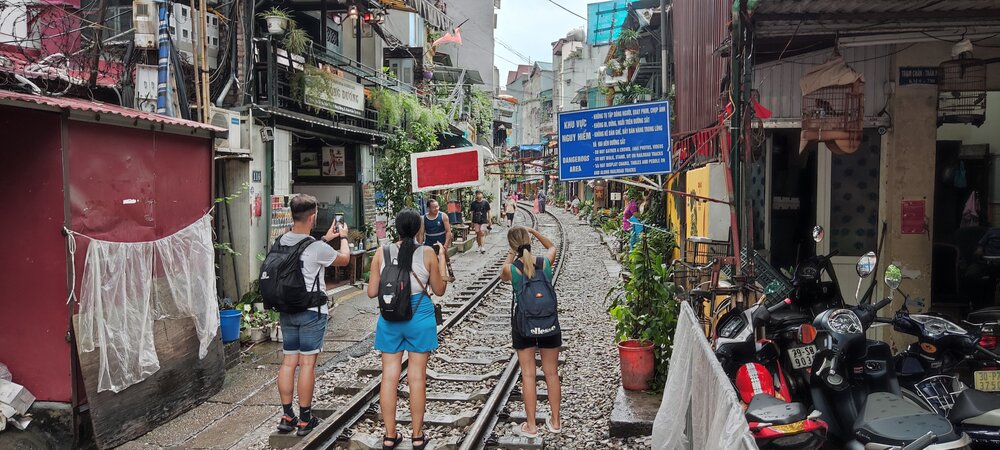
Cafés along the track post the day’s train times. Access has been restricted several times since 2019, so check the current situation before you go. When you visit, sit where the café staff tell you and keep your feet and bags back from the rails; trains have hit tables and chairs. Daytime is quieter than the evening trains.
14. Get lost in the Old Quarter
The Old Quarter is a tangle of narrow streets north of Hoàn Kiếm Lake, many still named after the trade that once filled them: Hàng Bạc for silver, Hàng Mã for paper goods, Hàng Thiếc for tin.
Walk without a plan. At the northern edge is Đồng Xuân Market, Hanoi’s biggest covered market. At night, Tạ Hiện and the lanes around it fill with plastic stools and cheap draught beer (bia hơi).
Food, coffee and evenings
15. Eat bún chả for lunch
Bún chả is Hanoi’s lunch: grilled pork patties and pork belly served in a sweet, tangy fish-sauce broth, with cold rice noodles and a basket of herbs on the side.
It is a midday dish, and many stalls sell out by early afternoon. The best-known is Bún chả Hương Liên at 24 Lê Văn Hưu, where Barack Obama and Anthony Bourdain ate in 2016, but any busy stall with charcoal grills on the pavement will do. See our Old Quarter food guide for more.
16. Have phở for breakfast
Phở comes from northern Vietnam, and Hanoi’s version is simpler than the south’s: a clear beef broth, flat rice noodles and spring onion, with no plate of herbs on the side. Locals eat it for breakfast.
Phở Gia Truyền at 49 Bát Đàn is the classic: queue, pay first and carry your own bowl to a table. Phở Thìn at 13 Lò Đúc is known for beef stir-fried with garlic before it goes into the broth.
17. Drink egg coffee
Egg coffee (cà phê trứng) was invented in 1946 by Nguyễn Văn Giảng, a bartender who whipped egg yolk with sugar as a substitute for scarce milk. His family still serves it at Café Giảng, 39 Nguyễn Hữu Huân, in the Old Quarter.
It tastes like a coffee custard and is served hot or cold. Several cafés around Hoàn Kiếm Lake serve it on upper floors with a view of the water. For the rest of Vietnam’s coffee, from cà phê sữa đá to coconut coffee, see our Vietnam coffee guide.
18. Watch a water puppet show
Water puppetry began in the flooded rice fields of the Red River Delta around a thousand years ago. Puppeteers stand behind a screen, waist-deep in water, and work wooden puppets on long poles, with live music and singing.
The Thăng Long Water Puppet Theatre on the north shore of Hoàn Kiếm Lake runs several shows each evening, each about 50 minutes long. Tickets often sell out, so book a few days ahead. It is a good end to a day of sightseeing, and children enjoy it.
Day trips from Hanoi
19. Ninh Bình
Ninh Bình, about 2 hours south of Hanoi, has limestone karsts rising out of rice fields and rivers, and it is the most popular day trip from the capital.
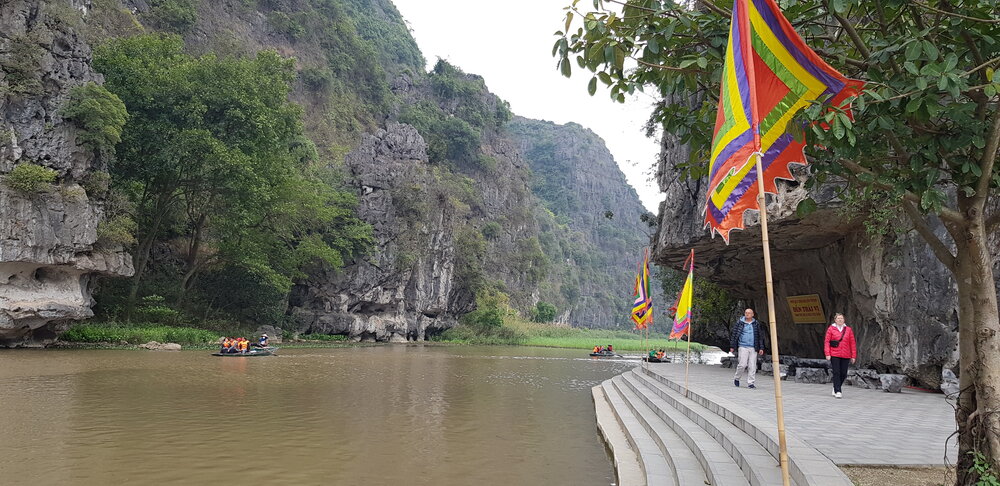
Take a rowing boat through the caves at Tam Cốc or Tràng An, then climb the roughly 500 steps to the top of Hang Múa for the view over the valley. Grab cars and tour buses make the trip easily, or take the train from Hanoi Station to Ninh Bình. One day is tight; if you can, stay a night.
20. Bát Tràng ceramic village
Bát Tràng, about 13 km southeast of the Old Quarter across the Red River, has been making pottery for more than 500 years.
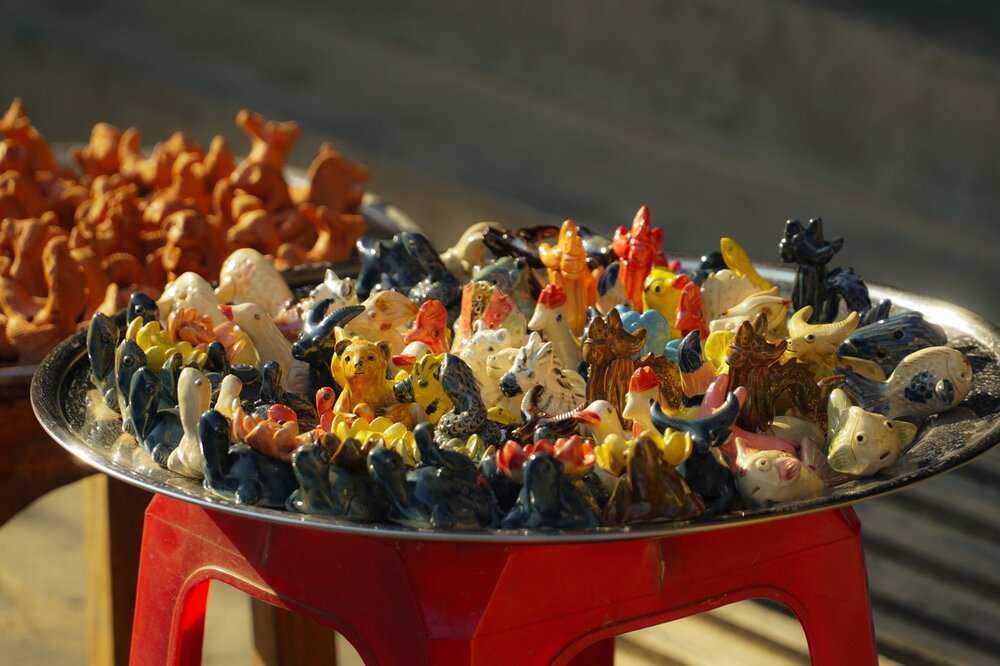
The streets are lined with workshops and shops selling everything from bowls to huge vases, and many workshops let you throw or paint your own piece. It is half a day: 30 minutes by Grab, or bus 47A from Long Biên.
Practical notes
- Timing: Most sights close between 4:30 and 5pm, some close for lunch, and the mausoleum opens in the morning only. Do sights in the morning and save food, the lake and shows for the evening.
- Getting around: The Old Quarter, Hoàn Kiếm Lake and the French Quarter are walkable. For everything else, use Grab for motorbike taxis and cars at fixed prices.
- Where to stay: The Old Quarter or the streets around Hoàn Kiếm Lake, so you can walk to most of this list. See our Hanoi destination guide.
- When to go: October to December and March to April are the most comfortable months. Summer is hot and humid; winter is cool and grey. See Hanoi in October and the other months.
- Dress: Cover shoulders and knees for the mausoleum, pagodas and temples.
Tours & activities in Hanoi
Activity links above are affiliate or partner links.