
Last updated: October 2026
Pu Luong’s weather splits into a cool, dry half (October to April) and a hot, wet half (May to September). The best time to visit is late September to early October for golden rice terraces, or March to April for green fields and dry trails. December and January are cold and misty, and June to August bring the heaviest rain. Below is what each month is actually like, when the rice is green or gold, and what to pack.
We were last there in September 2026, riding up midweek by motorbike. It stayed cloudy and dry the whole stay, which is about as good as September gets.
Our honest take: Pu Luong weather in short
- For golden terraces, aim for the last ten days of September or the first few days of October. By mid-October most fields are cut.
- For green terraces and easy trekking, go in March or April. There’s a second green season in July and August, but it comes with rain and mud.
- There is a smaller golden season too, from mid-May to early June, when the spring crop ripens. Fewer people know about it.
- December and January are cold for Vietnam. Nights can drop to around 10°C and homestays aren’t heated.
- June to August is the wettest stretch. Rain usually comes as afternoon storms, so mornings are often fine for walking.
- November is underrated: dry, cool, quiet, with good trekking. You just won’t see any rice.
Pu Luong weather by month at a glance
There’s no reliable long-term weather record for Pu Luong itself, and the averages published online disagree with each other. The ranges below are typical daytime temperatures in the valleys where most homestays are. Higher villages are a few degrees cooler.
| Month | Typical day temps | Rain | Rice terraces | Verdict |
|---|---|---|---|---|
| January | 12–20°C, colder mornings | Mostly dry, fog and drizzle | Bare, resting | Cold, quiet, misty |
| February | 14–21°C | Light drizzle, fog | Spring crop planted | Cool; Tet in the villages |
| March | 17–24°C | Mostly dry | Young green rice | Very good |
| April | 20–28°C | Mostly dry | Bright green | One of the best months |
| May | 23–31°C | Rain starts | Golden mid-May to early June | Good, getting hot |
| June | 24–31°C | Wet, afternoon storms | Harvest, then replanting | Hot and wet |
| July | 24–31°C | Wettest stretch | Young green rice | Lush, muddy trails |
| August | 24–30°C | Wet | Deep green | Green, but plan for rain |
| September | 20–28°C | Rain easing | Turning gold, harvest late month | Best for golden rice |
| October | 21–28°C | Mostly dry | Harvest ends by mid-month | Best overall (early October) |
| November | 17–25°C | Dry | Cut stubble | Quiet, great trekking |
| December | 10–18°C, nights near 10°C | Dry, misty mornings | Bare | Cold and empty |
When are the Pu Luong rice terraces green or golden?
Pu Luong grows two rice crops a year, which is why you can see green or gold at more than one point in the calendar.
The spring crop goes into the flooded terraces around February and early March. The fields are bright green in March and April, then ripen to gold from about mid-May to early June, when they’re cut.
The summer crop is planted straight after, in June and July. The terraces are at their greenest in July and August, then turn gold from mid-September. Harvest runs from late September into the first half of October. This is the season most photos of Pu Luong come from, and the busiest time for homestays.
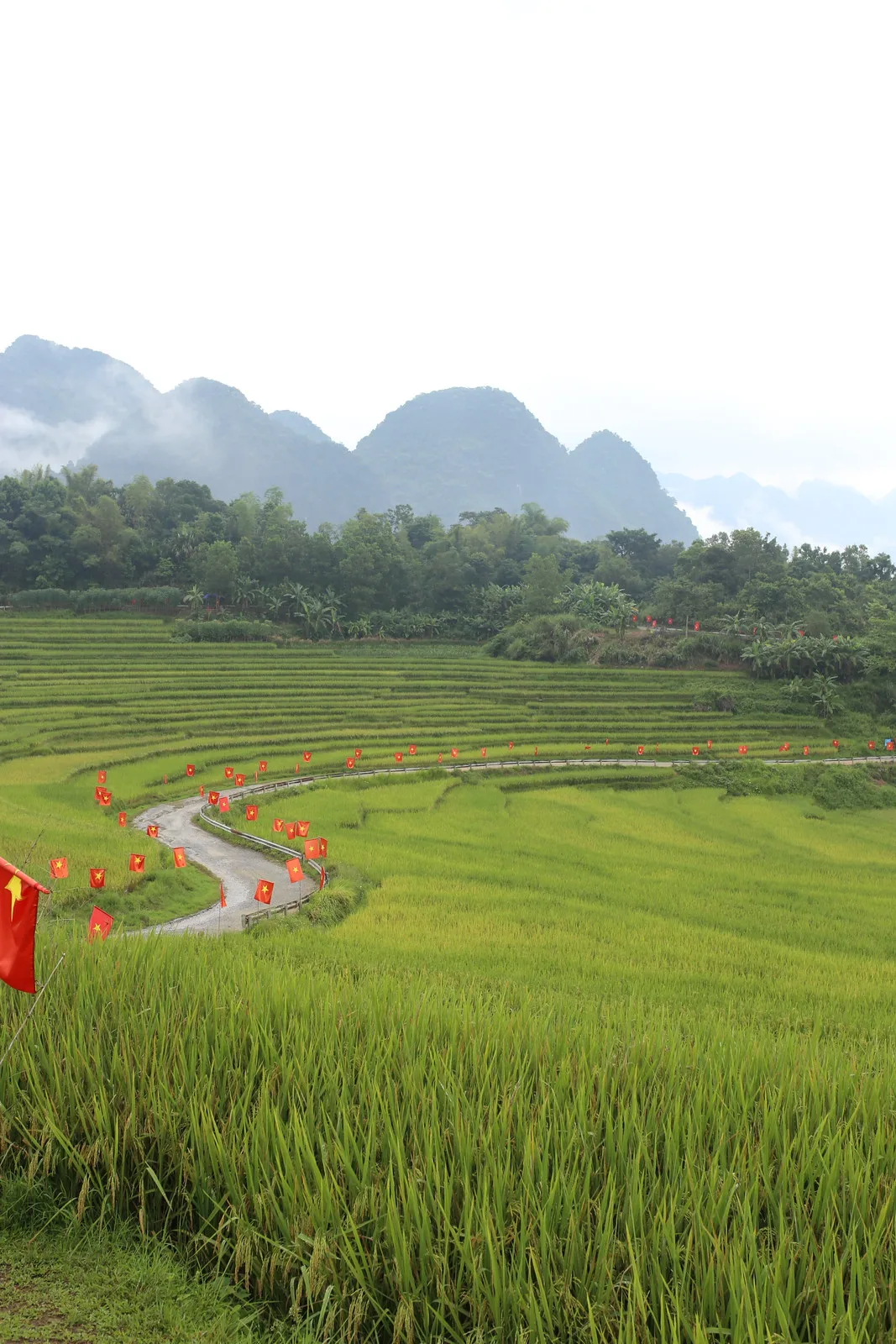
Bear in mind the exact timing moves by a week or two from year to year and from village to village. Lower, sunnier fields ripen first. If golden terraces are the whole point of the trip, message your homestay a week before you go and ask how the rice looks. For the same timing across the rest of the country, see our golden rice fields season guide.
Pu Luong in the dry season: October to April
October and November are the most comfortable months for trekking. Days are warm, rain is rare, and the air is clear. Early October still has harvest scenes; by November the fields are cut and visitor numbers drop sharply.
December to February is the cold season. Mornings are often foggy, with cloud sitting in the valleys until mid-morning, and nights can drop to around 10°C. Stilt-house homestays have thick blankets but no heating, so pack properly. Tet (the Lunar New Year, in late January or February) is a lively time to be in the Thai and Muong villages, but transport from Hanoi books up fast, so reserve seats early.
March and April are the sweet spot for many people: warm days, mostly dry trails, and green terraces from the spring crop.
Pu Luong in the rainy season: May to September
Rain picks up in May and is heaviest from June to August. Most of it falls as afternoon or evening storms rather than all-day rain, so the usual pattern is to walk in the morning and be back at the homestay by mid-afternoon. Trails turn muddy and slippery, and leeches come out in the forest sections, so shoes with real grip matter more than anything else you pack.
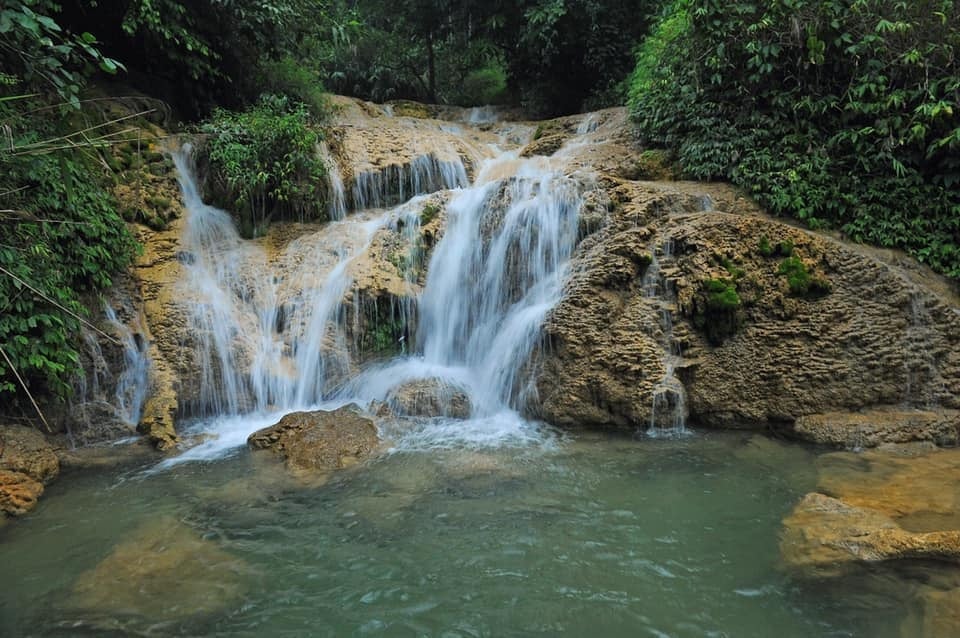
The upside is that this is when the waterfalls are at their fullest, including Hieu Waterfall, and the whole valley is a deep green. Homestays are usually much quieter than in late September.
After a run of heavy rain, mountain roads in the area can be hit by small landslides. If a big storm has just passed through, check with your homestay or driver about the road before setting off from Hanoi.
How to check the Pu Luong weather forecast
When you look up a forecast or a 14-day outlook, search for Ba Thuoc (the district Pu Luong is in), not Thanh Hoa. Thanh Hoa city is down on the coastal plain, and its forecast is usually warmer and quite different. Even the Ba Thuoc forecast is only a rough guide: rain in the mountains is local and changes quickly, and a forecast showing rain all week often means short afternoon showers.
What to pack for Pu Luong
- Walking shoes or trail runners with good grip, all year.
- A light rain jacket from May to October.
- A fleece or down jacket, warm socks and a hat from December to February.
- Leech socks or long trousers you can tuck in, for forest trails in the wet months.
- Insect repellent and sun cream, especially from April to September.
So, when is the best time to visit Pu Luong?
If you can only pick one window, go in the last week of September or the first week of October for golden terraces and drier weather. Book ahead, because it’s the busiest time of year. If you’d rather have green fields, fewer people and easy trails, March and April are the better choice. And if you want the valleys almost to yourself and don’t mind the cold, come in November or December.
Pu Luong is about 145 km from Hanoi, or 4 to 5 hours by road. It pairs well with Mai Chau, which is on the way. Our Pu Luong itinerary ideas have suggested routes, and there’s a short list of places to stay in our hotel guide.
FAQ
What is the rainy season in Pu Luong?
May to September, with the heaviest rain from June to August. Most rain falls in afternoon storms, so mornings are often dry enough to trek.
What month are the Pu Luong rice fields golden?
Mainly from mid-September to early October, with the harvest usually finished by mid-October. There’s also a smaller golden season from mid-May to early June, when the spring crop ripens.
Is Pu Luong cold in winter?
Yes, by Vietnamese standards. From December to February, days are cool and nights can drop to around 10°C. Homestays aren’t heated, so bring a warm jacket.
What is the best month to visit Pu Luong?
For golden rice terraces, late September to early October. For green terraces and dry trails, March or April. If you want quiet trails and don’t mind the cold, November and December are the emptiest months. Each month has its own guide, linked in the table above.
Is it worth visiting Pu Luong in the rainy season?
Yes, if you plan around the rain. From May to September most rain falls in afternoon storms, so you can trek in the morning. The valley is at its greenest, the waterfalls are full and homestays are quieter. Bring shoes with good grip and leech socks for forest trails.
Read more
- Pu Luong full travel guide
- Pu Luong Nature Reserve
- The Pu Luong Loop
- Best time to visit Vietnam: weather by region
Tours & activities in Vietnam
Activity links above are affiliate or partner links.