
Ho Chi Minh City is probably not the easiest place in Vietnam to fall in love with on your first day.
It is noisy. It is busy. The traffic looks completely chaotic when you first see it. Crossing the street can feel like a small adventure, especially when dozens of motorbikes seem to be coming at you from every direction.
And then, somewhere along the way, it starts to make sense.
You find a little coffee shop hidden behind an unremarkable doorway. You eat a bowl of noodles at a tiny street-side restaurant. You sit down with a cold Vietnamese coffee while the city carries on around you.
That is when you start to understand Saigon.
Ho Chi Minh City — still commonly called Saigon by locals — is Vietnam’s largest city and its economic centre. It is also one of the country’s main gateways for international travellers.
For first-time visitors, I usually recommend spending at least 2–3 days here. That gives you enough time to see the major sights without trying to squeeze every attraction into one exhausting schedule.
If you have 4–5 days, even better. You can slow down a little and add a day trip to places such as the Cu Chi Tunnels or the Mekong Delta.
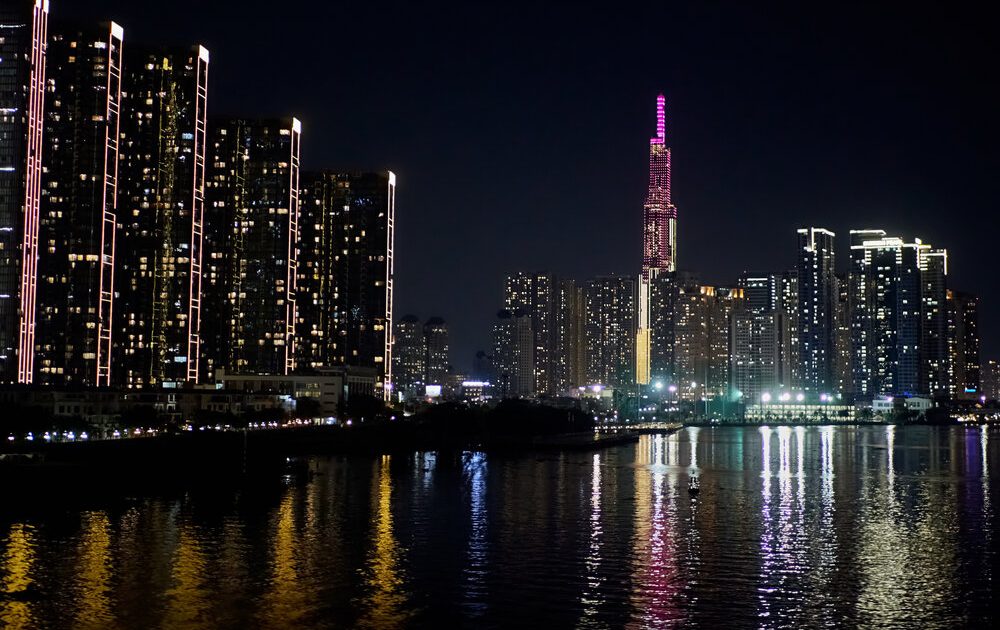
Is Ho Chi Minh City worth visiting?
Yes — although it depends on what you expect from Vietnam.
If you’re looking for quiet mountain scenery, rice terraces and a slow rural atmosphere, Ho Chi Minh City probably isn’t going to be the highlight of your trip.
But if you want food, history, nightlife, shopping, cafés and modern Vietnamese city life, this is one of the best places in the country to experience it.
What I particularly like about Ho Chi Minh City is how quickly the scenery changes.
One minute you’re standing beside a modern shopping mall or a luxury hotel. Walk for ten minutes and you might find yourself in a narrow alley filled with family-run restaurants, tiny houses and motorbikes parked outside.
The city doesn’t really separate its old and new sides. They are mixed together everywhere.
How many days do you need in Ho Chi Minh City?
For most travellers, I’d suggest:
- 2 days: Enough for the main sights, but you’ll be moving fairly quickly.
- 3 days: Probably the sweet spot for a first visit.
- 4–5 days: Much more relaxed, with time for food tours, cafés, shopping and a day trip.
- 1 week: Worth considering if Ho Chi Minh City is your base for exploring southern Vietnam.
Don’t make the mistake of thinking you need to visit every attraction. Ho Chi Minh City is one of those places where some of the best experiences happen between the attractions.
Best time to visit Ho Chi Minh City
Planning a trip to Ho Chi Minh City? We arrange private guided tours — day trips, multi-day itineraries, and custom routes.
Ho Chi Minh City is warm throughout the year, so don’t expect the kind of dramatic seasonal changes you get in northern Vietnam.
Instead, you’re mainly choosing between drier weather and wetter weather.
The dry season generally runs from around December to April. These months tend to be easier for sightseeing, although it can get extremely hot, particularly around March and April.
The rainy season usually runs from May to November.
Don’t let the word rainy automatically put you off.
In southern Vietnam, rain often comes as a heavy afternoon shower rather than an entire day of miserable weather. You can have a perfectly good morning exploring the city, get caught in a huge downpour at 3pm, and be back outside again an hour later.
→ Ho Chi Minh City in March — what the dry season actually feels like on the ground
Before you arrive — visas and entry
Most nationalities can enter Vietnam on an e-visa, which covers a single 90-day stay. Apply online before you travel — it’s straightforward and you’ll need it ready before boarding.
→ Vietnam entry requirements checklist — what you need, what to print, and common mistakes to avoid
How to get to Ho Chi Minh City
Most international visitors arrive at Tan Son Nhat International Airport (SGN).
The airport is relatively close to central Ho Chi Minh City, but don’t let the distance fool you. Traffic can make a short journey surprisingly slow, particularly during busy periods.
For most travellers, I recommend using a ride-hailing app such as Grab, Be or Xanh SM rather than trying to negotiate a taxi after landing.
If you prefer having everything arranged before you arrive, a private airport transfer is also a good option — particularly if you’re travelling with children, elderly family members or a lot of luggage.
Ho Chi Minh City is also well connected to the rest of Vietnam by train and bus. The Reunification Express runs the length of the country, so you can arrive by rail from Da Nang, Nha Trang or anywhere further north.
Book train tickets to Ho Chi Minh City:
Nha Trang → Ho Chi Minh City ·
Da Nang → Ho Chi Minh City
Getting around Ho Chi Minh City
This is probably the part that worries first-time visitors most.
The traffic looks terrifying.
And honestly, it can be.
But you don’t need to rent a motorbike to enjoy Ho Chi Minh City.
For most visitors, Grab is the easiest option. You can book a car or motorbike, see the price before confirming and avoid having to negotiate with drivers.
Walking is also surprisingly useful if you’re staying around District 1. Many of the major attractions are relatively close to one another.
Just remember that walking in Ho Chi Minh City doesn’t necessarily mean you’ll have a peaceful stroll. Sidewalks can be busy, motorbikes may use them, and crossing major roads takes a little practice.
My advice? Don’t wait for the road to become completely empty. It never will. Walk at a steady pace, make your intentions clear and let the traffic flow around you.
It sounds scary. After a day or two, you’ll wonder why you were so worried.
If you’re thinking about renting a motorbike yourself, make sure you understand the licence requirements first — it’s not as simple as it used to be. → Riding a motorbike legally in Vietnam
Where to stay in Ho Chi Minh City
For a first visit, District 1 is usually the easiest place to stay.
You’re close to many of the major sights, restaurants, cafés and nightlife areas, and you won’t spend as much time travelling between attractions.
But District 1 isn’t your only option.
District 3 is a great alternative if you’d prefer somewhere a little more local and quieter while remaining close to the centre.
District 4 is worth considering for food lovers. It has a very different atmosphere from the polished tourist areas and is famous for its local food scene.
Thao Dien in District 2 is another option, particularly for longer stays, families and travellers who prefer cafés, restaurants and a more residential environment.
So don’t simply search for “best hotel in Ho Chi Minh City”. Think about what kind of neighbourhood you want to experience.
The best things to do in Ho Chi Minh City
You could spend a week here without running out of things to eat, see and explore.
But for a first visit, I’d start with these.
1. Visit the War Remnants Museum
This is one of the most important museums in the city and one I would strongly recommend, even if you’re not particularly interested in history.
It is not an easy museum. Some of the photographs and exhibits are confronting, and you may need some time afterwards to process what you’ve seen.
But it provides an important perspective on the Vietnam War and its consequences.
I wouldn’t schedule five other attractions immediately afterwards. Give yourself some breathing room.
2. Explore Independence Palace
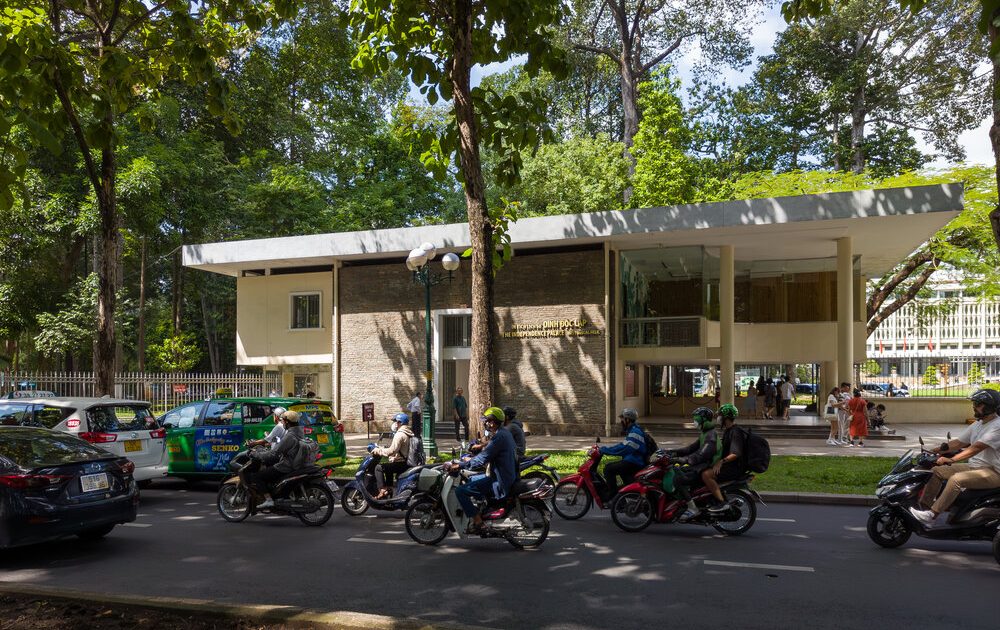
Independence Palace is another important stop for anyone interested in Vietnam’s modern history.
The palace played a major role during the Vietnam War, and the events surrounding its gates in April 1975 became one of the defining moments in the history of Saigon.
The building itself is also interesting to explore, particularly the preserved interiors and underground areas.
It’s conveniently located near several other attractions, so you can combine it with the War Remnants Museum and Tao Dan Park.
3. See the Saigon Central Post Office
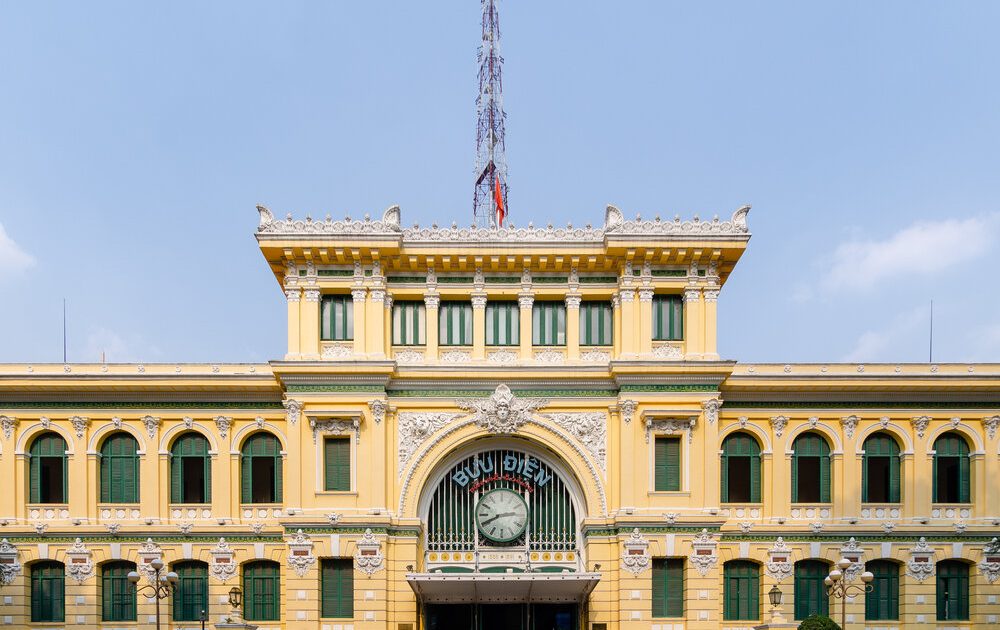
This is one of those places that can easily become a five-minute photo stop. Don’t rush it.
The building dates back to the French colonial period and remains one of the city’s most recognisable architectural landmarks.
Walk inside, look up at the ceiling, check out the old maps and — if you want to do something slightly old-fashioned — send a postcard home.
4. See Notre Dame Cathedral from the outside
The red-brick Notre Dame Cathedral Basilica of Saigon sits directly opposite the Central Post Office, making the two easy to visit together.
The cathedral has been undergoing restoration, so access and the appearance of the site can change.
Even when you can’t go inside, it’s still worth seeing from the outside.
5. Visit Ben Thanh Market
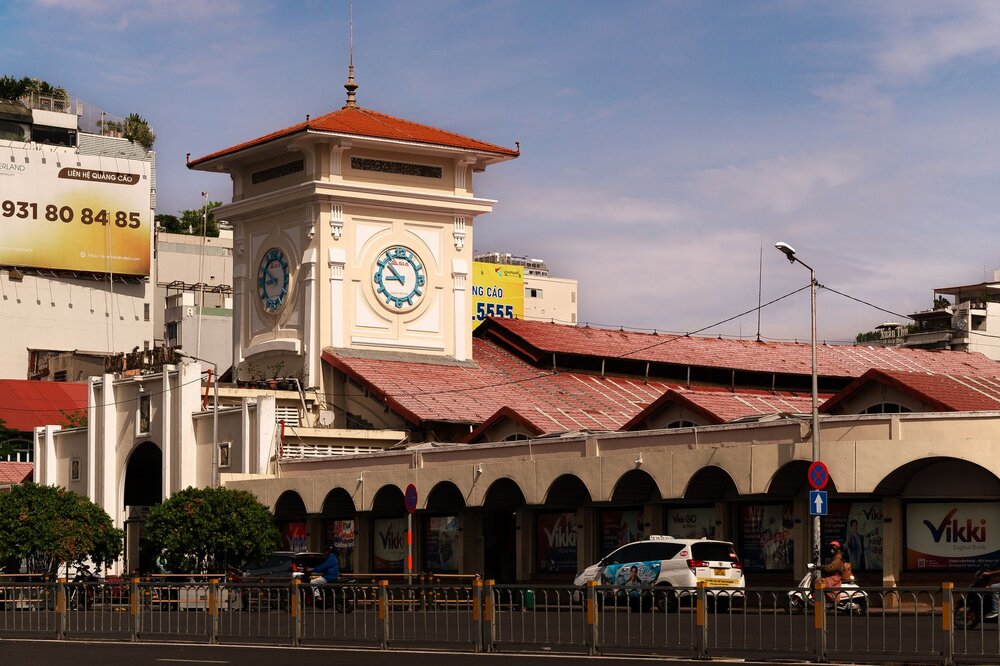
Ben Thanh Market is probably the most famous market in Ho Chi Minh City.
It is also one of the places where expectations and reality can be slightly different.
Yes, it’s touristy. Yes, you’ll probably be approached by vendors. And yes, you’ll probably see plenty of souvenirs.
But it is still an interesting place to experience, particularly if this is your first time in Vietnam.
Go for the atmosphere rather than expecting it to be the cheapest place in the city to shop.
And don’t forget to explore the surrounding streets. Some of my favourite food experiences are often found around the famous attractions rather than inside them.
6. Eat your way through the city
Honestly, you could build an entire Ho Chi Minh City itinerary around food.
Try banh mi for breakfast. Have com tam for lunch. Stop for Vietnamese iced coffee in the afternoon. Then spend the evening eating street food.
And don’t limit yourself to the dishes you’ve already heard of. Ho Chi Minh City is particularly good for exploring southern Vietnamese cuisine, but you’ll also find food from every region of the country.
If you’re not sure where to start, a local food tour can be one of the best introductions to the city. → Browse food & street food guides
7. Explore the cafés
Vietnamese coffee deserves its own category.
You have traditional ca phe sua da, egg coffee, coconut coffee and an endless number of modern cafés experimenting with Vietnamese ingredients.
Don’t just search for the most Instagrammable café. Walk around. Look up. Sometimes the most interesting places are the ones you weren’t looking for.
8. Explore the Nguyen Hue area
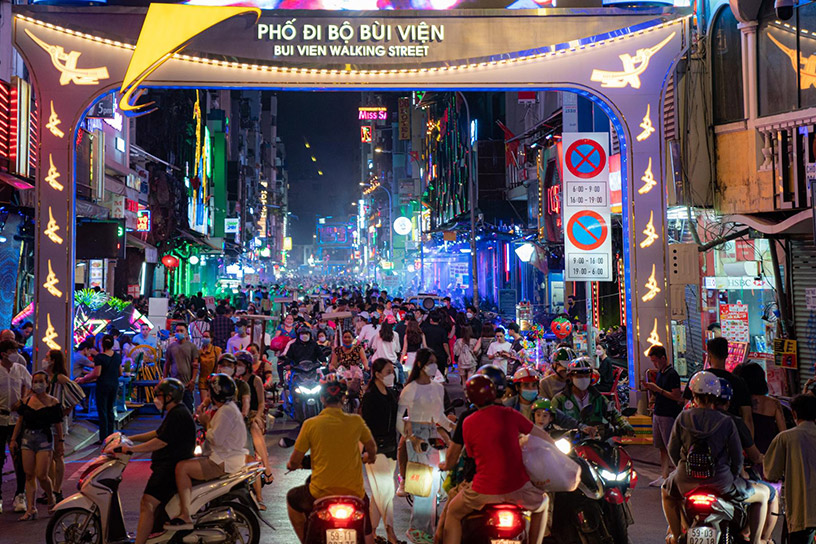
Nguyen Hue Walking Street is one of the easiest places to get a feel for the modern side of the city.
Come in the evening when the temperature starts to drop and the area fills with locals, families and visitors.
The surrounding streets are also worth exploring, particularly around the old apartment buildings that have been converted into cafés, restaurants and small shops.
9. Visit the Fine Arts Museum
If you need a break from the traffic and heat, the Ho Chi Minh City Museum of Fine Arts is a good choice.
The museum itself is housed in a beautiful colonial-era building, and the collection covers Vietnamese art from different periods. It’s also a much calmer experience than some of the city’s busier attractions.
10. Go to the Cu Chi Tunnels
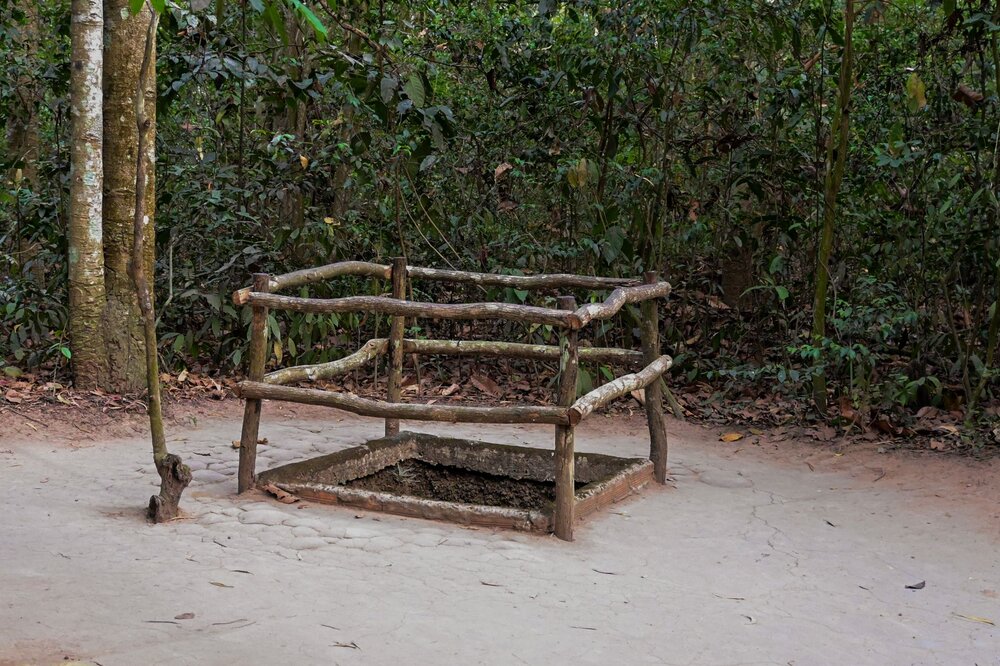
The Cu Chi Tunnels are one of the most popular day trips from Ho Chi Minh City.
The tunnel network played an important role during the wars in Vietnam, and visitors can explore sections of the underground system.
It is worth understanding what you’re seeing rather than treating it simply as an adventure attraction.
The tunnels can be physically demanding, particularly for anyone who doesn’t like confined spaces. For most travellers, a half-day trip is enough.
→ Browse Cu Chi Tunnels & day tours from Ho Chi Minh City →
Don’t forget the Mekong Delta
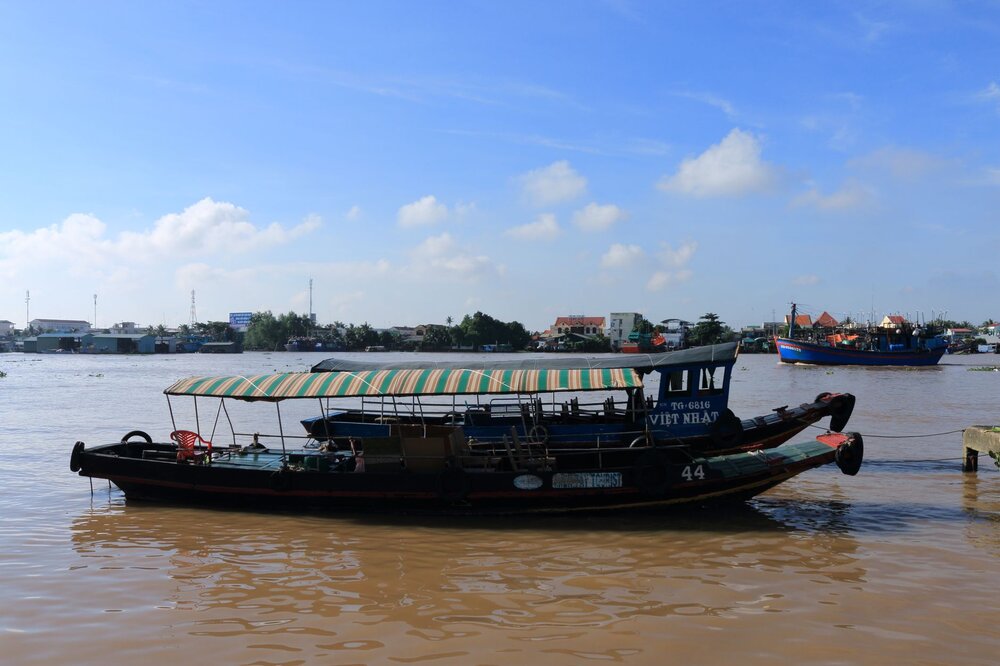
If you have an extra day, consider heading out of Ho Chi Minh City to the Mekong Delta.
The landscape changes quickly. The skyscrapers disappear, the roads become quieter and eventually you’re surrounded by waterways, farms and small communities.
There are many different ways to experience the Mekong Delta, and they aren’t all the same. Some tours are extremely tourist-oriented, while others focus more on local life and the countryside.
If you have the time, I’d rather spend a little more money on a smaller or better-organised tour than rush through the region on a huge group excursion.
→ Browse Mekong Delta day trips from Ho Chi Minh City →
What should you eat in Ho Chi Minh City?
This is where I would tell you to stop planning too much. Seriously. Leave some space in your itinerary for food.
Some dishes worth looking out for include:
- Banh mi — Vietnamese baguette sandwiches
- Com tam — broken rice, usually served with grilled pork
- Hu tieu — a southern Vietnamese noodle soup
- Banh xeo — crispy savoury Vietnamese pancakes
- Bun thit nuong — grilled pork with noodles, herbs and sauce
- Oc — Vietnamese-style snails and shellfish
- Ca phe sua da — strong Vietnamese iced coffee with condensed milk
And don’t be afraid of the little restaurants. Some of the best meals you’ll have in Ho Chi Minh City may come from a place with plastic chairs, a handwritten menu and absolutely no English. That’s part of the fun.
→ Vietnam food & street food guide
Is Ho Chi Minh City safe?
For most travellers, yes.
The biggest problems visitors are likely to encounter are not usually serious crimes but things like petty theft, scams, traffic and motorbike-related incidents.
Keep your phone away from the road when you’re standing on busy streets. Don’t leave your bag hanging loosely from your chair. Use reputable ride-hailing services where possible.
The traffic is probably the biggest safety adjustment for first-time visitors. Don’t assume that because a vehicle is small, it will stop for you.
How much does a trip to Ho Chi Minh City cost?
One of the reasons I like travelling in Vietnam is that you can make the same destination work for very different budgets.
You can stay in a simple local hotel and eat street food for very little. Or you can stay in a five-star hotel, eat at excellent restaurants and spend your evenings in rooftop bars.
The city gives you both options. For most travellers, I’d rather spend the money on experiences and food than automatically booking the most expensive hotel. You don’t need luxury to enjoy Ho Chi Minh City.
A simple 3-day Ho Chi Minh City itinerary
Day 1 — Old Saigon
Start around the Central Post Office and Notre Dame Cathedral. Walk towards Independence Palace and the War Remnants Museum. Take a break in Tao Dan Park or one of the nearby cafés.
In the evening, explore Nguyen Hue Walking Street and have dinner around the city centre.
Day 2 — Food and local life
Start with Vietnamese coffee and breakfast. Spend the morning exploring markets and neighbourhood streets. Join a food tour in the afternoon or evening. Leave some time simply to sit in a café and watch the city.
Day 3 — Choose your experience
Take a half-day trip to the Cu Chi Tunnels. Or, if you’re not interested in the tunnels, stay in the city and explore more neighbourhoods, museums, cafés and food spots.
If you have another day available, consider the Mekong Delta.
→ Browse all Ho Chi Minh City tours & day trips →
What I like — and don’t like — about Ho Chi Minh City
The good:
- The food is fantastic.
- There is always something happening.
- The city has an incredible mix of old and new.
- You can find excellent cafés almost everywhere.
- It’s a great base for exploring southern Vietnam.
- And there is a lot more to the city than the famous tourist attractions.
The challenging parts:
- The traffic can be overwhelming.
- It can be extremely hot and humid.
- The city is noisy.
- Crossing the road takes some getting used to.
- And during heavy rain, some streets can become difficult to navigate.
But honestly, I think these things are part of understanding Ho Chi Minh City. You don’t come here expecting everything to be calm and perfectly organised. You come here because there is energy everywhere.
Final thoughts
Ho Chi Minh City isn’t the kind of destination where you necessarily fall in love with it immediately.
For some people, the first impression is simply: This place is crazy.
Then you have your first proper bowl of pho. You discover a tiny coffee shop. You spend an evening eating street food. You watch thousands of motorbikes move through an intersection somehow without crashing into each other.
And eventually, the chaos starts to feel strangely familiar.
That’s what makes Ho Chi Minh City interesting. It’s not polished, quiet or particularly predictable. But it is alive.
And if you’re travelling through Vietnam, I think it’s worth giving Saigon at least a few days to show you what it’s really like.