
Hue sits on the banks of the Perfume River in central Vietnam, ruling for over a century as the seat of the Nguyen Dynasty, Vietnam’s last imperial court. Its walled Citadel, moated and modelled on Beijing’s Forbidden City, still anchors a city built around royal ritual, ornate mausoleums scattered through the surrounding hills, and a refined cuisine once reserved for emperors. Quieter and more contemplative than Vietnam’s beach cities, Hue rewards travellers interested in history and food in equal measure.
Hue Imperial Citadel
The Hue Imperial Citadel is the heart of the city, a vast fortified complex ringed by moats and thick stone walls that once housed the Nguyen emperors and their court. Inside, the Imperial City and Forbidden Purple City hold restored palaces, ceremonial gates, and courtyards, though many structures were damaged during the 1968 Battle of Hue and remain under restoration. The Flag Tower (Ky Dai), rising at the Citadel’s southern edge, is one of the city’s most recognisable landmarks.
Royal Tombs of the Nguyen Emperors
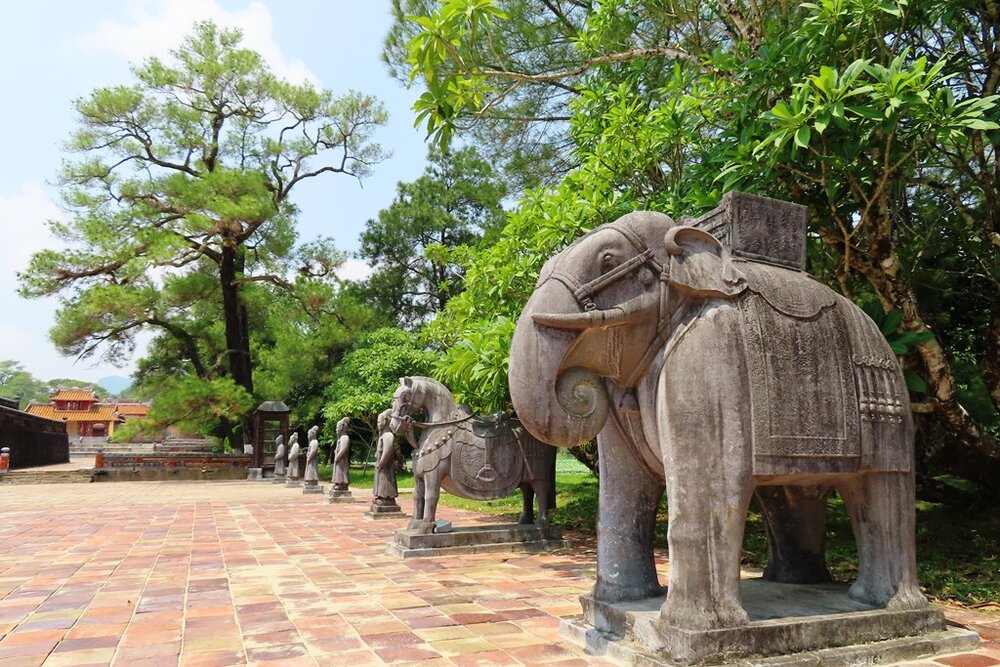
Scattered through the hills south of the city, the Hue Royal Tombs are elaborate mausoleum complexes where Nguyen emperors planned their own afterlives. Tu Duc Mausoleum is the most serene, set among pine trees and a lotus pond where the emperor once composed poetry. Khai Dinh Mausoleum blends European and Vietnamese styles in dramatic concrete and mosaic. Minh Mang Mausoleum is the most formally symmetrical, arranged around a series of courtyards and a crescent lake.
Thien Mu Pagoda & Perfume River
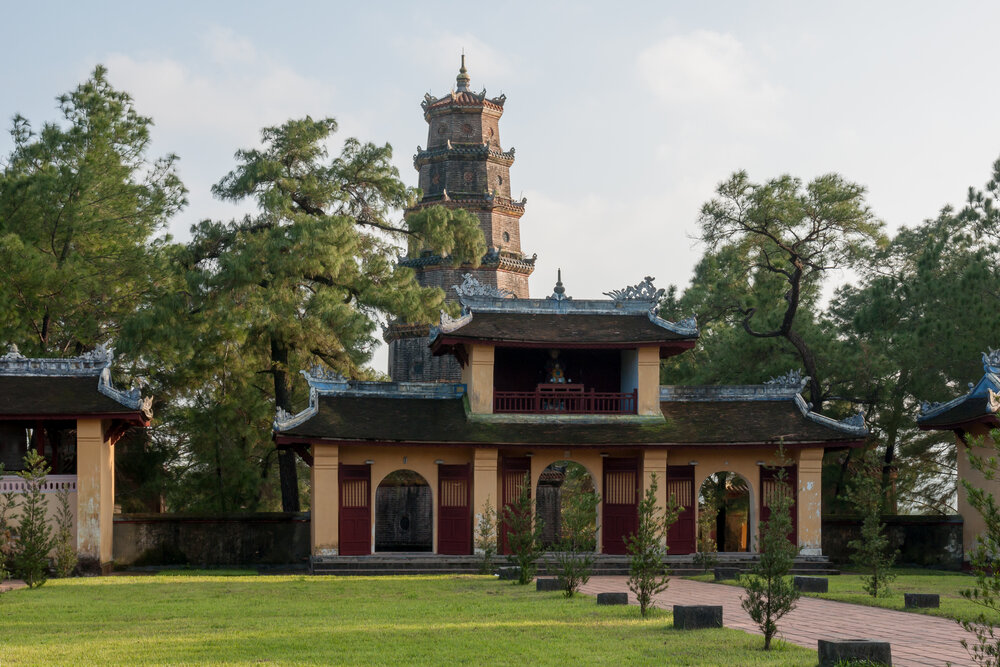
Thien Mu Pagoda, its seven-tiered octagonal tower rising above the Perfume River, is Hue’s most iconic religious site and an active Buddhist monastery. The best way to reach it is by Perfume River Boat Tour, a leisurely cruise past riverside gardens and fishing boats that also links several of the royal tombs. Nearby, Tu Dam Pagoda is another significant Buddhist site, historically tied to the Buddhist movements of the 1960s.
Dong Ba Market & Tam Giang Lagoon
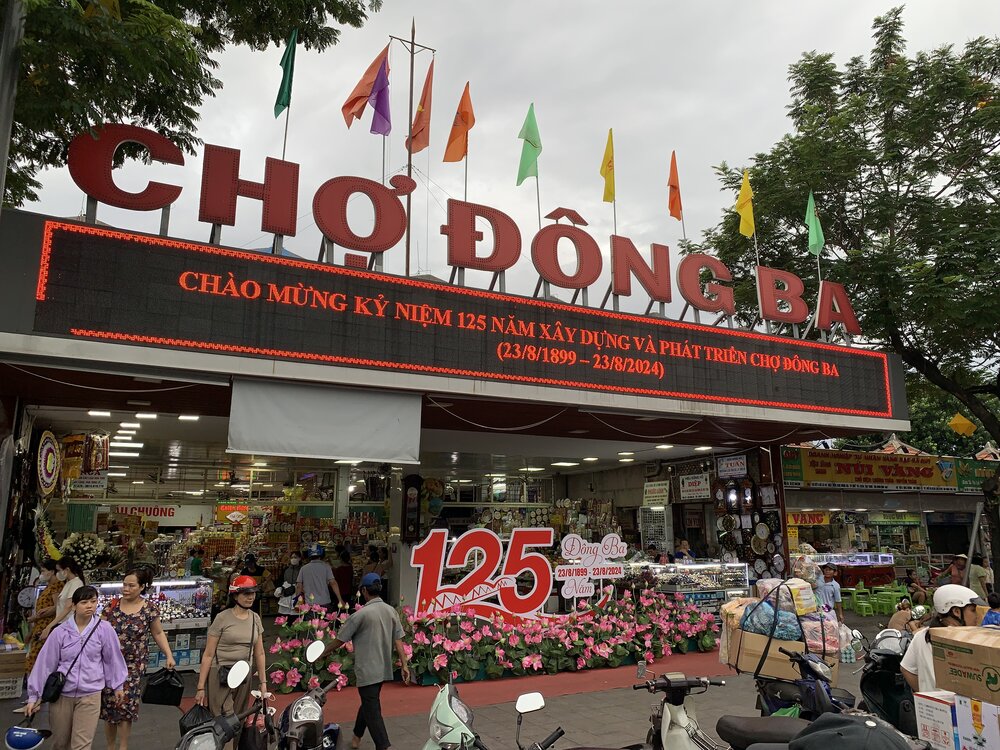
Dong Ba Market, sprawling along the Perfume River just outside the Citadel walls, is Hue’s largest market and a good place to see the raw ingredients behind the city’s cuisine, alongside conical hats, silk, and household goods. For a change of scenery, Tam Giang Lagoon, Southeast Asia’s largest lagoon system, lies a short drive from the city, with fishing villages and calm waters good for boat trips at sunrise or sunset.
Hue Royal Cuisine
Hue’s cuisine developed to please an imperial court, and the results are still Vietnam’s most refined regional food: small, intricately arranged dishes originally designed to be visually beautiful as well as delicious. Look for bun bo Hue, a spicy beef and lemongrass noodle soup that’s become a national favourite, alongside banh khoai (crispy stuffed pancakes) and an array of delicate steamed rice cakes such as banh beo. Restaurants around the Citadel and Dong Ba Market serve set menus recreating full royal-style meals.
Bach Ma National Park
For a break from history and temples, Bach Ma National Park lies about an hour south of Hue, a mountain reserve of cloud forest, waterfalls, and hiking trails first developed as a French hill station. Trails lead to viewpoints looking out over the coast and the Hai Van Pass, along with several multi-tiered waterfalls reachable on day hikes. It’s a popular escape from Hue’s summer heat and a good add-on for travellers with an extra day.
Best Time to Visit
Planning a trip to Hue? We arrange private guided tours — day trips, multi-day itineraries, and custom routes.
Hue has a more marked wet season than the rest of central Vietnam: March to August is dry and increasingly hot, with April and May offering the most comfortable temperatures for exploring the Citadel and tombs on foot. September to January brings heavy rain and occasional flooding, particularly October and November. Hue’s cooler, cloudier winter climate is part of its character, but pack a rain jacket if visiting outside the dry months.
Getting There
Hue has its own airport, Phu Bai International Airport (HUI), about 15 km south of the city with domestic flights and some regional connections. The city sits on the reunification railway line, with a particularly scenic route north over the Hai Van Pass to Da Nang (around 2.5–3 hours by road, slightly longer by train). Open-tour buses also connect Hue to both Da Nang and Hoi An.
Where to Stay
Hotels along the Perfume River’s south bank, near the modern city centre, offer easy access to restaurants and nightlife along Le Loi and Pham Ngu Lao streets. Staying closer to the Citadel on the north bank suits travellers prioritising the historic sights, with a quieter, more local atmosphere. Both areas are within a short taxi or cyclo ride of each other, so location matters less here than in some other Vietnamese cities.
Practical Tips
Buy a combined ticket for the Citadel and main royal tombs if visiting several sites, since it’s better value than paying individually. Hire a private car or join a tour to cover the tombs efficiently, as they’re spread across the hills south of the city. Try a Perfume River boat tour in the late afternoon for cooler temperatures and better light. Dress modestly and be prepared for some walking on uneven stone paths at both the Citadel and tomb complexes.