
Vietnam has over 3,200 km of coastline, more than 3,000 islands, and a beach character that changes completely from north to south. The island resorts of Phu Quoc in the far south are warm year-round; the clear-water diving beaches of Con Dao are among the least crowded in Southeast Asia; the central coast from Da Nang to Quy Nhon has a string of underrated beaches separated by dramatic headlands; and the northern islands of Cat Ba and Ha Long offer karst-fringed swimming coves that look nothing like the tropics further south. This guide covers where to go, when to go, and what to expect at Vietnam’s best beach destinations.
Vietnam’s Best Beach Destinations
Phu Quoc Island
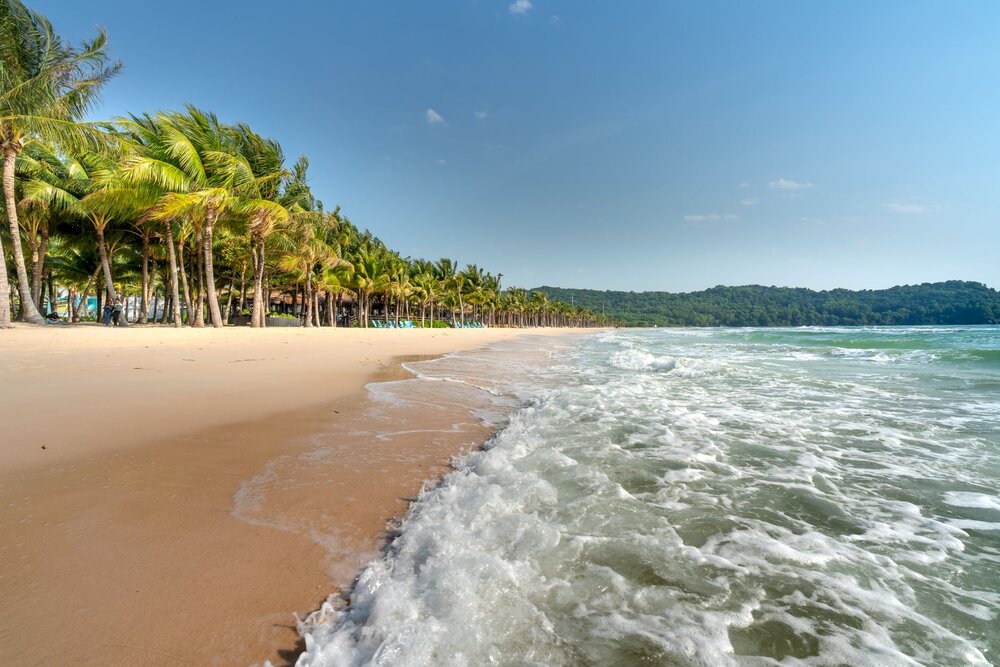
Phu Quoc is Vietnam’s largest island and its most developed beach destination — a 574 km² island in the Gulf of Thailand off the Cambodian coast, with white-sand beaches on its western and southern shores, a forested interior national park, and a rapidly expanding resort infrastructure. Sao Beach on the south coast is the finest white-sand beach on the island; Ong Lang Beach on the northwest is quieter with a more local character; Long Beach (Bai Truong) stretches 20 km along the west coast with the bulk of the resort strip. The dry season (November–April) gives Phu Quoc its clearest water and calmest conditions; the wet season (May–October) brings lower prices, fewer crowds, and occasional rough seas on the west coast.
Con Dao Islands
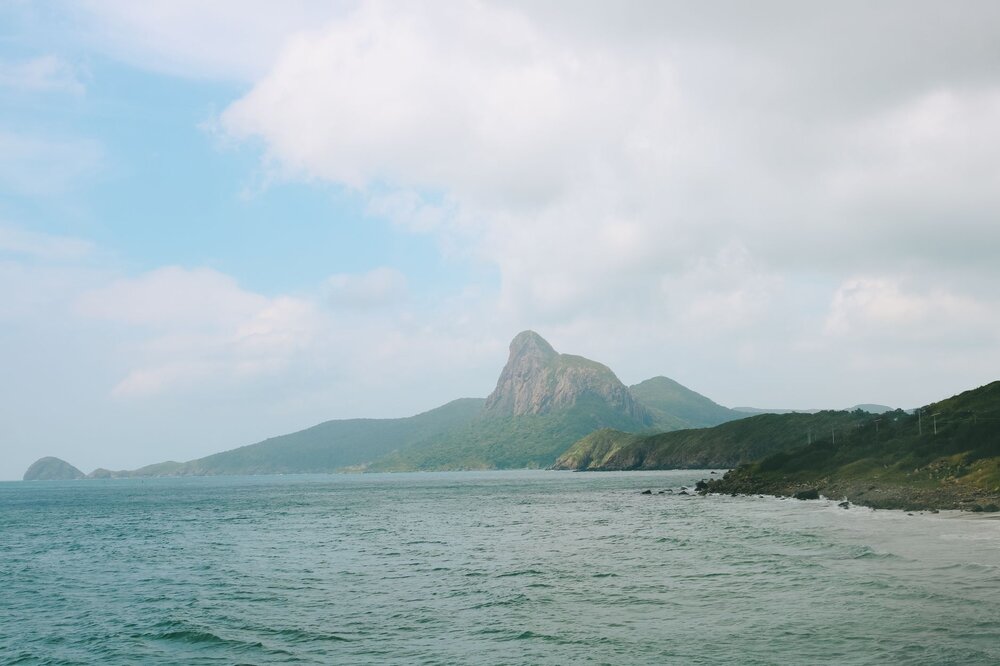
Con Dao is Vietnam’s most pristine beach destination — a remote archipelago of 16 islands 230 km off the southern coast, with no mass tourism, some of the best snorkelling and diving in Vietnam, and nesting sea turtle beaches protected by Con Dao National Park. The main island (Con Son) has a small town with guesthouses, seafood restaurants, and the dark-history colonial-era prisons; the surrounding waters have coral reefs, whale sharks (seasonal), and dugong habitat. Con Dao is the anti-Phu Quoc: deliberately unhurried, deliberately unspoilt. Fly from Ho Chi Minh City (45 minutes) or take the overnight ferry. November–May is the dive season; June–October has rougher seas.
My Khe Beach, Da Nang
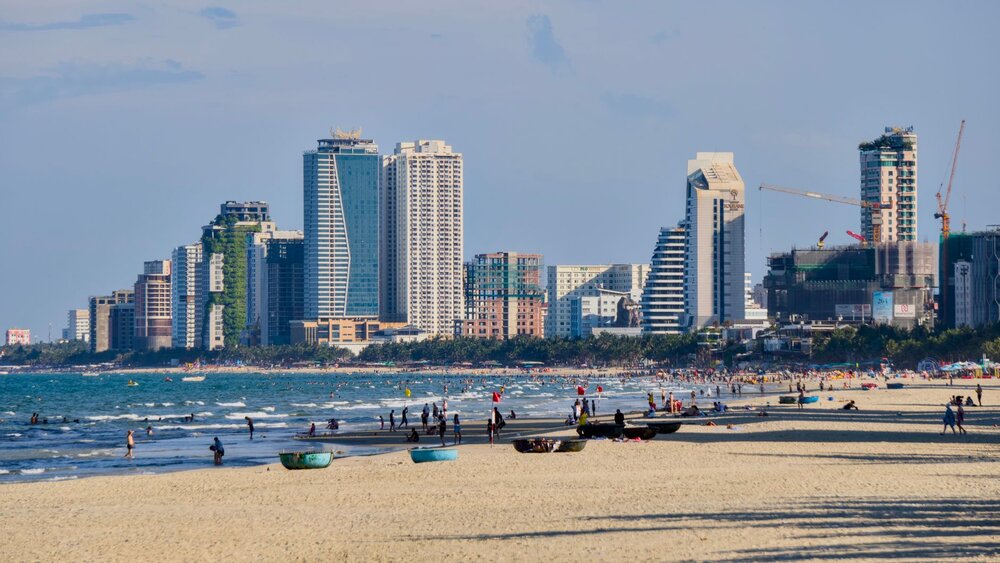
My Khe is the most accessible urban beach in Vietnam — a 9 km stretch of clean sand directly in front of Da Nang city, 5 minutes from the city centre by motorbike. The beach is wide, the sand is clean, the surf is manageable (surfboard rental available), and the row of seafood restaurants behind the sand serves the freshest catch at lunchtime. Da Nang’s position at the midpoint of the coast makes My Khe the central coast’s base beach — within day-trip distance of Hoi An (30 min), the Marble Mountains (15 min south), and the Hai Van Pass (30 min north). Best season: February–August; September–November brings the central coast’s northeast monsoon.
Ky Co Beach, Quy Nhon
Ky Co is Vietnam’s most underrated beach — a turquoise-water cove south of Quy Nhon backed by dramatic rocky headlands, accessible only by boat (20 minutes from Ky Co pier) or a steep 4WD track. The water is exceptionally clear by Vietnamese standards; the beach is uncrowded even in peak season; and the surrounding cliffs and rock formations give it a Mediterranean-in-the-tropics character that the flat beaches further south lack. Quy Nhon as a base is still largely unaffected by mass tourism — the accommodation is affordable, the seafood is excellent, and the central-coast beaches (Queen’s Beach, Eo Gio cliffs) are all within an hour of the city.
Best Time to Visit Vietnam’s Beaches
Vietnam’s coastline is long enough that the wet and dry seasons are staggered — when one coast is in monsoon, another is typically dry.
- Southern beaches (Phu Quoc, Con Dao, Mui Ne): November–April dry season; May–October wet season with rough seas on the west-facing coasts
- Central coast (Da Nang, Hoi An, Quy Nhon, Nha Trang): February–August dry season; September–December northeast monsoon with heavy rain and choppy seas
- Northern islands (Ha Long, Cat Ba): April–October is the main season; November–March is cold and sometimes foggy — swimming is possible but not the draw
- Best overall window: February–April hits all three zones in dry conditions simultaneously — the central coast is clear, the south is in full dry season, and the north is warming up
Beach Tips for Vietnam
- Jellyfish season: Box jellyfish appear on some central and southern beaches from March–May; ask locals before swimming if you see any washed up on the sand
- Sun protection: Vietnam’s tropical UV index (often 11–12 on the scale) is severe — SPF 50 sunscreen, a rash vest for snorkelling, and a midday break (11 AM–2 PM) are not optional on a full beach day
- Water safety: Rip currents are a genuine hazard on exposed beaches (My Khe, Rang Beach in Mui Ne) — swim between the flags where they exist; if caught in a rip, swim parallel to shore, not against the current
- Island transport: Most island beaches require a boat — book through your guesthouse the day before; last boats typically return by 4–5 PM; missing the last boat means an unplanned overnight
- Avoid plastic-heavy beaches: Some popular beaches (particularly around Nha Trang and Ha Long) accumulate plastic waste after storms — check recent reviews before booking beachfront accommodation
Tours & activities in Vietnam
Activity links above are affiliate or partner links.