
February is one of Pu Luong’s quietest and most intimate months. The rice terraces are in their post-harvest resting phase, showing earthy tones and bare sculpted fields rather than green or golden landscapes. Cool, misty mornings give way to mild afternoons, making walking between villages comfortable and unhurried. And if your visit overlaps with Tet, you’ll catch a side of rural Vietnamese life that most travellers never see — wood smoke from village kitchens, sticky rice being prepared, altars freshened with flowers, and neighbours calling on each other along the valley paths.
Weather in Pu Luong in February
- Daytime temperature: 16–22°C (61–72°F)
- Mornings and evenings: Cool, often dropping to 10–14°C — a fleece is needed
- Conditions: Misty mornings that typically clear by late morning; dry and pleasant through the afternoon
- Rainfall: Low
February is slightly warmer than January and generally dry. The cooler temperatures make walking and cycling through the valleys genuinely comfortable. Plan outdoor activities from late morning through mid-afternoon for the best conditions, and save misty early mornings for the terrace viewpoints.
What to pack: Layers are essential — a light fleece or warm mid-layer for mornings and evenings, breathable clothes for walking during the day, a waterproof jacket, and comfortable walking shoes with decent grip.
Tet in Pu Luong
Tet (Vietnamese Lunar New Year) falls in late January or February and transforms Pu Luong’s Thai and Muong villages into something quietly special. This is a family-centred celebration rather than a public festival — villages become more intimate rather than livelier. Homes are cleaned and decorated, altars are refreshed with fruit and flowers, and families gather to prepare traditional dishes together.
Some family-run guesthouses and small shops may close for a day or two around the main Tet days, but village life continues and most homestays remain open. If you’re staying with a local family over Tet, you may be invited to share a meal — one of the most genuine cultural experiences the region offers. Book accommodation well in advance if travelling during the Tet period, as it fills quickly.
Best Places to Visit in Pu Luong in February
Pu Luong Rice Terraces
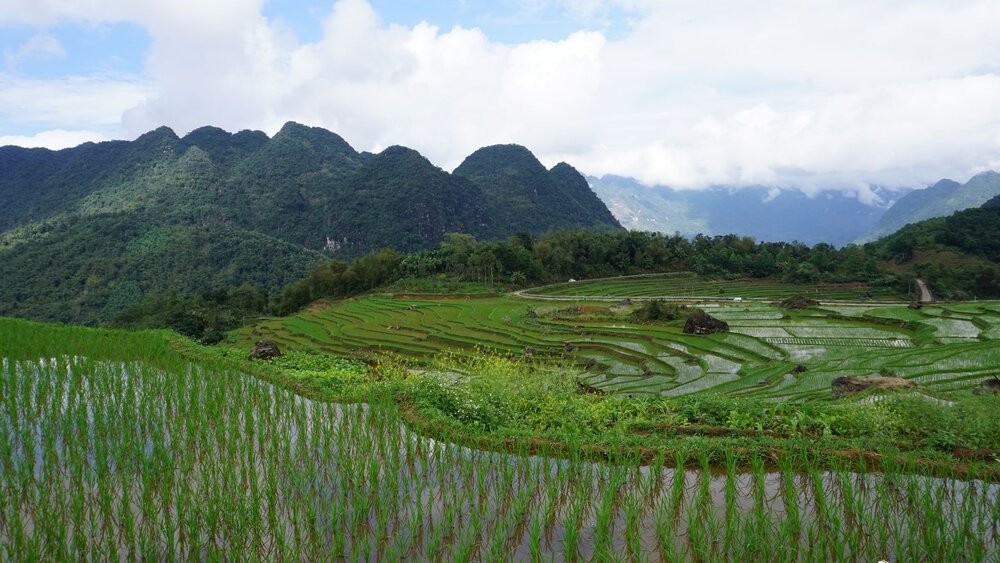
The terraces are bare in February — the harvest is long finished — but the sculpted hillsides have their own quiet beauty, especially when morning mist fills the valleys below. Walking the terrace paths between villages is peaceful and unrushed, with almost no other visitors. Early morning is the best time: position yourself at a high viewpoint before the mist lifts for a classic sea-of-clouds scene over the stepped valley.
Bamboo Water Wheels (Làng Tôm)
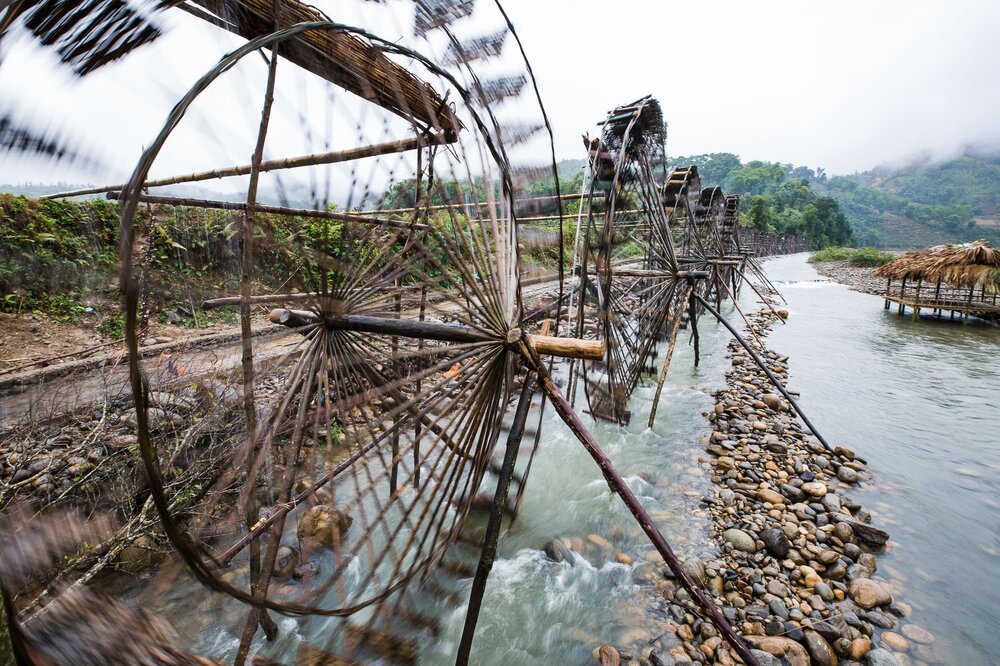
The traditional bamboo water wheels along the streams of Pu Luong are one of the reserve’s most photographed sights — and in February, with the light low and mist drifting through the valley, they’re at their most atmospheric. The wheels lift water from the stream into irrigation channels that feed the terraces above, using a design that has changed little for centuries. Walk the valley paths in Lang Tom village to find the best clusters.
Thác Hiêu (Hieu Waterfall)
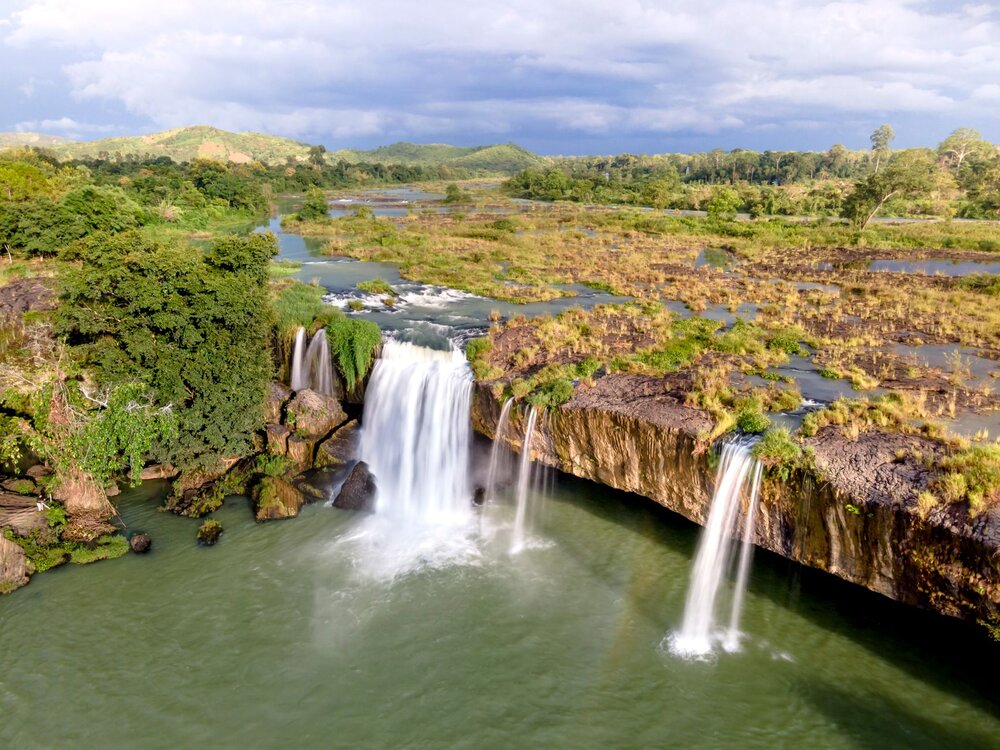
A multi-tiered waterfall set in the forest above Hieu village, reached via a 1–2 hour trail through the jungle. February’s dry conditions mean the waterfall is calmer than during the rainy season — the pools at its base are clear and, on warmer afternoons, swimmable. The trail passes through dense forest and is quieter in February than in any other month. A local guide from the village is recommended for the upper sections.
Lung Van Plateau
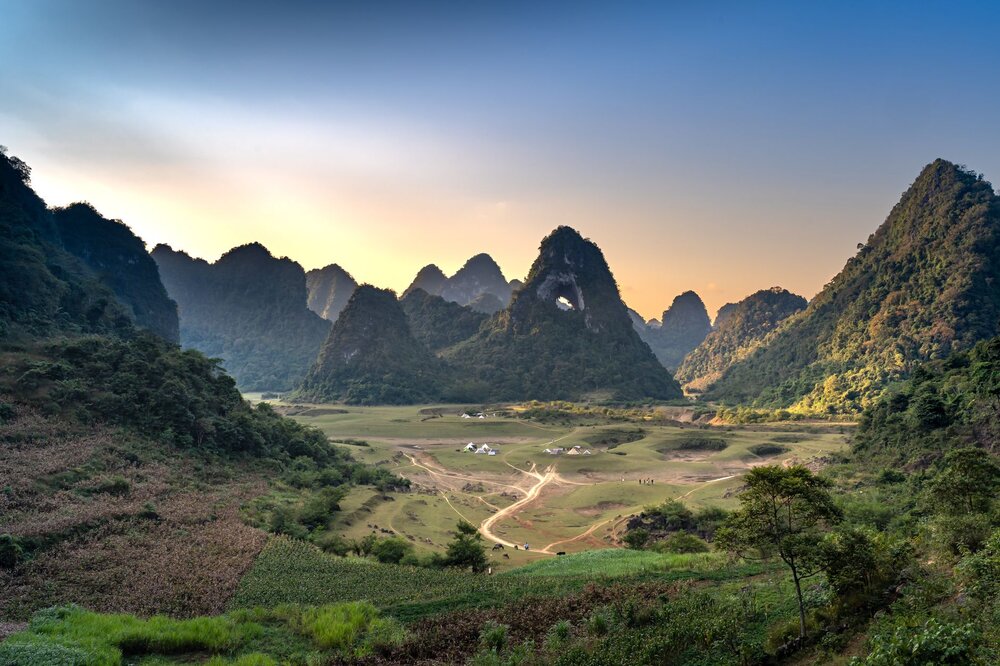
The high plateau above the main valley offers wide views over the Pu Luong landscape and a chance to visit Muong villages that see very few visitors. February’s cool, clear afternoons are ideal for the plateau walk — temperatures are comfortable for extended hiking and the air is clean after the dry season. The drive or motorbike ride up through hairpin bends is itself an experience.
Hang Đơi (Bat Cave)
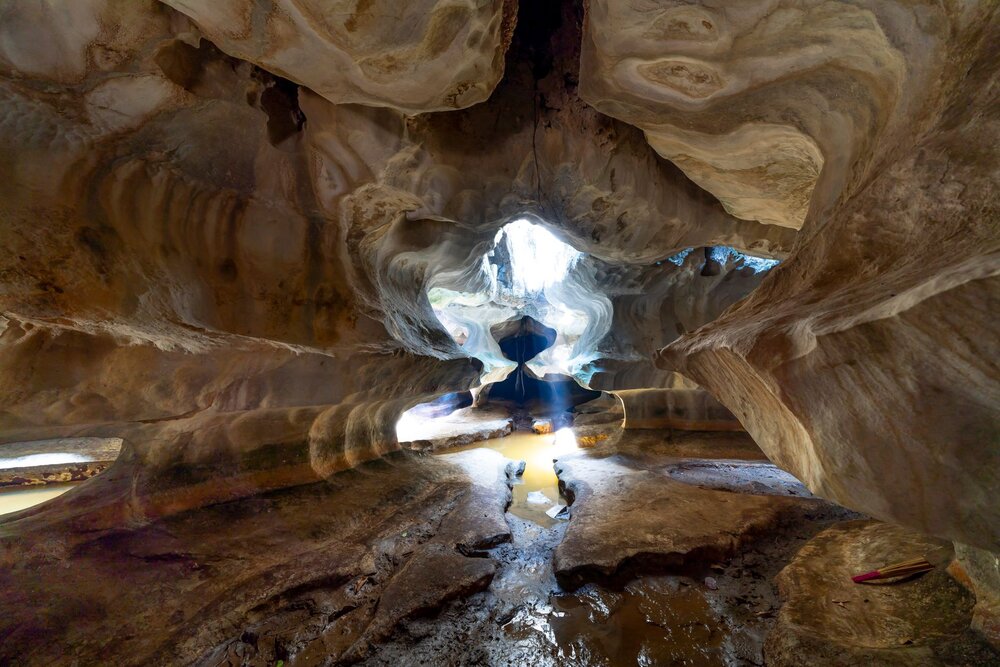
A limestone cave system at the edge of the reserve home to large colonies of bats — hence the name. The cave is most dramatically visited at dusk when thousands of bats emerge in spiralling clouds to feed. February’s cooler temperatures make the evening wait more comfortable than in summer. The walk to the cave through the surrounding forest is pleasant in the dry season.
Bamboo Rafting on the Cham River
A slow bamboo raft ride along the Cham River through the valley, passing between forested hills and village rice fields. February’s low water levels make the river calmer and clearer than in the rainy season — good for spotting fish and enjoying the reflections of the surrounding landscape. Most homestays and eco-lodges can arrange a raft trip; the standard route takes 1–2 hours.

Best Things to Do in Pu Luong in February
- Village walks: Explore Thai and Muong settlements at a leisurely pace — February’s quiet means you’re often the only visitor on the paths between hamlets
- Terrace viewpoints at sunrise: Position yourself at a high point before 7 AM for mist-filled valley views; the light clears by mid-morning
- Homestay stay: Spending a night or two with a local family is the best way to experience Pu Luong — especially around Tet, when village rhythms slow and domestic life takes centre stage
- Cycling the valley: Flat sections of the valley floor are well-suited to bicycle; ask your accommodation to arrange hire
- Don Market: Held on Fridays and Sundays, the local market at Don draws Thai and Muong vendors selling produce, herbs, textiles, and handmade goods — a genuine community market with very few tourists
Travel Tips for February
- Book accommodation early if visiting around Tet — family homestays fill up quickly and some close for a day or two during the main festival days
- Use private transport for flexibility; public buses serve the main roads but not the smaller villages
- Schedule walks and outdoor activities from late morning through mid-afternoon for the warmest conditions
- Bring cash — ATMs are limited in the reserve; withdraw in Hanoi or at the nearest town before arriving
- Weekdays are significantly quieter than weekends, when tour groups arrive from Hanoi
- If visiting Don Market, go early (before 9 AM) when it is most active
Tours & activities in Pu Luong
Activity links above are affiliate or partner links.