
Cat Ba Island sits at the southern edge of Ha Long Bay, sharing the same limestone karst scenery but with a working fishing town, a national park covering more than half its land area, and far fewer boats on the water. Most visitors come for Lan Ha Bay — the quieter, southern section of the karst archipelago that Cat Ba overlooks — but the island itself rewards slower exploration: jungle trails, a wartime hospital buried inside a clifftop cave, and beaches a short walk from town.
Lan Ha Bay
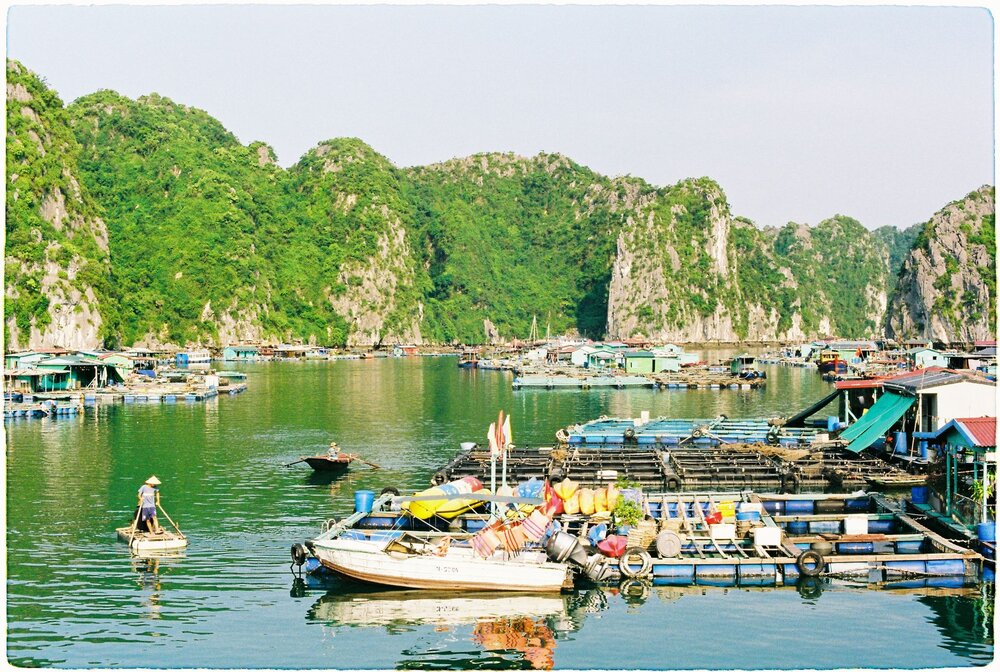
Lan Ha Bay is the main reason people base themselves on Cat Ba rather than doing a standard Ha Long Bay cruise from Bai Chay. The bay has the same karst towers and emerald water as Ha Long, but boat traffic is a fraction of what you encounter in the main bay — anchoring spots feel isolated even on busy days. Day tours and overnight cruises depart from Cat Ba Town; most overnight itineraries loop through both Lan Ha Bay and the southern reaches of Ha Long Bay. Kayaking is included on most tours and gets you into narrow channels and hidden lagoons that larger boats cannot enter. Book at any tour desk in town, or arrange in advance online — the overnight trips in particular fill up at weekends.

A floating homestay in Lan Ha Bay is a step further: nights on a raft moored among the karst towers, with swimming straight from the platform. The morning light before other boats arrive is what makes it worth doing.
Cat Ba National Park
Cat Ba National Park covers 263km² of the island’s northern half — dense subtropical forest on karst terrain, home to the endangered Cat Ba langur, one of the rarest primates on Earth. Trails range from a short walk to Trung Trang Cave (a limestone cavern inside the park, accessible with a guide) to longer ascents to viewpoints above the treeline. The trails get muddy after rain; proper footwear matters. The best single day out combines a morning trek through the park, a boat across to Viet Hai village on the eastern coast, and a bike ride back through the valley.
Cat Co Beaches
Three small beaches — Cat Co 1, 2, and 3 — sit in sheltered coves a short walk south of Cat Ba Town. Cat Co 3 is the pick: the least built-up of the three, with calm, generally clear water and a natural cove setting. All three are reachable on foot from town. The Rock Trail connects them along the clifftop, with open views over the surrounding sea — go early morning or late afternoon to avoid the heat, and bring water as there is no shade along the route.
Cannon Fort
Cannon Fort is a short uphill walk from Cat Ba Town, taking about 20 minutes from the harbour. The fort itself — a WWII-era installation with old gun emplacements and crumbling lookout posts — is the destination, but the view is the point: a 360° panorama over the karst islands, the town, and the bay. Come for sunset. The light on the limestone towers in the last hour before dark is the best view on the island.
Hospital Cave
Hospital Cave is a concrete complex built inside a limestone cave and used as a secret, bomb-proof hospital during the American War — first by the Viet Cong, then expanded with Soviet technical assistance. The wards, operating theatre, and connecting tunnels are largely intact and open to walk through. Getting there is easiest by scooter (rentable from any hotel) or as part of an island tour. Allow 45–90 minutes. It is not the island’s most essential stop if time is tight, but it fills in the history of what happened in northern Vietnam in ways the more-visited war sites in the south do not.
Kayaking and Bioluminescent Plankton
After dark, the waters around Cat Ba contain bioluminescent plankton — disturb the water and it glows. Kayak tours that start at dusk and paddle into the darkness after sunset are the standard way to see it. Daytime guided kayak tours are also available, stopping at quieter bays and small beaches along the island’s coastline. Both can be arranged through tour desks in Cat Ba Town.
Best Time to Visit
Planning a trip to Cat Ba? We arrange private guided tours — day trips, multi-day itineraries, and custom routes.
October to April is the reliable season: dry, clear, with calm bay conditions. May to September brings the southwest monsoon — boat tours can be suspended for safety during storms, sometimes for several days at a stretch. The island stays accessible by land regardless of weather, but the bay experience is the reason most people come. July and August are peak season with higher prices and more boats on the water; October is the single best month for hiking, bay conditions, and fewer crowds.
Getting There
From Hanoi, the journey takes 3–4 hours. The easiest option is a shuttle bus and speedboat combo sold through any travel desk in the Old Quarter — the operator picks up from your hotel and drops you at your accommodation in Cat Ba Town. The DIY alternative is a local bus or train to Hai Phong, taxi to the ferry terminal, and a local bus from the ferry landing to Cat Ba Town; it costs less but requires three separate transfers. From Ha Long Bay (Bai Chay), a direct ferry or speedboat takes 1–2 hours. From Ninh Binh, combined bus-and-ferry tickets through hotels or travel agencies cover the 4–5 hour journey via Hai Phong.
Getting Around
Scooter rental is the primary way to get around — every hotel offers it, and the island roads are manageable. Grab does not operate on Cat Ba. If you are staying in Cat Ba Town, the Cat Co beaches and Cannon Fort are walkable. For Hospital Cave, the national park, and anywhere else on the island, a scooter or private driver is needed. Guided day tours cover most of the island’s highlights and include transport.
Where to Stay
Cat Ba Town has accommodation across all budgets. Backpacker hostels (around $15–20/night) cluster on the main strip near the pier; mid-range hotels ($40–70/night) are a five-minute walk from the same area. The Flamingo Resort sits further from town, directly on a beach, with pool and resort facilities ($100–120/night). Floating homestays in Lan Ha Bay are bookable through tour operators in town — one or two nights is the typical stay.
Where to Eat
The food scene is built around fresh seafood from the island’s working fishing harbour. The Healing Kitchen stands out for coffee and lighter meals; The Little Leaf has a garden setting and a short menu of fresh dishes; Secret Garden Cafe is the most atmospheric evening option, with plants, lanterns, and both Vietnamese and Western food. For pizza specifically, Olivium and My Way Pizza both have good reputations among repeat visitors. Most restaurants are within walking distance of the main harbour strip.