
Hanoi has been Vietnam’s capital on and off since 1010, and a thousand years of history sit visibly on its surface — French colonial villas, Confucian temple courtyards, and a tangled Old Quarter of 36 guild streets all within walking distance of each other. The climate splits into a humid, hot summer and a cool, misty winter, giving the city genuine seasons rare elsewhere in Vietnam. Come for the layered history; stay for a street food scene that rivals any in Asia.
Hanoi Old Quarter
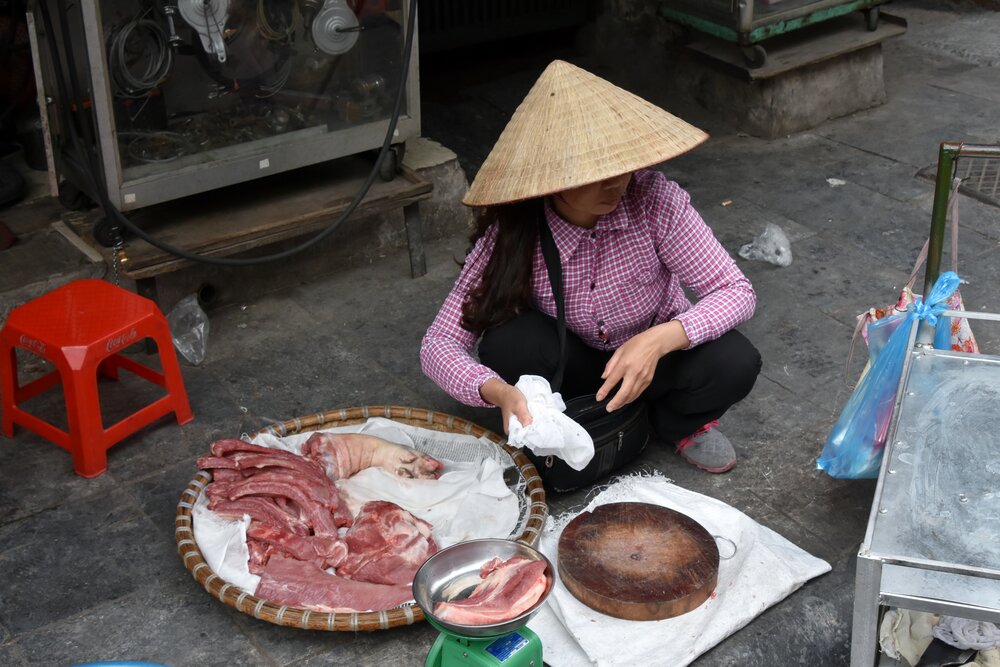
The Old Quarter’s narrow streets were built around the guilds that once traded there, and the system is still legible: Hang Bac for silver, Hang Ma for votive paper and lanterns, Hang Gai for silk, Hang Duong for sweets. Walk slowly — the neighbourhood rewards aimless turns more than a checklist. Most of the interesting shopfronts, street stalls, and tube houses are on streets the tour maps don’t label. Weekends bring a pedestrian zone around the lake and a night market along Hang Dao, worth an evening wander even if you’re not buying.
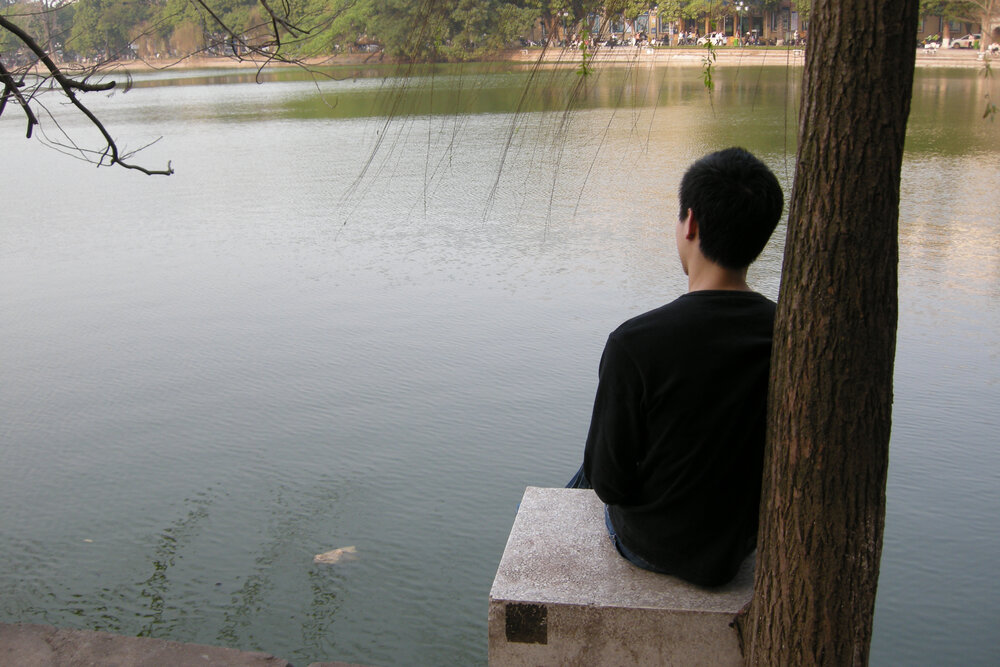
Hoan Kiem Lake & Ngoc Son Temple
Hoan Kiem Lake anchors the Old Quarter’s southern edge and gives the city its daily rhythm: tai chi groups at dawn, families and food vendors at dusk, teenagers sitting on the railings all hours. The red Huc Bridge leads to Ngoc Son Temple on a small island — there’s an entrance fee, modest but worth paying for the view back across the water. The lake’s resident giant softshell turtle, long part of the legend of Emperor Le Loi’s returned sword, died in 2016; the legend remains.
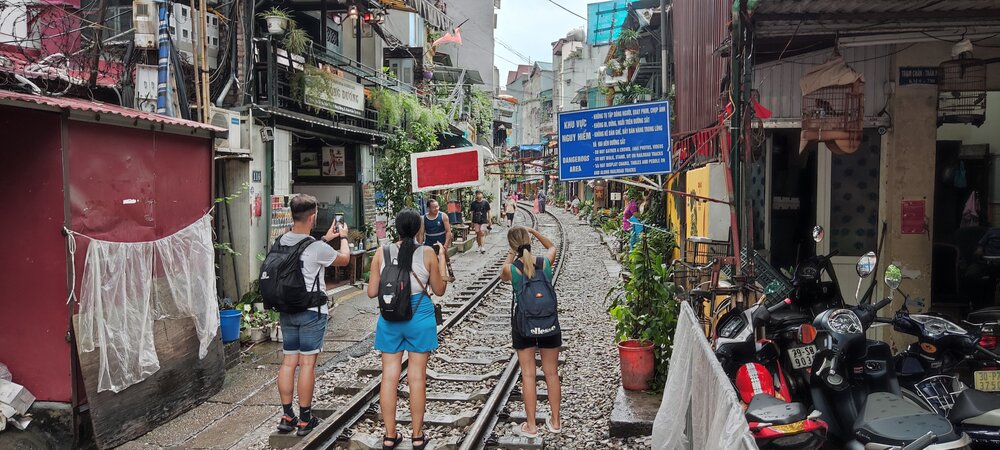
Train Street
Twice a day a train runs through a residential alley in the Old Quarter, passing within arm’s reach of house walls, balconies, and coffee tables. The famous spot fills with tourists well before each pass; if you want a quieter version, the train also runs through a second stretch south of Hoan Kiem near Coffee 1990, which draws fewer crowds. The government has periodically threatened to close both sections to tourists — check current status before making it a priority. Five passes run daily, with times roughly at 7:00, 9:30, 12:00, 15:30, and 19:00, though not guaranteed.
Temple of Literature
Vietnam’s first national university, founded in 1070, the Temple of Literature is a sequence of five courtyards dedicated to Confucius and the scholars who studied here over seven centuries. Stone stelae mounted on stone turtles record the names of doctoral graduates going back to 1442 — 82 remain of an original 116. The innermost courtyard still holds a statue of Confucius flanked by his disciples, and on exam season local students come to leave offerings for luck. Go early to have it to yourself; it gets busy by mid-morning.
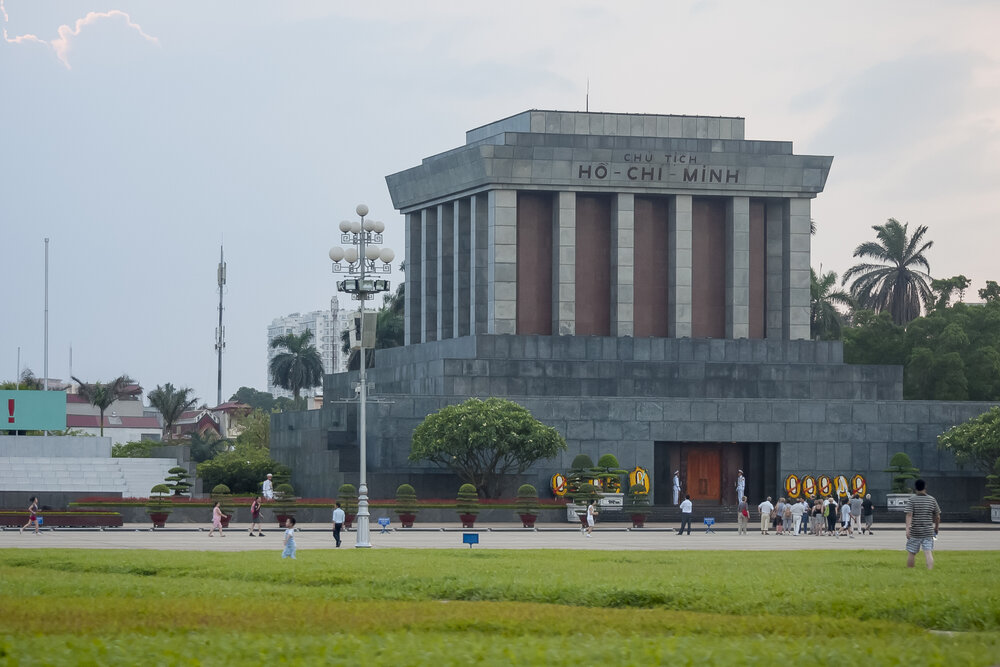
Ho Chi Minh Mausoleum & One Pillar Pagoda
The Ho Chi Minh Mausoleum holds the embalmed body of Vietnam’s revolutionary leader in a granite structure modelled on Lenin’s tomb in Moscow, guarded around the clock and open to visitors in respectful silence. Just beside it, the One Pillar Pagoda rises from a single stone column out of a lotus pond, built in the 11th century to resemble a lotus blossom — one of Vietnam’s most recognisable religious structures despite its small size. The complex also includes Ho Chi Minh’s stilt house and gardens. The mausoleum is closed on Mondays, Fridays, and for several weeks each autumn while Ho Chi Minh’s body is sent to Russia for preservation.
Tay Ho & West Lake
Tay Ho is Hanoi’s largest lake and the city’s more relaxed counterpart to the Old Quarter, ringed by lakeside cafes, restaurants, and the Xuan Dieu strip popular with expats and digital nomads. On a small peninsula jutting into the lake sits Tran Quoc Pagoda, Hanoi’s oldest Buddhist temple at roughly 1,500 years, its multi-tiered tower catching golden light at sunset. The Imperial Citadel of Thang Long, a UNESCO World Heritage site tracing Vietnamese royal history through eleven centuries of occupation layers, is a short taxi ride away and is far less visited than the mausoleum complex.
Food & Coffee
Bun cha is Hanoi’s signature lunch: grilled pork patties and pork belly served in a sweetened broth alongside a plate of rice vermicelli and fresh herbs. Bun Cha Ta near Ta Hien Street and Bun Cha 74 Hang Quat are consistently good; portions are smaller than you expect, so order generously. Pho bo here is a simpler, cleaner bowl than the southern version — Pho Bo Duong Tua does plastic stools, fast service, and herbs on the side. Cha ca La Vong, turmeric-and-dill fish fried tableside, gave its name to an entire street in the Old Quarter and is worth one sit-down meal.
Egg coffee — a thick, whipped mixture of egg yolk, condensed milk, and coffee — was invented at Cafe Giang on Hang Gai in the 1940s when fresh milk was scarce, and they still make the best version. HEBECA Roastery is the pick for specialty filter coffee with actual origin information. The Note Coffee on Dinh Tien Hoang is the most photographed — every surface covered in tourist post-it notes — but the coffee is mediocre and overpriced. For evening drinks, Ta Hien Street (Beer Street) north of the lake has the densest concentration of bars and a reliably lively atmosphere, though the craft beer is unremarkable.
Day Trips from Hanoi
Bat Trang Ceramic Village, 15km southeast on the Red River, has been producing pottery for around 700 years. You can throw pots on a wheel, buy finished ceramics from hundreds of stalls, or just walk the lanes between the kilns. It’s an easy half-day trip by taxi or bus 47 from Long Bien station.
Quang Phu Cau Incense Village, about 40km southwest, has been making incense for over a century. The courtyard drying racks — bundles of red, purple, and pink incense fanned out in circles — photograph strikingly and the work is still entirely manual. Best visited on a guided tour since independent transport is inconvenient and the village has limited signs in English.
The Perfume Pagoda complex south of the city combines a scenic boat ride along the Yen Stream with a cable car or hike up to a limestone cave temple. It draws large crowds during the spring festival (roughly February to April) but is quieter the rest of the year. Ninh Binh is a better day trip if you only have one — closer, less crowded, and the boat rides through Trang An are comparable.
For something more active, countryside Vespa tours run half-day morning circuits through rice fields, villages, and local markets outside the city — several operators run these, and they include a local lunch.
Best Time to Visit
Planning a trip to Hanoi? We arrange private guided tours — day trips, multi-day itineraries, and custom routes.
October to December is Hanoi’s best window: humidity drops, skies clear, and temperatures sit between 18–25°C. March and April bring mist, occasional drizzle, and blooming flowers — pleasant but grey. Summer (May–August) is hot, sticky, and above 32°C with afternoon downpours. Winter (December–February) turns surprisingly cold and damp, sometimes dipping to 10°C with a persistent grey chill that catches visitors expecting tropical warmth. Tet (Lunar New Year, late January or February) transforms the city with flower markets but closes most restaurants and shops for four to seven days — plan around it or embrace the emptied streets.
Getting There
Noi Bai International Airport (HAN), about 30–45 minutes north of the city centre, is Vietnam’s main northern gateway with direct flights from major Asian hubs and a growing number of long-haul routes. Grab is the most reliable way into the Old Quarter and costs around 250,000–300,000 VND (roughly $10–12); avoid touts in the arrivals hall. Overnight sleeper trains and buses connect Hanoi to Sapa, Ninh Binh, and points further south.
Where to Stay
The Old Quarter puts you inside the action — narrow boutique hotels above bustling streets, walkable to Hoan Kiem Lake and the night market. Expect noise: most streets don’t quiet down until after midnight. The French Quarter around the Opera House offers a quieter, wider-boulevarded alternative with a more colonial feel. Tay Ho suits longer stays, with serviced apartments, lakeside cafes, and a slower pace about 20 minutes by taxi from the centre.
Practical Tips
Traffic: Cross streets slowly and steadily — motorbikes read your trajectory and flow around you. Don’t stop suddenly or change pace. Traffic lights exist at major intersections; use them where available, especially on wide roads.
Money: Most street food stalls and local restaurants are cash-only. ATMs are common; HSBC next to Hoan Kiem Lake has lower fees than the tourist-area machines. Keep small denomination notes — 10,000 and 20,000 VND — for street food.
SIM and connectivity: Local SIMs from Viettel or Vietnamobile are sold at the airport and throughout the Old Quarter for around $5–8 including data. You’ll need a passport to register. Essential for Grab, Google Maps, and translation.
Getting around the city: The Old Quarter and Hoan Kiem area are walkable. For anywhere beyond — Tay Ho, the mausoleum complex, the train station — Grab is cheap and reliable. Cyclos (three-wheeled pedicabs) around the Old Quarter are for tourists; negotiate a price before getting in.