
Da Nang doesn’t have the old-city depth of Hue or Hoi An, but it has a long beach, a forested peninsula with wildlife, a world-class Cham sculpture museum, and a food scene that goes well beyond the tourist strip. Two days covers the essentials.
2 days in Da Nang
Day 1
Morning — Beach, then Marble Mountains
Start at the beach at dawn. The water faces east, so the morning light is good and the locals are already there. The stretch at the end of Pham Van Dong Street or Nguyen Van Thoai Street is where Vietnamese families set up — quieter than the hotel sections further north. Swim, then grab a coconut from a beach vendor. As you face the sea, note the large white Guanyin statue on the peninsula to your left — that’s Son Tra, where you’re going tomorrow.
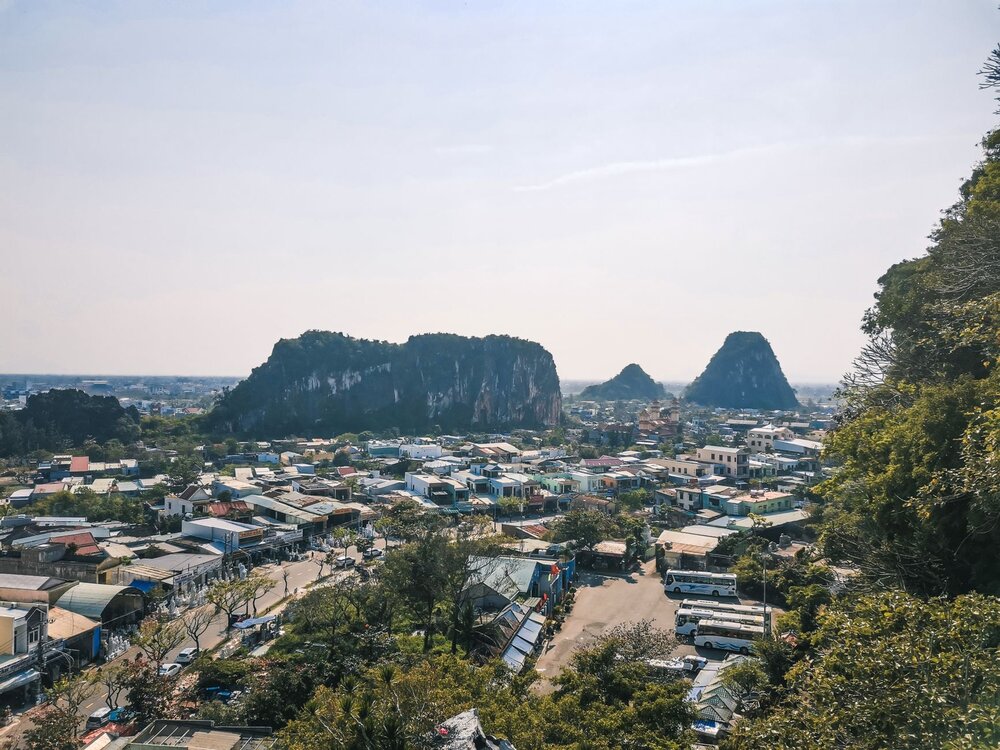
Take a taxi south along the coastal road to the Marble Mountains — five limestone peaks riddled with caves, shrines and pagodas. They were mined for marble for decades; now the grottoes hold religious sites. Go to Thuy Son (Water Mountain), the largest, which has over a dozen temples and several viewpoints. Allow 1.5–2 hours. Motorbike taxis wait at the base if the climb isn’t appealing.
Address: 81 Huyen Tran Cong Chua, Hoa Hai, Ngu Hanh Son
Lunch — Bé Man
Taxi back north along the coast to Bé Man on My Khe Beach for seafood. The menu is live-catch: crabs, lobsters, geoduck, squid. The Michelin inspectors call out the steamed squid with ginger and spring onion — it comes with a side of salad greens and a sharp dipping sauce. Order by weight at the tank out front.
Address: Lo 8 Nguyen Giap, Man Thai, Son Tra
Afternoon — Cham Museum, café strip, Dien Hai Citadel
The Museum of Cham Sculpture on 2 Thang 9 Street is the best museum in central Vietnam and the largest collection of Cham art in the world. The Cham ruled this coast from roughly the 2nd to the 17th century — a Hindu civilisation with strong Indian Ocean trade links. The sandstone sculptures here span from the 7th to the 15th century: Shiva lingas, apsara dancers, multi-armed gods, temple pediments. It’s air-conditioned, uncrowded, and takes about an hour. Don’t skip the courtyard pieces.
Address: 2 Thang 9, Binh Hien, Hai Chau | Open daily 7am–5pm | ~40,000 VND entry
Afterwards, walk or grab a taxi to 113 Nguyen Chi Thanh Street — a block of cafés popular with students, ranging from retro shophouses to garden spaces. Good for an afternoon coffee. From there it’s a 5-minute walk north to the early 20th-century Dien Hai Citadel, one of the few remaining French-era military fortifications in Vietnam. The Da Nang Museum is inside — the photography archive showing the city’s shift from fishing village to modern port city is the most interesting part.
Address: Thach Thang, Hai Chau
Dinner — Bún Cha Ca 109
Just south of the citadel, Bún Cha Ca 109 serves the Da Nang dish worth knowing: vermicelli rice noodles in a clear fish and seafood broth, with bamboo shoots, cabbage, pineapple, fish balls, and crab cakes. It’s a breakfast staple locally but served all day. A bowl costs around 40,000–50,000 VND.
Address: 109 Nguyen Chi Thanh, Hai Chau 1, Hai Chau
Evening — Dragon Bridge
After dinner, walk to the Dragon Bridge on Cau Rong. The bridge is lit up at night and the riverside promenade along Bach Dang Street is where Da Nang comes out to walk. If it’s Saturday or Sunday, cross to the east bank by 9pm — the dragon’s head breathes fire on the hour, and there’s a water show directly after.
Address: Cau Rong, An Hai Trung, Son Tra
Day 2
Morning — Son Tra Peninsula
The Son Tra Peninsula is a forested headland 10 km northeast of the city centre — jungle road, military-era infrastructure, and a resident population of red-shanked douc langurs, one of the most colourful primates in Asia and endangered. Rent a motorbike (around 150,000 VND/day) or take a taxi. The road loops around the peninsula; allow 2–3 hours for a proper circuit.
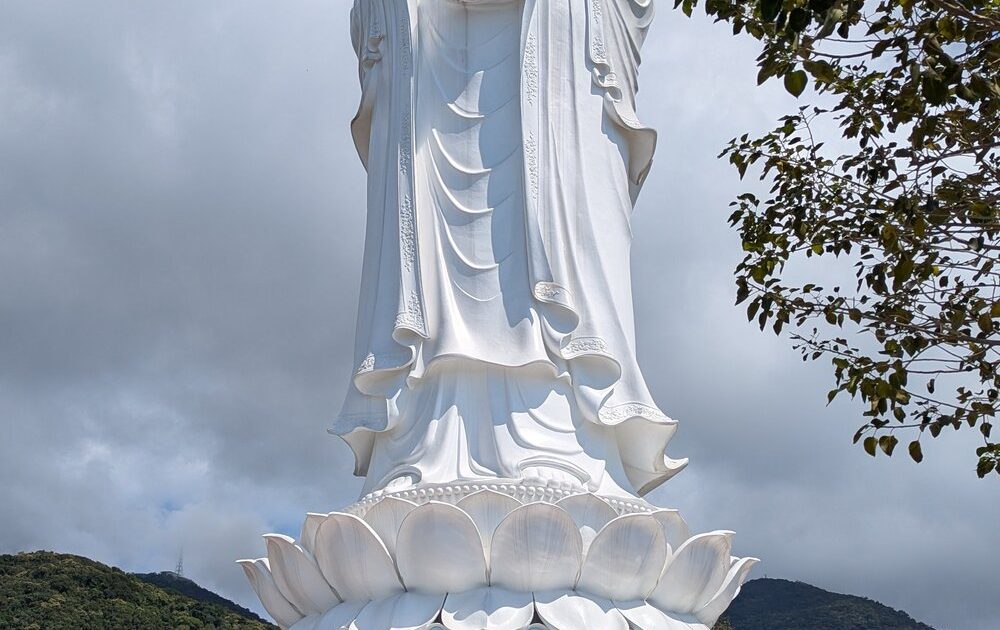
Start at Linh Ung Pagoda, on the southern slope of the peninsula facing the sea. The 67-metre white Guanyin statue is the one you saw from the beach yesterday. The pagoda is active and well-maintained — shoes off at the entrance. From here, drive further into the peninsula and slow down where the forest canopy is thick — the langurs tend to come down to the roadside trees in the morning. There are around 1,300 left on Son Tra; you have a reasonable chance of seeing them.
Address: Son Tra Peninsula, Son Tra District
Lunch — Nam Hien
On the way back into town, stop at Nam Hien on Phan Thanh Street for banh xeo — a crispy rice-flour pancake filled with shrimp and beansprouts, served with fresh herbs and a peanut dipping sauce. The pancake arrives sizzling and is meant to be torn and wrapped in the lettuce leaves provided. Order one per person minimum.
Address: 46 Phan Thanh, Thac Gian, Thanh Khe
Afternoon — Fine Arts Museum, then beach
The Da Nang Fine Arts Museum on Le Duan Street is quiet and undervisited — mostly painting and lacquerwork from artists based in central Vietnam. The lacquer pieces on the upper floor are the standout: the technique involves dozens of layers applied and sanded over months, and the finished surface has a depth that’s hard to photograph. Give it an hour. Entry is cheap.
Address: 78 Le Duan, Thach Thang, Hai Chau | Open Tue–Sun 8am–5pm
After the museum, go back to the beach for a final swim before dinner.
Dinner — Luk Lak
Luk Lak on Bach Dang Street is on the Han River promenade and serves modern Vietnamese food. The grilled ground beef with herbs and lemongrass is the dish to order — wrapped in rice paper with herbs, or eaten alongside sticky rice and cassava. The riverside setting works well at night.
Address: 28 Bach Dang, Thach Thang, Hai Chau
Evening — Han River
After dinner you’re already on Bach Dang Street. Walk the riverfront — the illuminated bridges are visible from the promenade, and the Han River Swing Bridge (built 1929) rotates at midnight on weekends to let boats through. Riverside bars line this stretch if you want to extend the night.
Connect and book directly with local licensed tour operators at tour.vietnam-guides.com

5 days in Da Nang by private car
A private car gives you the flexibility to cover Da Nang, Hoi An, Ba Na Hills, My Son, and a day in Hue without relying on public transport or group tours. This itinerary is arranged to balance travel time with time on the ground at each place.
Day 1 — Arrival, Hoi An Old Town
Pick up from Da Nang airport and drop luggage at your hotel, then head straight to Hoi An — 30 km south along the coast road, about 45 minutes. Start at the Thu Bon River for a bamboo basket boat (coconut boat) ride through the water coconut palms of Bay Mau Forest. The boats spin in tight circles; the boatmen propel them with one oar while the passengers hold on. Allow 30–45 minutes.
Lunch in town — Hoi An has more local restaurants per street than anywhere else in central Vietnam. Cao Lau (thick rice noodles with pork, char and local herbs) is specific to Hoi An and worth ordering. Afterwards, the Old Town:
- Japanese Covered Bridge — 18th-century structure with a small pagoda built into one end; the most photographed spot in the town
- Ancient merchant houses — several open to visitors on ticket; Tan Ky House on Nguyen Thai Hoc Street dates to around 1800
- Hoai River front — the riverside fills in the late afternoon; boats leave from here for flower lantern releases on the water after dark
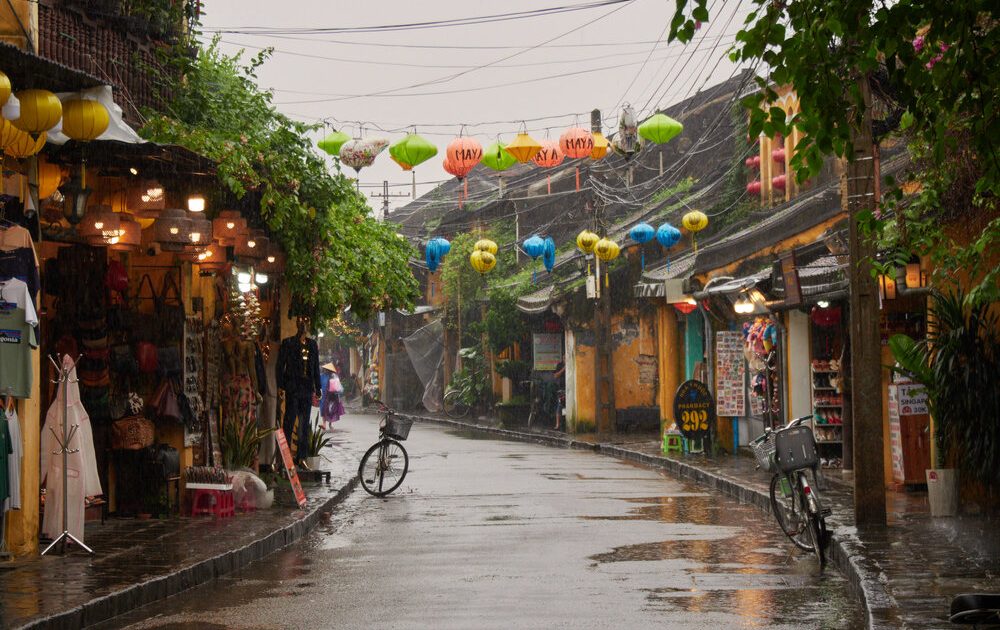
Back to Da Nang hotel by evening.
Day 2 — Ba Na Hills
Ba Na Hills sits at 1,487 metres in the Truong Son range, about 40 km west of Da Nang. The drive takes roughly an hour. The cable car to the summit is one of the longest in the world at 5,801 metres — the views over the forest are clear on most mornings before cloud comes in around midday, so go early.
At the top:
- Golden Bridge — the two-giant-hands bridge that went global in 2018; it crosses a forested ridge at around 1,400 metres. Go early for fewer crowds and better light
- French Village — a recreation of a French hill-station from the colonial era; the architecture is consistent and the gardens are well-kept
- Wine cellar and wax museum — both inside the French Village complex
- Buffet restaurant — the main dining option at the summit, with a large selection; included in some ticket packages

Back to Da Nang hotel by evening.
Day 3 — Linh Ung Pagoda, Marble Mountains, My Son
A long day combining the Son Tra Peninsula, the southern coast, and an archaeological site inland. Start early.
Linh Ung Pagoda on Son Tra Peninsula — the 67-metre white Guanyin statue faces the sea and the city. The pagoda is active. Allow 30–45 minutes, and keep an eye on the tree canopy on the drive in — red-shanked douc langurs come to the roadside trees in the morning.
Non Nuoc Stone Carving Village — just north of the Marble Mountains, the village has produced carved marble since the 17th century. The workshops are open and working; you can walk through and watch without buying. It’s a 10-minute stop.
Marble Mountains — five limestone peaks directly south of Da Nang. Go to Thuy Son (the largest): caves, grottoes, and a dozen active shrines inside the limestone. Climb to the top for views over My Khe Beach and the coast. Allow 1.5–2 hours.
Continue 45 km south to My Son Sanctuary — a cluster of Hindu temples built between the 4th and 14th centuries by the Cham kingdom. The ruins are in a jungle valley; the best-preserved groups are A, B, C, and D. The site was heavily bombed in 1969 and not all groups are accessible, but enough survives to make the visit worth the drive. Allow 1.5–2 hours. Open 6am–5pm, entry around 150,000 VND.
Back to Da Nang hotel.
Day 4 — Hue day trip
Hue is 100 km north on Highway 1 — roughly 2 hours each way through the Hai Van Pass, which has views over the coast and the bay below. The day is long so leave by 7am.
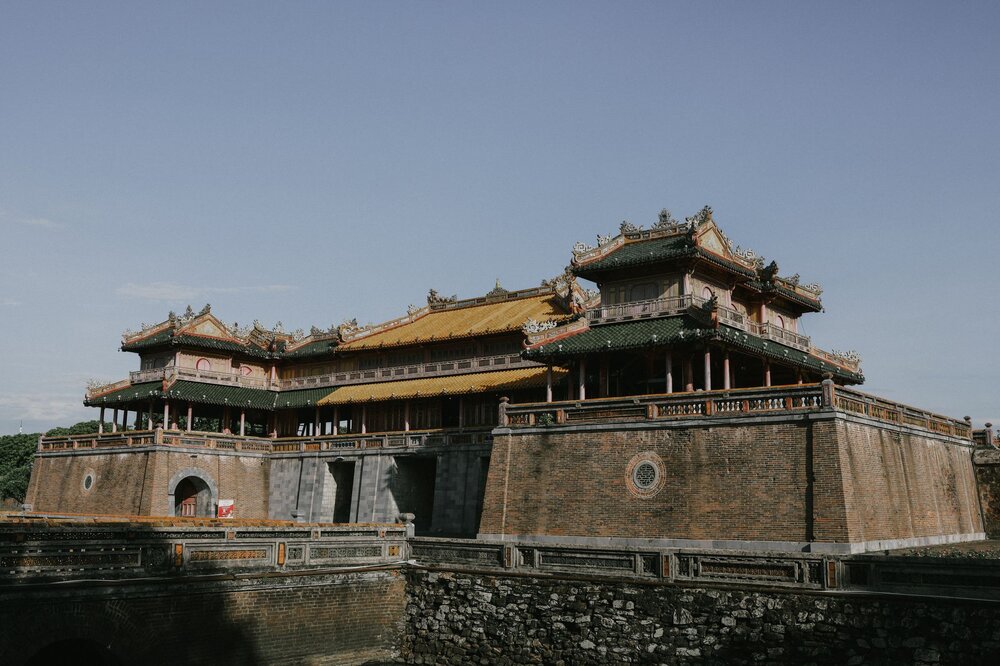
- Hue Imperial City — the walled citadel and royal enclosure of the Nguyen dynasty (1802–1945). The citadel walls alone take 20 minutes to walk. Inside: throne halls, royal residences, pavilions, and the Flag Tower. Allow 2 hours minimum
- Thien Mu Pagoda — on the Perfume River, 3 km west of the city; the seven-storey Phuoc Duyen tower is the icon of Hue. The pagoda is active and the riverside setting is good in the afternoon light
- Khai Dinh Tomb — the most elaborate of the royal tombs, built 1920–1931 in a hybrid Vietnamese-European style; mosaics cover almost every interior surface
- Tu Duc Tomb — the most peaceful of the tombs, set in pine forest with pavilions over a lake; built during the emperor’s lifetime as a retreat
Lunch in Hue — Bun Bo Hue (spicy beef noodle soup) is the local dish; most restaurants near the citadel serve it. Return to Da Nang by evening.
Day 5 — Da Nang city, then airport
A lighter morning before departure.
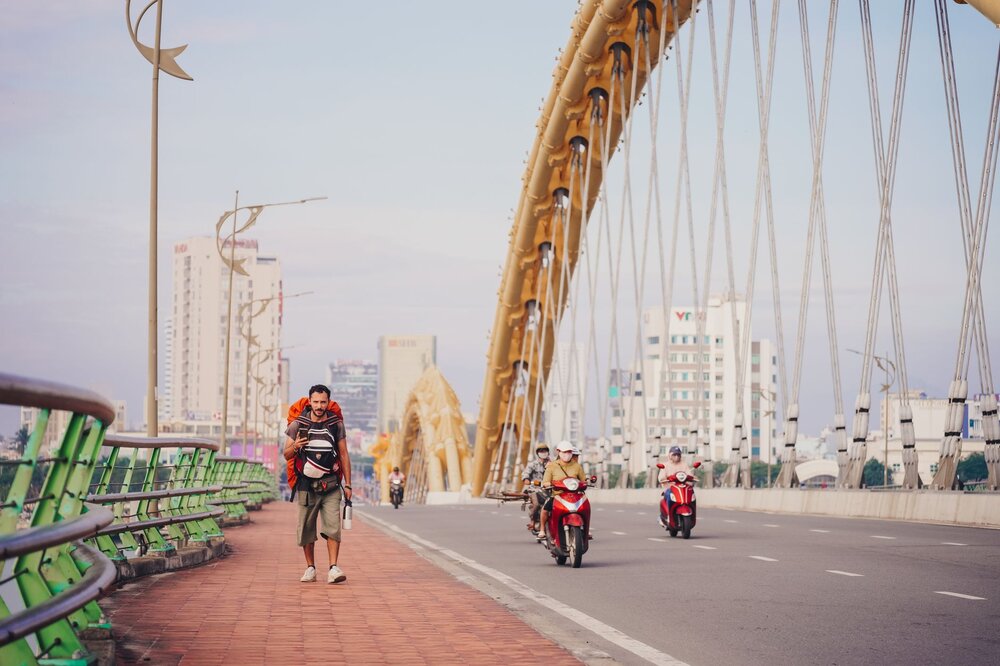
- Dragon Bridge — best from the riverbank on Bach Dang Street; the bridge is 666 metres long and the dragon structure runs the full length. If you haven’t seen it lit at night, the daytime view from the bridge itself is worth a short walk
- My Khe Beach — 10 km of east-facing beach. The northern end near the hotels is clean and well-maintained; the local section is further south. A final swim before heading to the airport
- Han Market or Con Market — last chance to pick up dried goods, Vietnamese coffee, and textiles. Han Market is in the city centre; Con Market is larger and used more by locals
Drop off at Da Nang International Airport (DAD), roughly 3 km from the city centre.
Connect and book directly with local licensed tour operators at tour.vietnam-guides.com