
January is one of Hoi An’s finest months. The dry season is firmly established, the Ancient Town is bathed in clear light, and the cooler temperatures (by Vietnamese standards) make wandering the lantern-lit streets, cycling out to the craft villages, and sitting at riverside cafés genuinely comfortable. It’s peak season — the town is busy and accommodation books fast — but Hoi An in January is Hoi An at its most photogenic.
Weather in Hoi An in January
- Temperature: 20–24°C (68–75°F) — pleasantly warm with cool evenings
- Rainfall: Low (42% chance) — dry season in full effect
- Humidity: 85%
- Wind: 11.5 mph — sea breeze
- Daylight: 11.3 hours
Events in January
- New Year’s Day (1 January): The town is festive; riverside bars and restaurants run New Year events
- Lantern Festival: Held on the 14th of each lunar month — the Ancient Town turns off electric lights and the streets and Thu Bon River are lit by thousands of paper lanterns. January typically has at least one lantern night; check the lunar calendar for the exact date
- Tet preparation: By mid-to-late January, yellow apricot blossom trees and kumquat plants appear in the Ancient Town’s shophouses and streets as the city prepares for Lunar New Year
Best Things to Do in Hoi An in January
Hoi An Ancient Town
The UNESCO World Heritage old town is at its most atmospheric in January — clear evenings, lantern glow, and cool temperatures that make the narrow streets of Chinese shophouses, Japanese merchant houses, and Vietnamese tube houses genuinely enjoyable to explore slowly. The Ancient Town ticket (120,000 VND, valid 3 days) gives access to five heritage sites including the assembly halls, old houses, and museum. Visit early morning for the most peaceful version of the town before tour groups arrive.

Japanese Covered Bridge
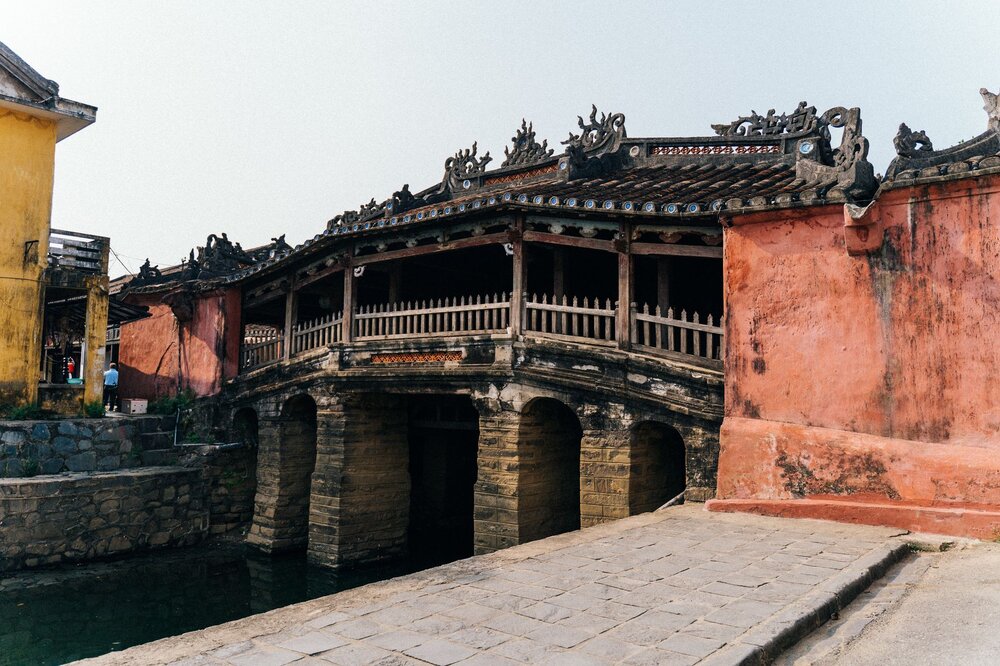
The 18th-century wooden bridge across the small canal at the western end of the Ancient Town is Hoi An’s most recognisable landmark — it appears on Vietnam’s 20,000 VND banknote. Built by the Japanese merchant community in the 1590s and later modified with a small temple, it blends Japanese, Chinese, and Vietnamese architectural elements. January’s clear light makes for particularly clean photographs; visit before 8 AM to avoid the rush. Included in the Ancient Town ticket.
My Son Sanctuary
A 40-minute drive from Hoi An through rice paddies and jungle, My Son is a collection of Hindu temples built by the Champa civilisation between the 4th and 14th centuries. January’s clear weather and comfortable temperatures make the outdoor exploration of the site pleasant at any time of morning. The earliest UNESCO site in Vietnam, it’s less polished than Angkor but more atmospherically ruined — moss-covered towers, jungle encroachment, and the sounds of the surrounding forest. Allow 3 hours including the drive.

An Bang Beach
Five kilometres east of the Ancient Town, An Bang is Hoi An’s beach village — a quieter, more low-key alternative to Da Nang’s busy My Khe. A line of bamboo-roofed beach bars and restaurants faces the sea; January’s calm conditions make the beach pleasant for swimming and the seafood lunch spots are reliably good. Lounge chairs with umbrellas cost 75,000–200,000 VND. The beach is most enjoyable in January mornings before the wind picks up in the afternoon.

Also Worth Doing
- Thanh Ha Pottery Village: A short cycle west of town along the Thu Bon River — traditional pottery workshops where you can try throwing your own piece. Entry: 35,000 VND (village only) or 85,000 VND (includes museum and activity voucher)
- Thu Bon River boat tour: A leisurely afternoon on the river — passing fishing villages, water coconut groves, and the approach to Kim Bong carpentry island by traditional wooden boat
- Countryside bicycle tour: January’s comfortable temperatures make cycling through the rice paddies and villages around Hoi An particularly enjoyable
- Lantern night: Check the lunar calendar for the monthly lantern festival night — one of Hoi An’s most special experiences
Practical Tips for January
- Book ahead: January is peak season — accommodation, tailor shops, and cooking classes fill quickly
- Ancient Town ticket: 120,000 VND, valid for 3 days, covers five heritage sites
- Japanese Bridge: Visit before 8 AM for the most peaceful experience; it’s very crowded by 9–10 AM
- Tailor: If having clothes made, allow at least 2–3 days for fittings; January is the busiest time for Hoi An’s tailors
Tours & activities in Hoi An
Activity links above are affiliate or partner links.