Phu Cam Cathedral
Hue's Catholic cathedral, a concrete modernist church by the architect of Saigon's Independence Palace that took 37 years to finish.
Overview
Phu Cam Cathedral (Nhà thờ Chính tòa Phủ Cam) is the main Catholic church of Hue and the seat of the Archdiocese of Hue. It stands on Phuoc Qua hill on the south side of the Perfume River, on a site that has had a church since 1682. The current building, a tall concrete design by architect Ngo Viet Thu, was started in 1963 and only completed in 2000 after war interrupted the work. Entry is free, and 30 to 45 minutes is enough for a visit.
Get There
Phu Cam Cathedral is on the south bank, at No. 1 Doan Huu Trung Street, Phuoc Vinh area.
By taxi or ride-hailing: about 10 minutes from the Imperial Citadel. Show the driver "Nhà thờ Phủ Cam, 1 Đoàn Hữu Trưng".
On foot or by bicycle: the cathedral is on the same side of the river as the hotel area around Le Loi Street, so it's an easy walk or bike ride from most south-bank hotels.
Other
History
In 1682 the missionary priest Father Langlois built a bamboo chapel here, by the river, on land that was once an orange plantation (cam means orange). Bishop Allys replaced it with a brick church in 1898, finished in 1902. When Hue became an archdiocese in 1960, Archbishop Ngo Dinh Thuc, older brother of South Vietnam's president Ngo Dinh Diem, had the old church demolished and commissioned a modern one from Ngo Viet Thu. Construction began in early 1963, the year of the Buddhist crisis and the coup that killed Diem; Thuc was in Rome and never returned. Work stalled for years and the site was damaged by bombing during the 1968 Tet Offensive. The main structure was finished in 1995 and the whole cathedral was completed in May 2000, 150 years after the diocese was founded.
Architecture
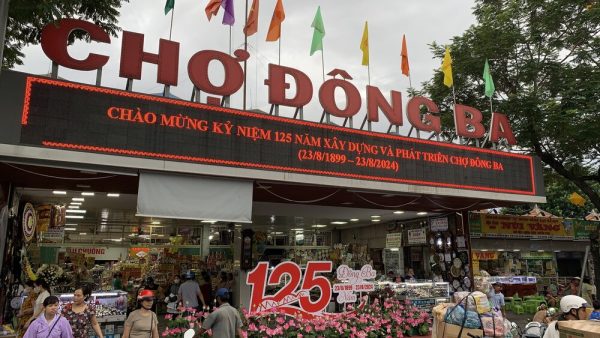
- Modernist shell: reinforced concrete, with a sharply pointed front. Ngo Viet Thu also designed Independence Palace (now Reunification Palace) in Ho Chi Minh City and Hue's Dong Ba Market.
- Cross-shaped plan: the head of the cross faces south. The main hall is 70 metres long and 15 to 37 metres wide, and holds about 2,500 people.
- Bell tower: three tiers with four electrically rung bells.
- Interior: classical in style, with a marble altar on a raised round platform. The tomb of Archbishop Philippe Nguyen Kim Dien is on the left; on the right is an altar for Tong Viet Buong, a Phu Cam Catholic who died in 1833.
Visiting Tips
- Free entry
- Grounds open daily; the interior is most reliably open around Mass times
- Mass times: weekdays around 5:00 AM and 6:00 PM; Sundays 5:30 AM, 8:00 AM, 3:00 PM and 6:30 PM (times can change, so check the notice board at the church)
- Dress modestly, shoulders and knees covered
- Visitors can sit quietly at the back during Mass; no photos while it's on
- Late afternoon gives the best light on the facade
- Very busy on Christmas Eve and at Easter
- A good indoor stop on a wet day; combine with Dong Ba Market or Tu Dam Pagoda