
Da Lat sits at 1,500 m in the Central Highlands, earning its nickname the “City of Eternal Spring” from a climate that hovers between 15°C and 24°C year-round while the rest of Vietnam swelters. French colonists built grand villas and a miniature railway here in the 1930s; today the city is a favourite weekend escape for Vietnamese families, a hub for adventure sports, and a growing magnet for digital nomads drawn by cool air, strong coffee, and affordable rents.
Xuan Huong Lake & the City Centre
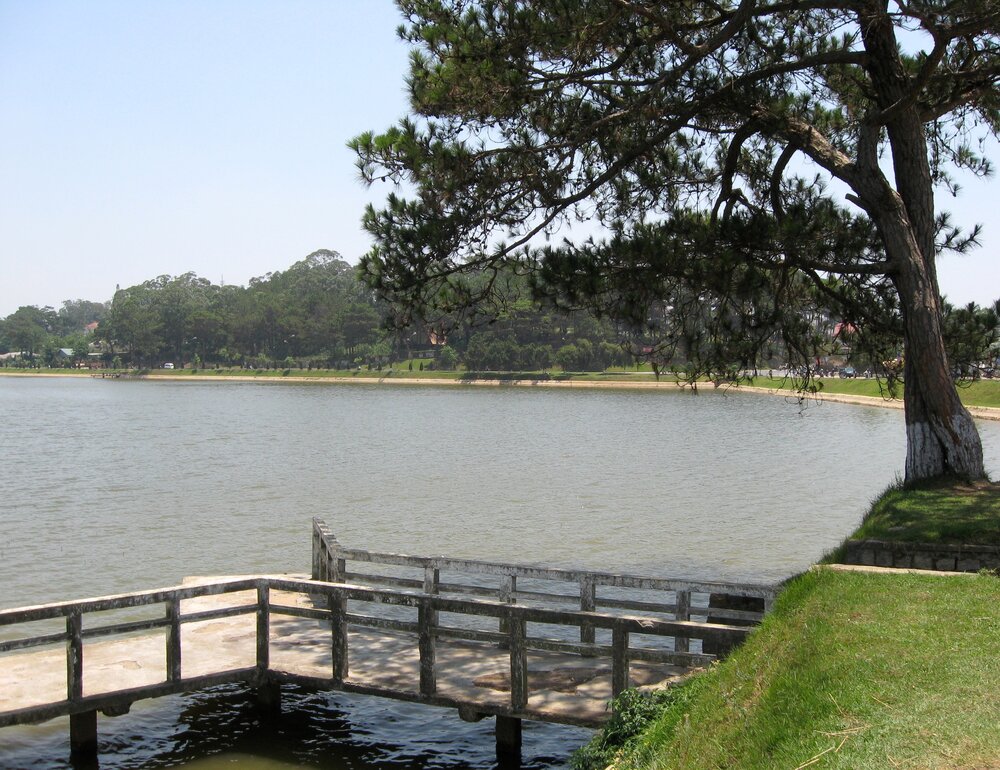
The crescent-shaped Xuan Huong Lake is Da Lat’s centrepiece — ringed by pine-shaded gardens, pastel French villas, and the retro pink Da Lat Railway Station (built 1938, still worth visiting even though the long-distance line is defunct). Hire a pedalo or bicycle and circle the 5 km lakeside path at sunrise before the crowds arrive. The adjacent Da Lat Flower Gardens display hydrangeas, roses, and mimosa in manicured beds year-round, peaking in December during the Da Lat Flower Festival.
Crazy House (Hang Nga Guesthouse)
No visit to Da Lat is complete without walking through Hang Nga Guesthouse, nicknamed “Crazy House” — an ongoing art project by architect Đặng Việt Nga that looks like a Gaudí fever dream crossed with a jungle treehouse. Twisted staircases snake between giant concrete mushrooms, hollow animal sculptures, and rooms named after animals (Eagle, Bear, Kangaroo). It’s a functioning guesthouse; staying here is an experience in itself.
Langbiang Mountain
The twin peaks of Langbiang Mountain rise to 2,167 m about 12 km north of the city, sacred to the K’Ho ethnic minority people. You can hike through pine forest to the summit (2–3 hours return, moderate) or take a US-Army-surplus jeep to the top for sunrise views over the entire highland plateau. The surrounding Bidoup Nui Ba National Park is excellent for birdwatching — home to several endemic species.
Valley of Love & Datanla Falls
The kitsch but charming Valley of Love (Thung Lũng Tình Yêu) is a pine-framed lake surrounded by flower gardens and photo props — very popular with Vietnamese honeymooners. More adventurous visitors head to Datanla Falls, where an alpine coaster threads through the forest before a short walk to the multi-tiered waterfall. Further south, the powerful Elephant Falls (Thác Voi) near Nam Ban town are less visited and more dramatic.
Coffee, Food & the Night Market
Da Lat grows some of Vietnam’s best Arabica coffee — the cool climate produces a cleaner, less bitter cup than the Robusta lowlands. The Da Lat Night Market is the best place to graze: bánh tráng nướng (grilled rice paper loaded with egg, spring onion, and dried shrimp — dubbed “Vietnamese pizza”), bánh mì xíu mại (baguette with pork meatballs), strawberry wine, and hot artichoke tea. Restaurants along Trương Công Định Street specialise in Da Lat’s famous lẩu bò (beef hotpot), eaten wrapped in wild pepper leaves from the Tây Nguyên forests.
Adventure Sports
Da Lat is Vietnam’s adventure capital. The pine-forested valleys offer canyoning (abseiling waterfalls — Pinkhouse and Groovy Gecko are the most established operators), mountain biking on single-track through flower farms, and motorbike loops out to Mang Den or down to the coast at Phan Rang. Rock climbing, paragliding over the lake, and zorbing across manicured grass slopes round out the menu.
Best Time to Visit
Planning a trip to Da Lat? We arrange private guided tours — day trips, multi-day itineraries, and custom routes.
Da Lat’s cool climate makes it appealing year-round, but seasons still matter. November to March is dry season — clear skies, cold nights (pack a jacket), ideal for outdoor activities and the December Flower Festival. April to October is the rainy season: afternoon downpours are common but mornings are often clear and the flower farms are at their most vivid. Avoid major Vietnamese holidays (Tet, 30 April, 2 September) unless you enjoy crowds — the city fills to capacity.
Getting There
By air: Lien Khuong Airport (DLI) is 30 km south of the city with direct flights from Hanoi, Ho Chi Minh City, and several other domestic hubs. A taxi to the centre takes 40–50 minutes (around 200,000–250,000 VND). By bus: Sleeper buses run overnight from Ho Chi Minh City (7–8 hours) and from Nha Trang (3–4 hours) — both comfortable and affordable. By motorbike: The highland roads from Phan Rang or Nha Trang are spectacular but demand experience.
Where to Stay
The most atmospheric option is a renovated French colonial villa — several have been converted into boutique guesthouses around the lake. Budget travellers cluster around Bui Thi Xuan Street for cheap guesthouses and easy access to the night market. Mid-range: Ana Mandara Villas Da Lat (colonial-era villas, from $120) or Terracotta Hotel (lakeside, from $60). Digital nomads tend to base themselves in the Hoang Dieu café district, a 10-minute walk from the lake.
Practical Tips
Pack a light jacket or fleece — evenings drop to 12–15°C even in “summer.” Motorbike rentals (150,000–200,000 VND/day) are the best way to explore the outskirts. The Easy Rider guided motorbike tours originated here and are still the best way to reach outlying villages without navigating yourself. Strawberries, avocados, and artichokes are all Da Lat specialities — pick some up at the Da Lat Central Market to take home.