
January is Ha Giang at its coldest and most atmospheric. The mountain air is sharp and clear, the terraced hillsides are bare or dusted with frost in the highest elevations, and the Dong Van Karst Plateau Geopark has a stark, winter-grey quality that is entirely different from the green of summer or the gold of buckwheat flower season. Visitor numbers are low; the loop roads are quiet; and the minority villages — Hmong, Tay, Lo Lo — are experienced in their everyday winter character. For travellers who want the landscape without the crowds, January is worthwhile despite the cold.
Weather in Ha Giang in January
- Temperature: 8–18°C (46–64°F) — chilly; cold at elevation and in the evenings
- Rainfall: Low (23% chance)
- Humidity: 91% — feels damper than the numbers suggest
- Wind: 6.8 mph
- Daylight: 10.9 hours
Pack warm layers — the mountain passes reach 1,500–2,000 metres and January wind-chill is real on the motorbike. Gloves and a warm jacket are essential.
Events in January
- New Year’s Day (1 January): Quiet on the loop; local Hmong markets continue on their weekly schedules
- Tet preparation: By late January, the minority villages are preparing for Lunar New Year — peach blossom trees are cut and brought into homes, traditional food preparations begin
Best Things to Do in Ha Giang in January
Dong Van Karst Plateau Geopark
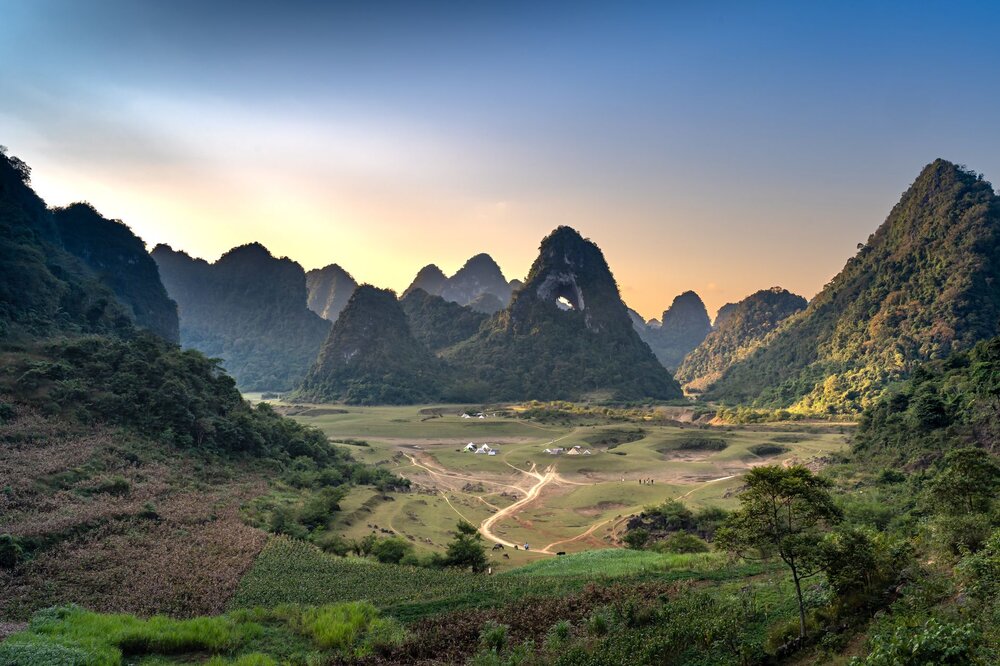
The Dong Van Karst Plateau — a UNESCO Geopark covering 2,300 km² of dramatic limestone karst terrain near the Chinese border — has a particular winter character in January. The grey limestone peaks emerge from low cloud and morning mist; the plateau’s geological formations are stripped of summer’s vegetation and visible in their raw, fractured detail. The Dong Van district market (Sunday mornings) draws Hmong, Lo Lo, and Pu Peo minority people from the surrounding villages — colourful, local, and almost entirely without tourist presence in January. The Dong Van Old Quarter, a collection of preserved French colonial-era shophouses, is quiet and atmospheric.
Ma Pi Leng Pass
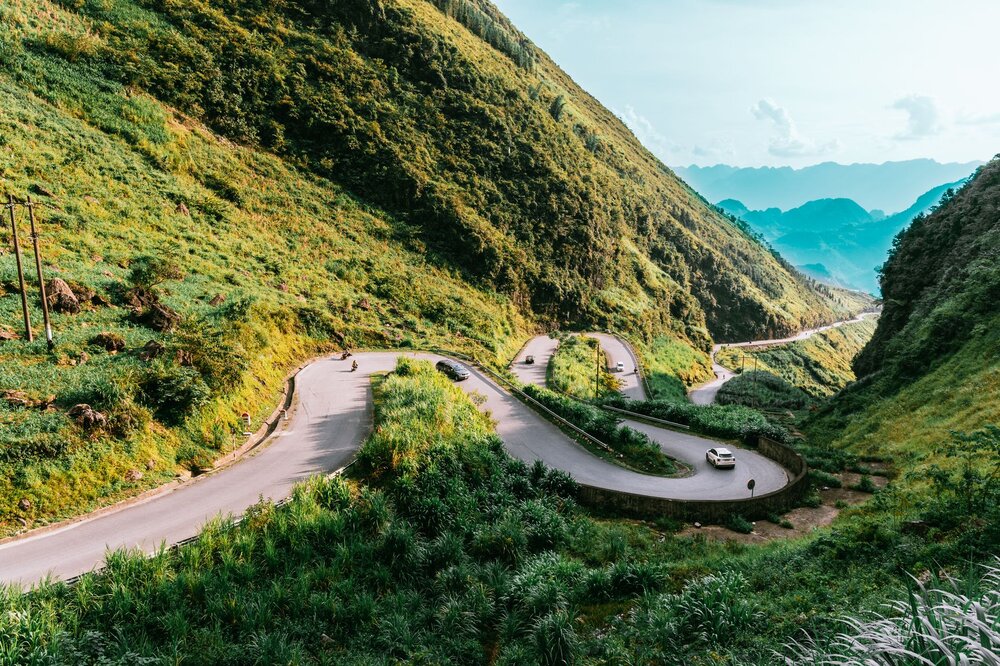
Ma Pi Leng Pass — at 1,500 metres, the most dramatic section of the Ha Giang Loop — has a particular intensity in January. The Nho Que River canyon visible from the pass viewpoint drops nearly 1,000 metres to the vivid green river below; in January’s clear air, the canyon walls are exposed and the depth of the gorge is fully visible without summer’s vegetation softening the edges. The road along the canyon rim (the Happiness Road) is quiet in January; the motorbike or car ride along the canyon edge in the cold, clear air is one of Vietnam’s finest road experiences. Bring warm clothing — the pass is cold and windy.
Lung Cu Flag Tower
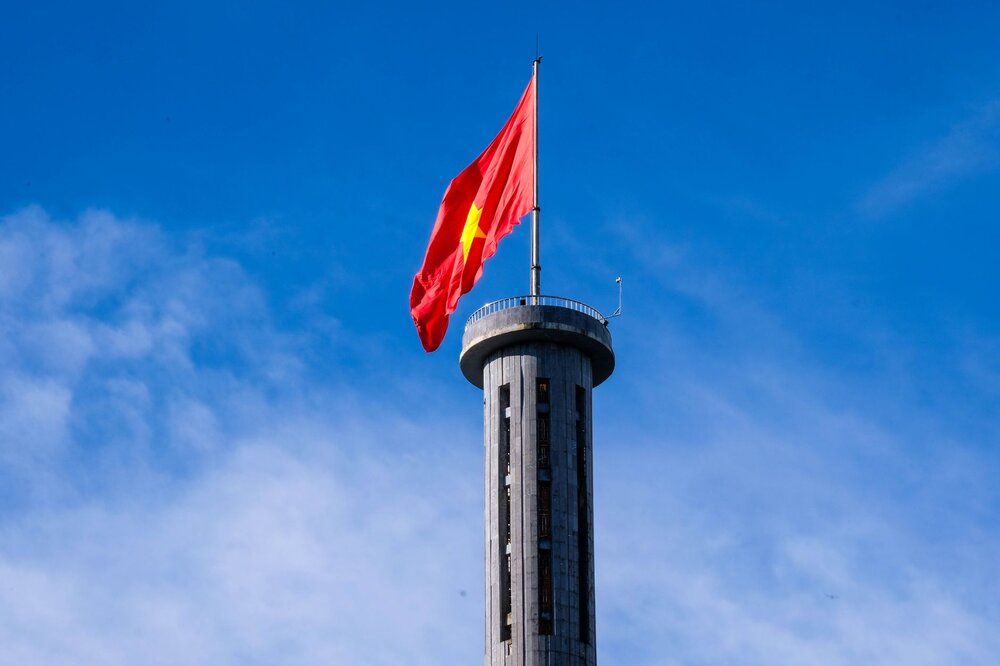
Lung Cu Flag Tower, at Vietnam’s northernmost point on the Dong Van Plateau, is a striking destination in January’s clear winter conditions. The 33-metre tower flying the Vietnamese flag stands on Dragon Mountain (Nui Rong) at 1,470 metres; the 389-step climb gives panoramic views over the Chinese border and the surrounding karst plateau in every direction. January’s clear air gives the views maximum visibility; the minority villages in the surrounding valleys are active with winter daily life and the descent through the Lo Lo village adjacent to the tower is worth exploring.
Also Worth Doing
- Quan Ba Heaven Gate: The pass viewpoint and the Twin Mountains (Nui Doi) visible from the gate are the loop’s first major stop from Ha Giang city — dramatic in January’s misty conditions
- Dong Van Old Quarter: The preserved Sino-French shophouses are particularly atmospheric in January’s quiet — the weekly market is the most authentic community event on the loop
- Minority village visits: January’s quiet means village encounters in Hmong, Tay, and Lo Lo communities are more natural and less performative than in tourist season
Practical Tips for January
- Warm clothing is non-negotiable: Gloves, a warm jacket, and thermal layers for the motorbike — the pass at 1,500m in January wind-chill is cold enough to be dangerous without preparation
- Motorbike vs. car: January weather can include fog and mist on the passes — semi-automatic motorbike is manageable but a car or jeep gives more weather protection; assess conditions each morning before setting out
- Loop accommodation: January guesthouses in Dong Van and Meo Vac are open and quiet — walk-in bookings are easy and prices are low
Tours & activities in Ha Giang
Activity links above are affiliate or partner links.