
Vietnamese food is one of the great cuisines of the world — and it is almost entirely a street food and market cuisine. The dishes that have made Vietnam famous internationally (pho, banh mi, bun bo Hue, cao lau, banh xeo) were not developed in restaurant kitchens but at roadside stalls, morning markets, and family storefronts that have been serving the same dishes for generations. The regional variation is extraordinary: northern Vietnamese food is subtle and broth-centred; central Vietnamese food is complex, spicy, and historically influenced by the Hue imperial court; southern food is sweeter, fresher, and more herb-forward. Eating in Vietnam is the easiest way to understand the country’s regional geography.
Vietnam’s Essential Dishes by Region
North Vietnam: Hanoi & Beyond
Pho bo — the beef noodle soup that Vietnam exported to the world — originated in Hanoi and is still best eaten there: a clear, slow-cooked beef bone broth with flat rice noodles, thin-sliced beef, and a restrained garnish of fresh ginger, spring onion, and chilli. The Hanoi version is subtler and less garnished than the southern version; the best bowls are at Pho Thin (Dinh Tien Hoang) and the morning street stalls of the Old Quarter. Bun cha (grilled pork patties in a sweet-sour broth with rice noodles and herbs) is Hanoi’s other signature dish — eaten at lunch, always at street level, always with a pile of fresh herbs. Cha ca (turmeric-marinated fish pan-fried with dill, the most distinctive Hanoi speciality) is available at the eponymous restaurants on Cha Ca Street in the Old Quarter.
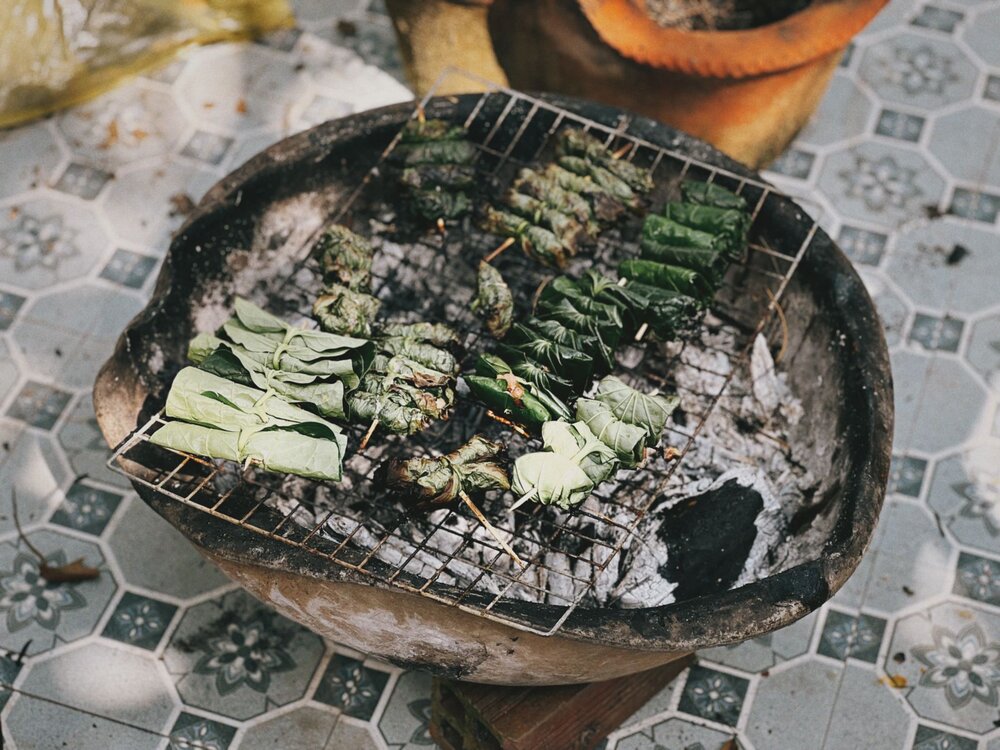
Central Vietnam: Hue & Hoi An
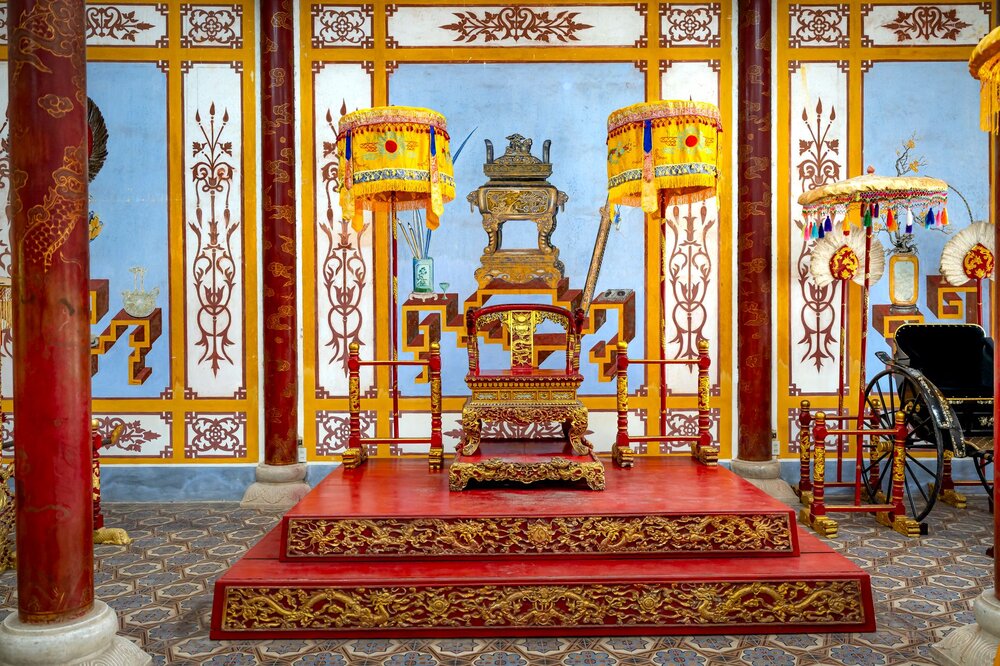
Central Vietnamese food is the most complex and historically layered of the three regional cuisines. Bun bo Hue is the imperial capital’s answer to Hanoi’s pho: a spicier, more intensely flavoured beef noodle soup with lemongrass and fermented shrimp paste in the broth; the morning bun bo stalls on Nguyen Chi Thanh Street in Hue are the benchmark. Banh beo, banh loc, banh nam — the trio of steamed rice-flour small dishes that are Hue’s most distinctive contribution to Vietnamese cuisine — are served at the plastic-stool restaurants of the Dong Ba market area. In Hoi An: cao lau (thick noodles with pork, greens, and crispy rice crackers, made with local well water) and white rose dumplings (banh vac) are the two dishes unique to the ancient town.
South Vietnam: Ho Chi Minh City & the Mekong
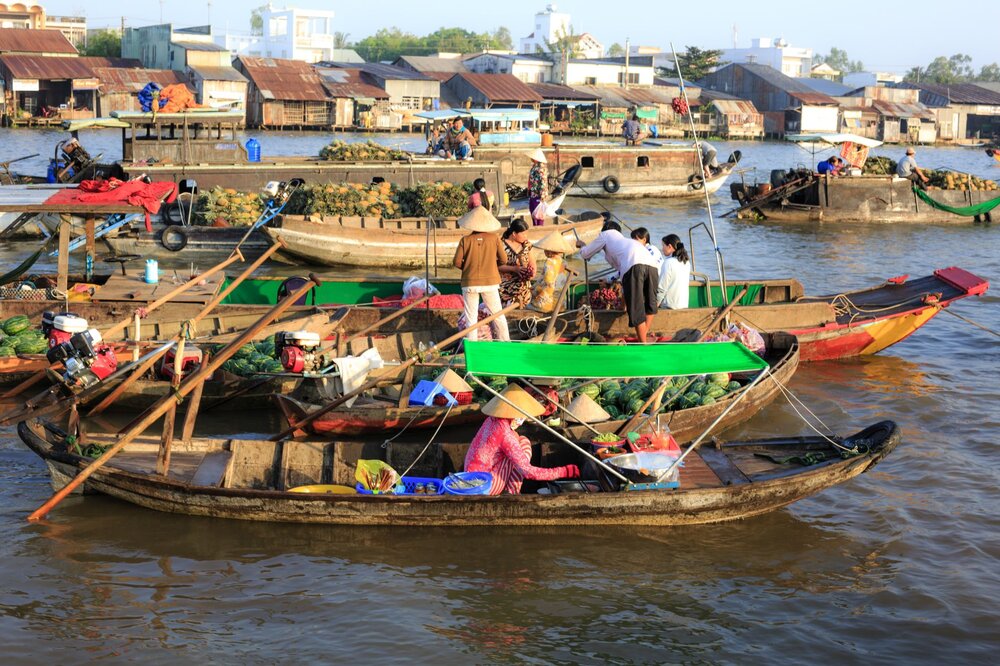
Southern Vietnamese food is sweeter, fresher, and more abundant in herbs and tropical fruit than the north. Banh mi in Ho Chi Minh City — the Vietnamese baguette sandwich with pâté, cold cuts, pickled vegetables, and fresh chilli — is at its best at the legendary Banh Mi Huynh Hoa (Thi Sach Street) and the morning street carts throughout Districts 1, 3, and 5. Com tam (broken rice with grilled pork chop, egg, and shredded pork skin) is the Saigon breakfast and lunch staple. In the Mekong Delta: hu tieu (a southern noodle soup with pork and seafood), fresh coconut products from Ben Tre, and the floating market breakfast of hot pho and fresh fruit eaten on a sampan are the defining food experiences of the south.
Best Food Experiences in Vietnam
- Hoi An cooking class: A half-day market tour and cooking class in Hoi An is the best introduction to Vietnamese food technique — the herb-identification, broth-building, and fresh-roll-wrapping sessions at the town’s cooking schools (Red Bridge, Morning Glory) are genuinely instructive
- Hue royal cuisine set meal: The most elaborately presented dinner in Vietnam; book at Tinh Gia Vien or the La Residence Hotel for the 10–12 small dish imperial presentation
- Ben Thanh Street Food Market, HCMC: The indoor night market south of Ben Thanh has the full southern street food canon under one roof — good for a systematic introduction to the southern dishes
- Pho breakfast in Hanoi Old Quarter: Walk Bat Dan Street before 8 AM and follow the queue to the best bowl
- Dong Ba Market, Hue: The covered riverside market has banh beo, banh loc, and banh nam at morning stalls that serve almost exclusively to local Vietnamese — the most authentic central Vietnamese food market experience
Food Tips
- Eat breakfast: Vietnamese breakfast is the best meal of the day — pho, bun bo, banh mi, and xoi (sticky rice) are all morning dishes that lose their character at lunch
- High turnover = safe: The busiest stalls have the freshest ingredients and the most reliable quality; avoid stalls with pre-cooked food sitting out for long periods
- Prices: Street food should cost 30,000–80,000 VND ($1–3) for a full bowl or sandwich; restaurant meals 80,000–200,000 VND; anything priced in USD at street level is tourist markup
- Vegetarian: Vietnamese Buddhist vegetarian food (com chay) is excellent and widely available; look for com chay restaurants near temples and pagodas — the mock-meat and tofu preparations are a distinct cuisine in their own right
- Allergies: Peanuts (lạc), shellfish (hải sản), and MSG (bột ngọt) are pervasive in Vietnamese cooking — communicate allergies clearly and ask specifically; “không có đậu phộng” (no peanuts) is the most important phrase for nut-allergy sufferers
Tours & activities in Vietnam
Activity links above are affiliate or partner links.