
April is one of Sapa’s least-visited months and one of its most interesting. It sits between the cool haze of winter and the crowds of summer, warm enough to trek comfortably, quiet enough that trails through the Muong Hoa Valley can feel like your own. More importantly, it’s when the farming year begins — and that changes everything about what you see here.
The Water Season
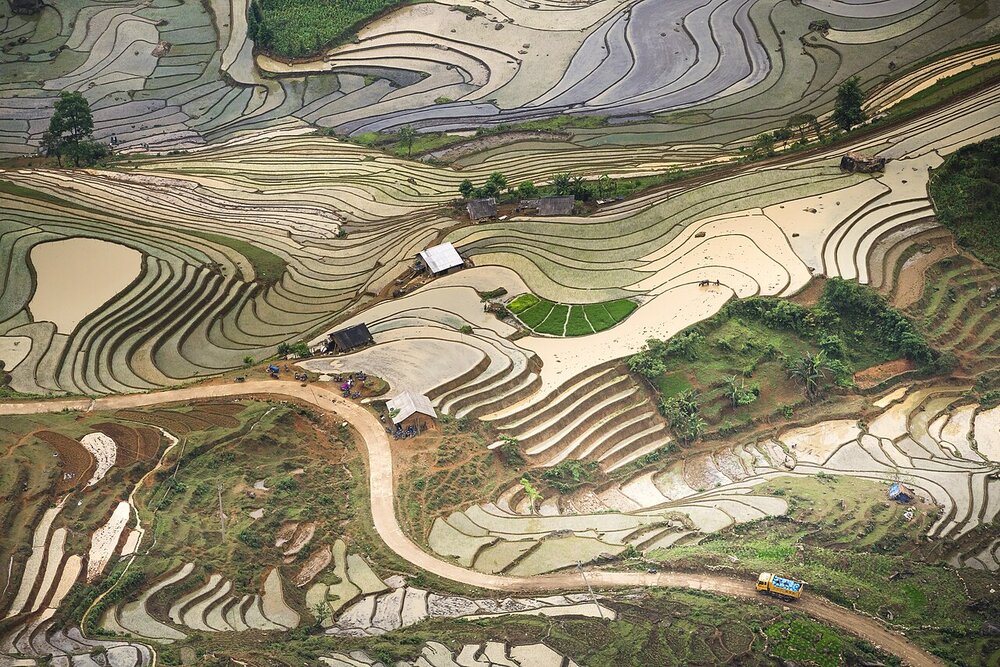
This is the thing most visitors don’t know about April: the terraces are flooded. Farmers divert water from mountain streams through networks of bamboo irrigation channels, slowly filling each tier of the hillside in preparation for rice planting. Walking the Muong Hoa Valley in early April, you hear it before you see it — water running along ridges, trickling between stones, pooling in the fields below.
The effect on the landscape is unlike anything in the harvest months. Instead of green or gold, the hillsides become mirrors. At sunrise and sunset the terraces catch the light and hold it — orange, pink, deep blue — shifting with the clouds. On still mornings the surrounding mountains reflect perfectly in the water. It’s not better or worse than September’s golden harvest, it’s just completely different, and far fewer people come for it.
The villages are busy in a way that feels real rather than performed. Families plough fields with water buffalo, repair terrace walls that didn’t survive the winter, carry seedlings down muddy paths. If you’re walking with a local guide through Lao Chai or Ta Van, you move through this work rather than alongside it. Some guesthouses will invite you to help — planting seedlings or clearing irrigation channels — if you’re staying a few nights and show genuine interest. It’s hard physical work, which makes it more memorable.
Weather in Sapa in April
Daytime temperatures run 18–25°C (64–77°F), dropping to 13–17°C at night. Mornings are usually clear and cool — good for an early start on the terraces or a forest trail. By early afternoon, short showers become common. They’re rarely all-day affairs; waiting 20–30 minutes under tree cover often sees blue sky return. The rain that falls overnight is what fills the terraces, so it has a purpose beyond inconvenience.
Higher up — on Fansipan’s upper trails or in the pine forests above town — it runs 3–5°C cooler. A light rain jacket and a fleece for evenings are worth the space in your bag.
What to Do
The Muong Hoa Valley trek is the obvious centrepiece. The route from Sapa town down to Lao Chai and Ta Van passes directly through working terraces; in April you have reason to walk slowly, stop at irrigation channels, watch a ploughing team work a steep field. Sunrise from the viewpoints above the valley — the road between La Pan Tan and Cat Cat gives a good angle — catches the reflections at their sharpest when the air is still and the light is low.
The forest trails in Hoang Lien National Park are underrated in spring. Pine woodland, bamboo groves, hidden waterfalls fed by recent rainfall — the canopy keeps the trails shaded even when the afternoon warms up. Birdsong is active in April in a way it isn’t in summer. Love Waterfall is worth the walk specifically in April because the flow is at its strongest after the rains.
Fansipan runs the cable car year-round. April conditions are generally good for the summit — expect 8–12°C at the top even when it’s warm in town.
The Saturday market in Sapa draws Black H’Mong, Red Dao, Tay, and Giay communities from surrounding villages. In April it’s quieter than the summer crowds allow, which makes it easier to actually have a conversation.
Crowds and Timing
April is genuinely quiet except for two windows. The Hung Kings Festival falls on April 4 and 16 (both public holidays), and Liberation Day on April 30 combines with Labour Day on May 1 for a four-day weekend that fills Sapa fast. Outside those dates, weekday trails feel empty and homestay hosts have real time for guests. If you’re flexible on dates, the middle two weeks of April are the sweet spot.
A Few Practical Notes
Shoes matter more in April than any other month. Terrace paths are muddy after rain and slippery near irrigation channels — proper grip is not optional. Carry a dry bag for your phone and camera if you’re shooting near water. Visit the terraces early or late; midday light flattens the reflections completely. And book accommodation for the April 30–May 1 window at least two or three weeks out — it sells quickly.
A local guide adds more in April than in most months. The farming activity is what makes the landscape meaningful; someone who can explain the irrigation system, introduce you to families, and navigate you through active fields rather than around them changes the experience significantly.
Tours & activities in Sapa
Activity links above are affiliate or partner links.