
Vietnam weather is one of the most important factors in planning your trip. The country spans 1,700 kilometres from north to south, and different regions have completely different climate patterns. There is no single best time to visit — it depends entirely on where you are going.
Three Climate Zones
Northern Vietnam (Hanoi, Ha Long Bay, Ninh Binh, Sapa, Ha Giang)
The north has four distinct seasons. Summers (June–August) are hot and humid with heavy rainfall, temperatures reaching 35°C. Winters (December–February) are cool and misty — averaging 17–22°C in Hanoi, but dropping to 10°C or below in the mountains of Sapa and Ha Giang, with occasional frost and even snow on the highest peaks. Spring (March–April) and autumn (September–November) are the sweet spots: clear skies, comfortable temperatures, and the countryside at its most photogenic.
- Best months: March–April and September–November
- Mountain trekking (Sapa, Ha Giang): September–November and March–May (15–28°C daytime, cool nights)
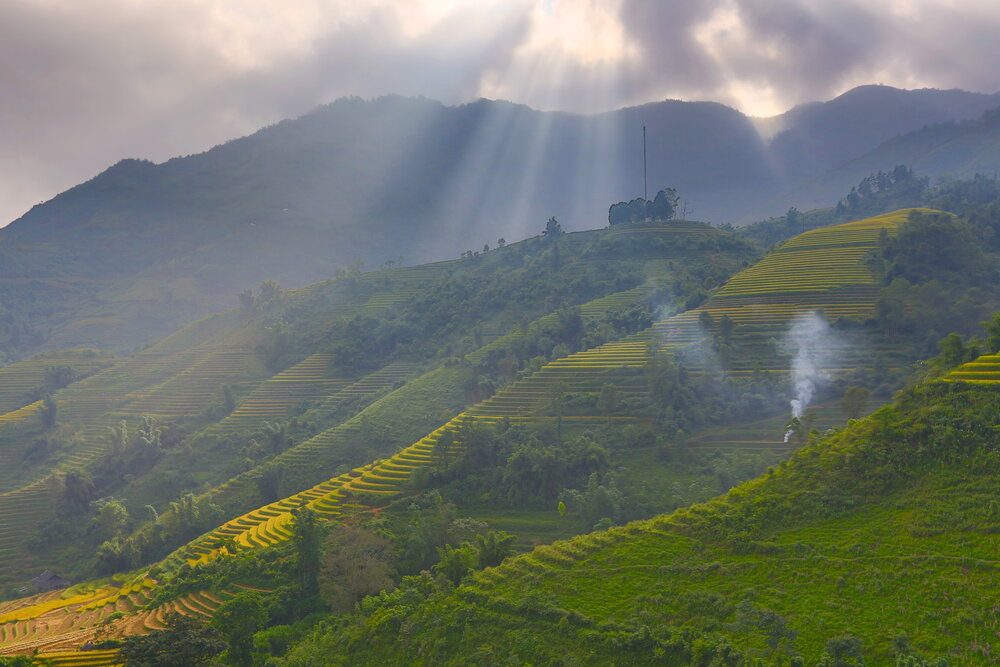
- Golden rice terraces: September–October in Sapa, Ha Giang, and Mu Cang Chai
- Avoid for mountains: December–January (very cold nights, frost risk)
Central Vietnam (Hue, Da Nang, Hoi An, Phong Nha, Nha Trang, Da Lat)
Central Vietnam runs on an opposite calendar to the rest of the country. While the north and south enjoy dry conditions from November to April, the central coast gets its heaviest rain in October and November — this is also the region most exposed to typhoons. From February through August, the coast is warm, dry, and ideal. Nha Trang, further south on the central coast, enjoys over 300 days of sunshine per year and stays dry well into September. Da Lat in the central highlands sits at 1,500 metres, keeping temperatures at a comfortable 20–30°C year-round — a cool escape from the lowland heat.
- Best months (coast): February–August
- Nha Trang dry season: extends through September
- Da Lat: cool and pleasant year-round; wet June–October
- Avoid: October–November (heavy rain, flooding, typhoon risk)


Southern Vietnam (Ho Chi Minh City, Mekong Delta, Mui Ne, Phu Quoc, Con Dao)
The south operates on a simple two-season cycle: dry (November–April) and wet (May–October). Temperatures stay consistently warm at 25–35°C throughout the year. The wet season brings the southwest monsoon — mostly afternoon downpours that rarely disrupt morning activities — along with lush green landscapes and fewer tourists. Phu Quoc and Con Dao are enjoyable year-round; outside the dry season expect afternoon rain but not all-day downpours.
- Best months: November–April
- Acceptable: May–October (warm and green; lower prices, fewer tourists)
- Peak rainfall: June–August
- Mekong floating season: September–November (dramatic flooding, a spectacle in itself)

Month-by-Month Quick Guide
- January: Excellent in south and coast; cool 17–20°C in Hanoi; cold in northern mountains. Tet may fall late January.
- February: Dry and warm coast and south; north warming up. Tet often falls here — book transport early.
- March: Good nationwide. Spring arrives in the north; central coast blooms. One of the best all-round months.
- April: Warm everywhere. North heats up toward summer; south nearing the end of dry season.
- May: South enters rainy season; central coast still pleasant; north warm and manageable.
- June–August: Hot across Vietnam (often 34–36°C). South and central rainy; north humid with intermittent rain. Typhoon risk on the central coast.
- September: North spectacular — golden rice terraces; Nha Trang still dry. Central coast begins to turn wet.
- October: North at its best. Central Vietnam rainy season peaks — avoid Hoi An and Hue. South still wet but easing.
- November: Excellent in north and south; peak season begins. Central coast still recovering from rains.
- December: Most stable conditions nationwide. Hanoi 17–20°C; south warm and dry. Best month for a full north-to-south trip.

Monsoon & Weather Events
- Southwest monsoon (May–October): Drives the wet season in the south and brings humidity to central areas.
- Northeast monsoon (September–February): Brings rain and storms to the central coast; can cause flooding in Hoi An and Hue.
- Typhoon season: July–November, primarily hitting the central coast. June–August for the far north.
- Tet (Vietnamese New Year): Late January to mid-February — transport and hotels book out weeks ahead nationwide.
- Golden rice terraces: September–October in Sapa, Ha Giang, and Mu Cang Chai — the most photogenic window in the north.
- Mekong flooding: September–November — the delta floods dramatically; a unique spectacle if you plan around it.
Best Overall Time to Visit
For a north-to-south journey, November to April is the most reliable window. December and January offer the most stable conditions across the entire country. If you are heading to the central coast only, aim for March to August. For mountain trekking in Sapa or Ha Giang, target September–November or March–May.
Vietnam Weather by Month
Planning around a specific month? Choose below for a detailed regional breakdown:

Tours & activities in Vietnam
Activity links above are affiliate or partner links.